
Peeling bananas to purify water
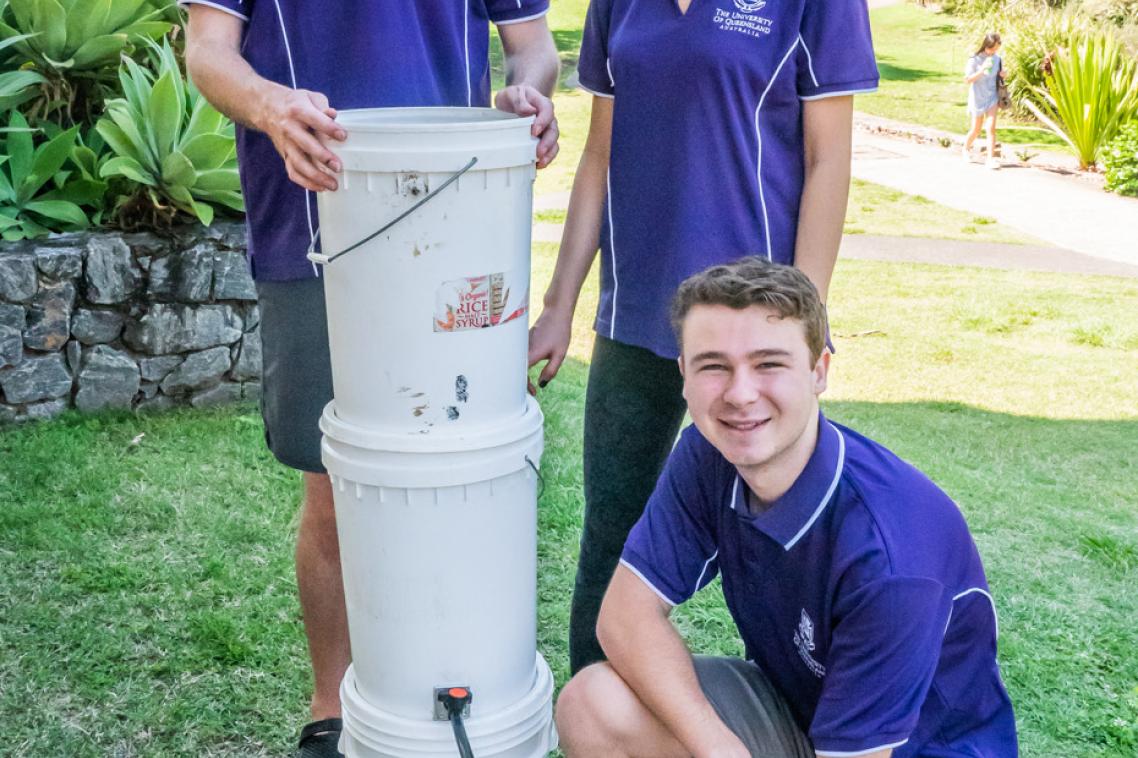
A group of University of Queensland engineering students has used the unusual combination of sand and banana skins to design a portable water treatment system for people in developing nations.
Engineering student Hayden Baks said carbon in the banana peel was used to remove unsafe substances from contaminated water, such as bacteria, heavy metal, turbidity and organic dyes.
“The combination of banana peels and slow sand filtration is a simple and cost effective way to treat river water and make it safe to drink,” he said.
The first year student engineers designed the home-based unit, which can treat more than nine litres of water an hour, as part of the Engineers Without Borders Challenge.
To meet the design brief the team had to create a device that could filter Mekong River water to a drinkable standard for a Cambodian village household.
“We weren’t looking to reinvent the wheel, but provide tangible results for locals,” he said.
“The entire build process was quite frustrating especially when things wouldn’t work, but thankfully perseverance meant we could produce a system capable of meeting the outlined requirements.
“We also created a water hygiene education plan and a community engagement plan to help locals adopt the system into their daily lives.”
Lecturer Jo Kirby said the challenge gave students an opportunity to design a creative and sustainable engineering solution.
“I feel it is important for students to get a sense of what real engineers do in the wider context of project work, and how that can benefit communities across the globe,” she said.
The design has been selected to feature in the Engineers Without Borders Showcase in December.
“It’s an awesome feeling to have our work recognised as being of a standard that can compete with other engineering students across Australia,” Hayden said.
“The Showcase will be a great opportunity to discuss our design with industry engineers and members from Engineers without Borders and Engineers Australia – and fingers crossed we can take home one of the awards.”
The Engineers Without Borders Challenge is part of one of UQ’s first year engineering practice courses.
Media: EAIT Communications, Paige Ashby, p.ashby@uq.edu.au, 0430 511 615
Related articles

Childhood measles vaccination rates fall worldwide post COVID-19
