
Reconciliation at UQ
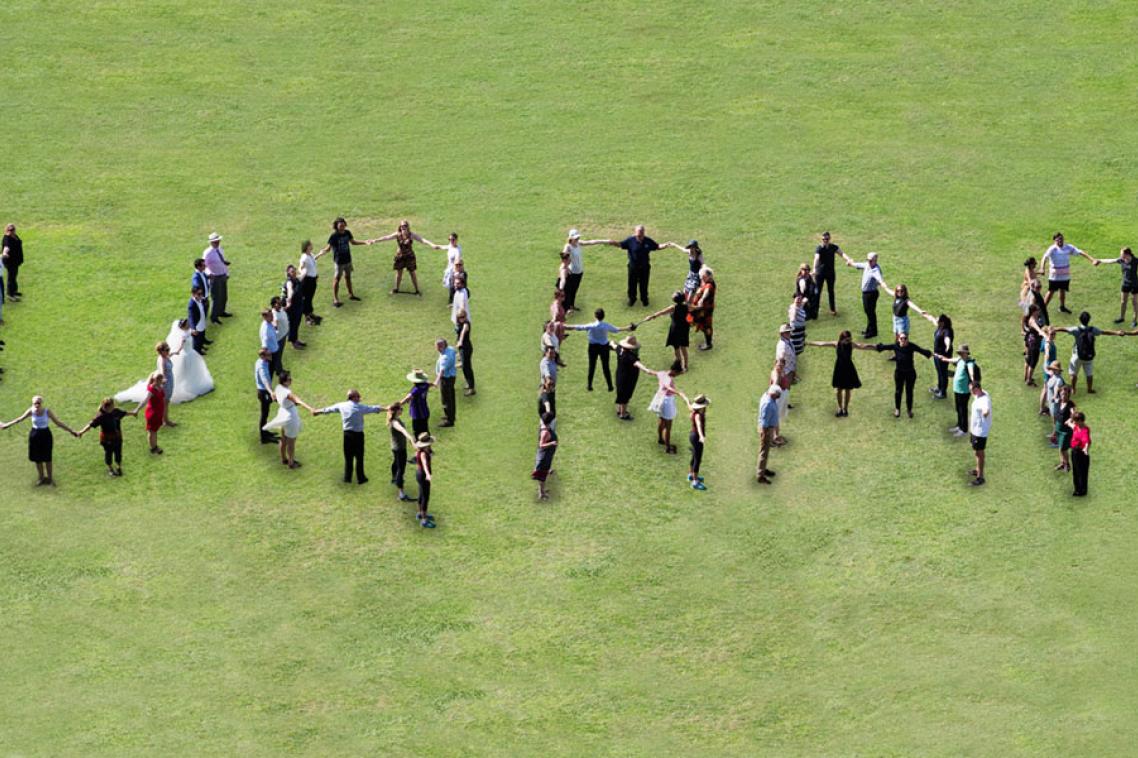
The University of Queensland has launched its inaugural Reconciliation Action Plan (RAP).
The UQ RAP is a valuable document that acknowledges the University’s commitment to the building of respectful relationships and opportunities between Aboriginal, Torres Strait Islander and non-Indigenous peoples.
Pro-Vice-Chancellor (Indigenous Engagement) Professor Bronwyn Fredericks said the RAP demonstrated commitment and practical actions designed to build and enhance current and emerging relationships within the University – and externally with communities, organisations and industry partners.
“The RAP highlights how the University will embed the notions of respect, relationships and opportunities into the UQ community, and strengthen our vision for a strong sense of belonging. We can all contemplate the myriad dimensions within the RAP and take action to make reconciliation happen at UQ.
“We know the positive actions in the plan will build higher trust, lower prejudice and boost Aboriginal and Torres Strait Islander pride, and guide UQ on its path as a world-class Australian university.”
The RAP has been a priority since 2017, when a Steering Committee co-chaired by Gaja Kerry Charlton and Vice-Chancellor and President Professor Peter Høj clearly recognised the practical framework and strengths this will bring to UQ.
Professor Høj said it had been a rewarding, thought-provoking and culturally informative experience to work towards launching UQ’s RAP.
“The journey has been one of reflection; listening and strengthening my and UQ’s relationships with and respect for First Australians,” Professor Høj said.
“UQ’s Innovative RAP reflects and complements the spirit of reconciliation that our Aboriginal, Torres Strait Islander and non-Indigenous staff, students, affiliates and alumni had already developed over many years.
“I’d like to thank all who have worked extremely hard to produce this RAP, including the Working Party comprised of staff from across the University. I’ve been looking forward to this moment for quite some time.”
Local Traditional Owner, Koenpal-Yuggera and Ngunda-Kabi-Kabi Elder Gaja Kerry Charlton believes the RAP is an important document.
“It will grow learning, understanding and two-way relationships between the University and First Australians,” she said.
“Those who share the journey of reconciliation also ‘close the gap’ to Indigenous disadvantage and build a more inclusive and fairer society.”
The University of Queensland joins more than 1000 dedicated corporate, government, and not-for-profit organisations that have formally committed to reconciliation through the RAP program since its inception in 2006.
Celebrations today, held between 9am and 3pm, include the launch of the RAP, a Reconciliation Camp – an interactive space to showcase UQ’s engaging journey towards the RAP, and a conversation with acclaimed singer/songwriter and UQ alumnus Kev Carmody.
Watch the launch below:

Media: Communications@uq.edu.au, +61 7 3365 1120; Nell Angus, lynell.angus@uq.edu.au, +61 7 3343 1679.
Topics
Related articles

What makes a winning environmental campaign? We studied six decades of activism to find out
