
Thirteen mammal extinctions prevented by havens
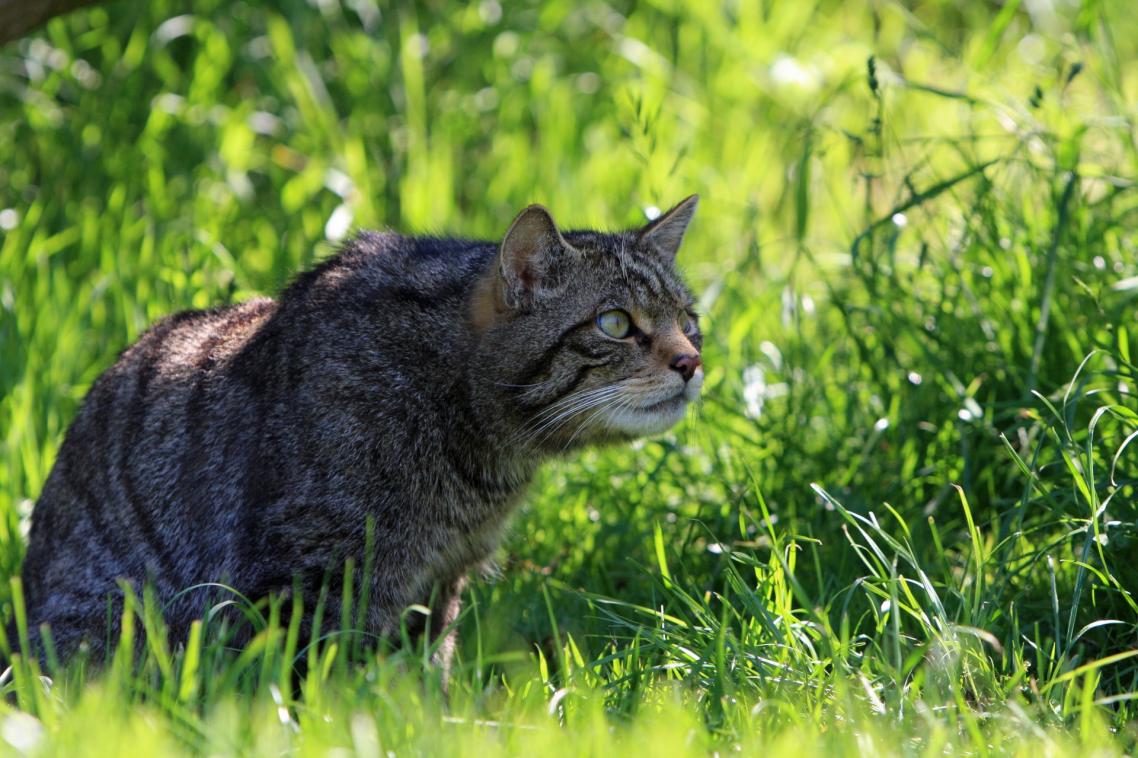
A stocktake of Australia’s animal havens – conservation areas free of cats and foxes – has found that they have already prevented 13 mammal extinctions.
The University of Queensland’s Professor Sarah Legge was part of the Threatened Species Recovery Hub team of 28 scientists and conservation managers from universities, government conservation agencies and NGOs, who collaborated to undertake the audit.
“Predation by feral cats and foxes is the main reason that Australia has the worst mammal extinction record of modern time,” she said.
“About 80 Australian islands are naturally cat and fox-free havens, and this has prevented some extinctions.”
An example is the greater stick-nest rat, which became extinct on mainland Australia, but survived on the Franklin Islands off South Australia, locations not reached by foxes or cats.
“Since the 1980s additional havens have been created in Australia by eradicating feral animals from islands or from within large fenced areas on the mainland, and threatened animals have been moved to these havens to put them out of reach of introduced predators.
“As of early 2018, we had 101 island havens covering 2152 square kilometres and 17 fenced havens covering 346 square kilometres.”
Researcher Dr Jeremy Ringma said if future extinctions are to be prevented, proponents need to be more strategic about where new havens are located, and which species go into them.
“The review revealed that while more than half of the mammal species in Australia that are vulnerable to cats and foxes have the protection of being in a haven, 29 species are not yet in a single haven,” Dr Ringma said.
Dr Michael Bode from Queensland University of Technology said, to prevent future mammal extinctions, national collaboration and coordination must be increased.
“We now know where new havens need to go, and with just 12 new havens, we can protect every threatened mammal species vulnerable to predation by cats and foxes.
“With 39 new havens we’d be able to protect at least three populations of every one of these species.
“But longer term, we really need to find ways of reducing fox and cat impacts across Australia, so we can restore our native mammals to landscapes at bigger scales.
“Until then, cat and fox-free havens will be critical in preventing extinctions.”
The research was undertaken by the Threatened Species Recovery Hub of the Australian Government’s National Environmental Science Program, in collaboration with government and non-government conservation agencies.
It has been published in Wildlife Research (DOI: 10.1071/WR17172), Nature Ecology and Evolution (DOI: 10.1038/s41559-017-0456-4), and Conservation Letters (DOI: 10.1111/conl.12611).
The Hub is a collaboration of 10 leading Australian universities and the Australian Wildlife Conservancy to undertake research to support the recovery of Australia’s threatened species.
Media: Professor Sarah Legge, s.legge@uq.edu.au, +61 476 861 951; Dr Jeremy Ringma, Jeremy.Ringma@gmail.com, +61 412 187 103; Associate Professor Mike Bode, michael.bode@qut.edu.au, +61 414 108 439; Jaana Dielenberg, j.dielenberg@uq.edu.au, +61 413 585 709.
Photos are available in dropbox to accompany this story. Photographers must be credited.
Related articles

A new way to navigate tough land and water use decisions
