
Zika study may ‘supercharge’ vaccine research
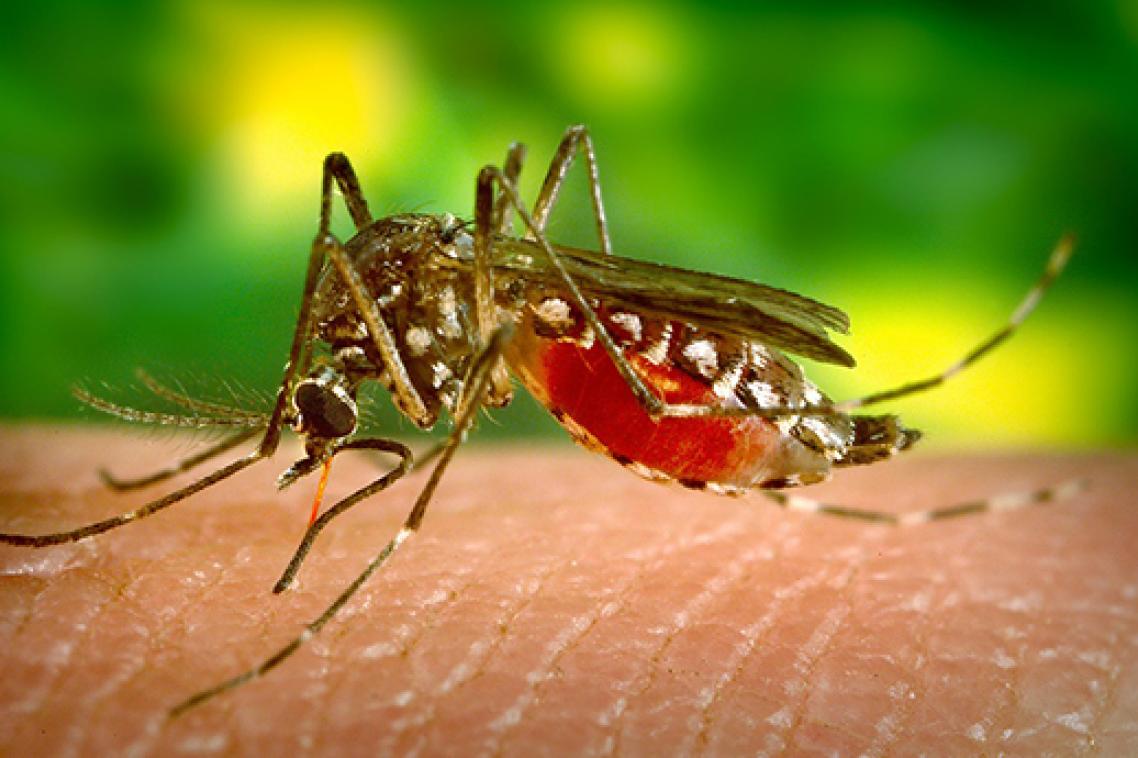
Scientists looking at the genetics of Zika virus have found a way to fast-track research which could lead to new vaccines.
The study, led by The University of Queensland and QIMR Berghofer Medical Research Institute, used a new technique to uncover Zika mutations that help foster virus replication in mosquito hosts, while hindering its ability to replicate in mammals.
Dr Yin Xiang Setoh from UQ’s School of Chemistry and Molecular Biosciences said the technique would supercharge research on Zika – which can cause birth defects – and other similar viruses.
“Viruses like Zika have adapted to grow in two contrasting systems – vertebrates, like us, and invertebrates, like mosquitos,” he said.
“We used deep mutational scanning to survey all of the possible amino acid mutations in what’s known as the envelope protein of the virus, which is responsible for how it binds with, enters and exits host cells.
“We found two mutations that resulted in a virus that grew well in mosquito cells, but very poorly in mammalian cells, revealing the amino acids that are critical for Zika virus to survive in mammals.”
Professor Andreas Suhrbier, who heads QIMR Berghofer’s Inflammation Biology laboratory, said the new technique allowed scientists to perform evolutionary virus selection in a matter of days – a process that would take tens or hundreds of years in nature.
“This technique, used in conjunction with modelling, gives us an insight into why evolution has chosen a particular path,” he said.
“We’re lifting the curtain on evolutionary processes and speeding up natural processes like never before.”
Lead researcher, Associate Professor Alexander Khromykh, who heads RNA Virology laboratory at UQ, said the fast-tracking of virus research was an exciting development.
“Using this rapid technique, we can now investigate how Zika virus can reach the placenta and cross into the foetus, and to isolate the viral genetic factors responsible,” he said.
“This could help provide crucial knowledge for developing an effective Zika vaccine.
“Indeed, Zika virus that was engineered to contain the identified two mutations showed great potential as a vaccine.
“At the same time, we might be able to identify the genetic factors behind virus replication and transmission by mosquitoes, helping us understand how Zika is transmitted in nature.”
“This technique can also be applied to investigate the development of the disease and the transmission of a range of similar viruses, transmitted by mosquitoes, ticks and other invertebrates.”
“It took us a number of years, not to mention a significant collaborative effort, to get to this stage and we’re incredibly excited to see what’s next.”
The study was initiated with seed funding from the Australian Infectious Diseases Research Centre.
The research is published in Nature Microbiology (DOI: 10.1038/s41564-019-0399-4).
Media: Associate Professor Alexander Khromykh, a.khromykh@uq.edu.au, +61 434 367 342; Dr Yin Xiang Setoh, y.setoh@uq.edu.au, +61 434 418 338; Dominic Jarvis, dominic.jarvis@uq.edu.au, +61 413 334 924; QIMR Berghofe, Gail Burke, +61 427 179 216, gail.burke@qimrberghofer.edu.au.
Topics
Related articles

From cooked breakfast to their own TV, aged care residents need to watch for extra fees
