
‘Floating forest’ could protect vulnerable shorelines
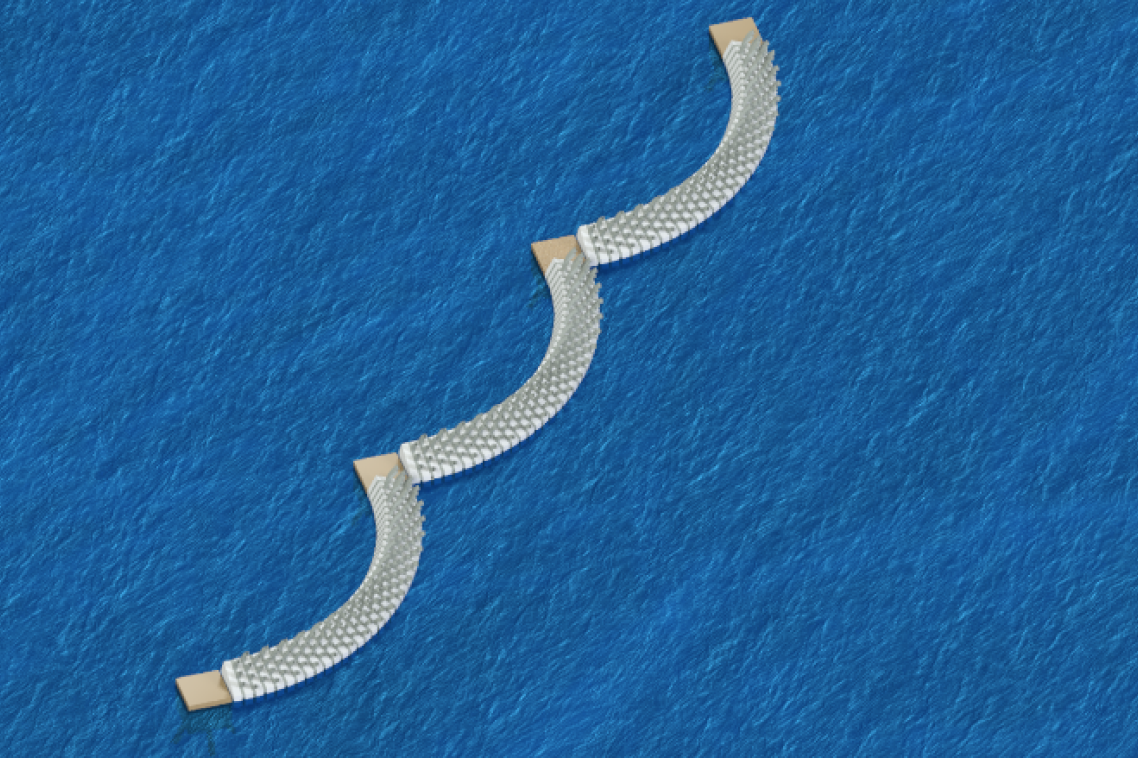
A team of civil engineers has invented and patented a 'floating forest' they say is capable of reducing wind and wave damage during a natural disaster.
University of Queensland researcher Professor Chien Ming Wang said the invention could prevent beach erosion and protect coastal infrastructure and floating assets such as boats.
“Wind can cause significant damage to coastal communities and can be fatal,” he said.
“Engineers have already developed wave-breakers capable of reducing the height of waves, but there has been nothing until now to break the wind.
“We’re the first ones to place a windbreak on top of the floating breakwater structure.”
The structure consists of a concrete deck tilted upstream to allow a wave run-up, which will dissipate the wave’s energy, similar to the way a truck safety ramp can slow a speeding truck.
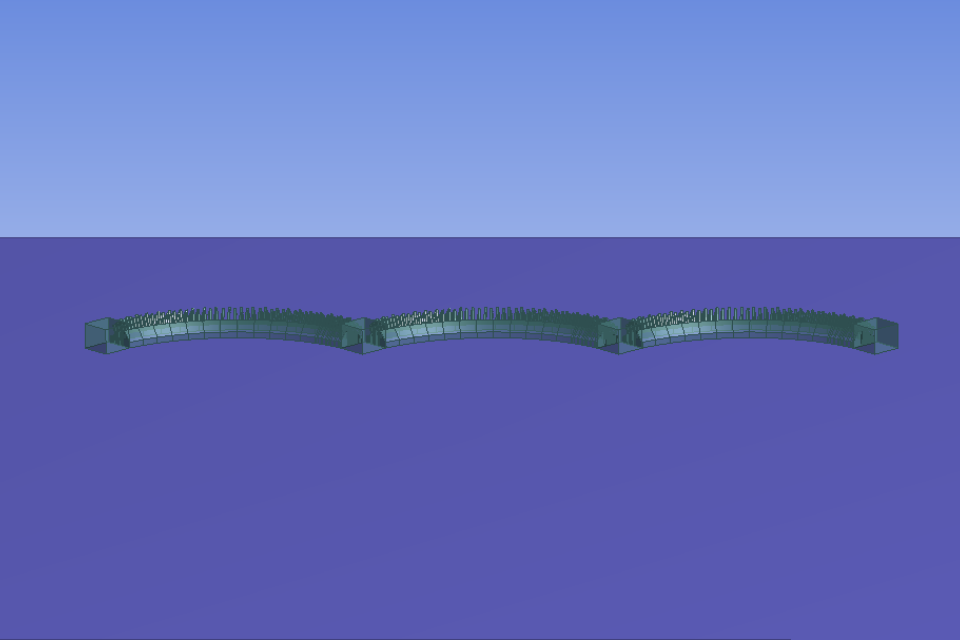
“A windbreak can be made up of real vegetation, however that could be difficult to maintain and manage, because it will be offshore,” Professor Wang said.
“Instead, we’ve chosen to build the tubes out of plastic and concrete and place them in a formation that provides the most resistance to wind, therefore dissipating its strength.
“The floating structure would be around one kilometre long with the tubes standing at 20m tall.”
Professor Wang worked with his PhD students Mengmeng Han and Junwei Lyu, his colleague Dr Matthew Mason, Monash University researchers Professor Wenhui Duan and Dr Shujian Chen and Hyundai Engineering and Construction engineers Dr Kwanghoe Jung and Ms Sara Kang to develop the concept.
The team worked with UQ’s commercialisation company UniQuest to file a provisional patent for the floating structure.
“We have built a small model segment of the ‘floating forest’ for testing in the wave flume of UQ’s hydraulics lab,” Professor Wang said.
“We hope that a smaller version may be constructed in places that are hit by strong cyclone seasons, such as Bangladesh, Mozambique, Taiwan and the Philippines.”
Head of School of Civil Engineering Professor Simon Washington said the idea was an example of UQ engineers collaborating with industry to solve global challenges.
“Researchers in our school working with our industry partners are generating some incredibly innovative research and ideas,” he said.
“The patent taken out by the researchers allows them to claim ownership of this idea and to work further on the invention, with the possibility of it being commercialised and shared with coastal communities around the world.”
The project received financial support from the Australian Research Council and the Nanocomm Hub.
Media: School of Civil Engineering, Professor Chien Ming Wang, cm.wang@uq.edu.au, 0431 364 775; UQ Communications, Paige Ashby, p.ashby@uq.edu.au, 0430 511 615
Related articles

Time to tap into agriculture’s hidden genetic potential
