
Hope for world’s warming reefs
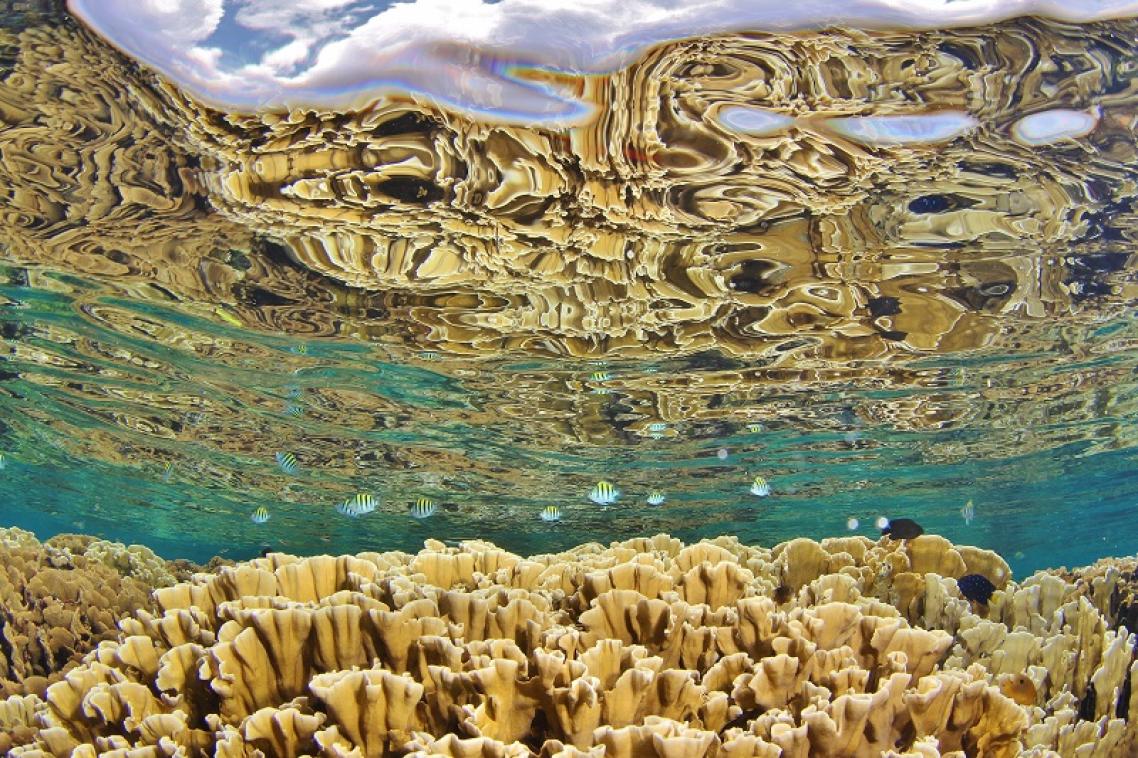
The fate of coral reefs under climate change could improve if management efforts take evolution and adaptation into account, according to an international study.
The University of Queensland’s Professor Peter Mumby was part of the pioneering Coral Reef Alliance study seeking ways to save the world’s reefs.
“Our research shows that by making smart decisions today, conservation managers can generate the conditions that can help corals adapt to rising temperatures,” Professor Mumby said.
“Climate change is decimating coral reefs, but our study offers tools that may be able to help these ecosystems.
“By facilitating evolution, conservation efforts can help corals adapt to rising temperatures.”
Internationally, some groups have advocated protecting reefs in the coolest waters, hoping that they’ll have longer to adapt, but the researchers found protecting diverse reef habitat types across a spectrum of ocean conditions was key to helping corals adapt to climate change.
“Some reefs are naturally warmer than others and it’s important to design protection so that corals can move freely between these areas as the ocean continues to warm,” Professor Mumby said.
“Fortunately, the science to inform this has been underway for a few years on the Great Barrier Reef.
“Together, a diversity of reef types act as stepping stones that give corals the best chance for adapting and moving as climate changes.”
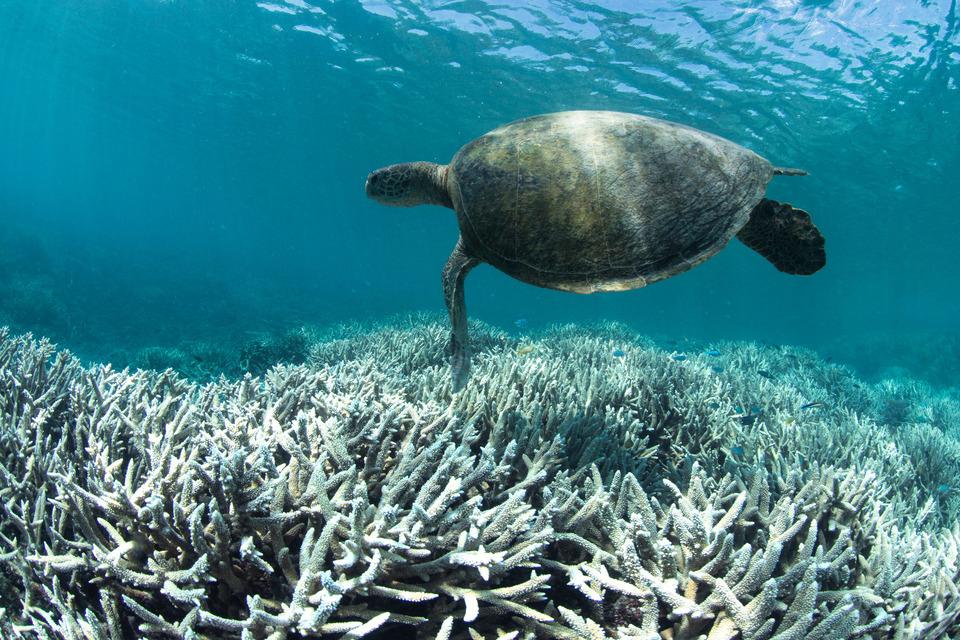
But they found action to reduce greenhouse gas emissions remained fundamentally important.
The world’s coral reefs are one of the most diverse ecosystems on the planet, supporting the livelihoods of more than 500 million people and valued at over $530 billion.
“It’s time to act now – we’re losing our reefs – but a diversity of coral types and reduced local stressors can make an enormous difference in ensuring their survival,” Professor Mumby said.
The study was a collaborative program launched by The Coral Reef Alliance’s Dr Madhavi Colton and Dr Michael Webster, co-authored at UQ and Stanford University, partnering with the University of Washington’s Dr Timothy Walsworth, Professor Daniel Schindler and Professor Tim Essington, and Associate Professor Malin Pinsky at Rutgers University.
The research was published in Nature Climate Change (DOI: 10.1038/s41558-019-0518-5) and funded by the Gordon and Betty Moore Foundation.
Image above left: We may be able to avoid coral bleaching events if we can effectively manage our coral reefs, while enabling them to evolve with a changing climate. Credit: The Ocean Agency.
Media: Professor Peter Mumby, p.j.mumby@uq.edu.au, +61 (0)449 811 589; Dominic Jarvis, dominic.jarvis@uq.edu.au, +61 413 334 924.
Related articles

Sharks on the move expose the need for international conservation efforts
