
Australian plants extracting high-value metals from mining wastes
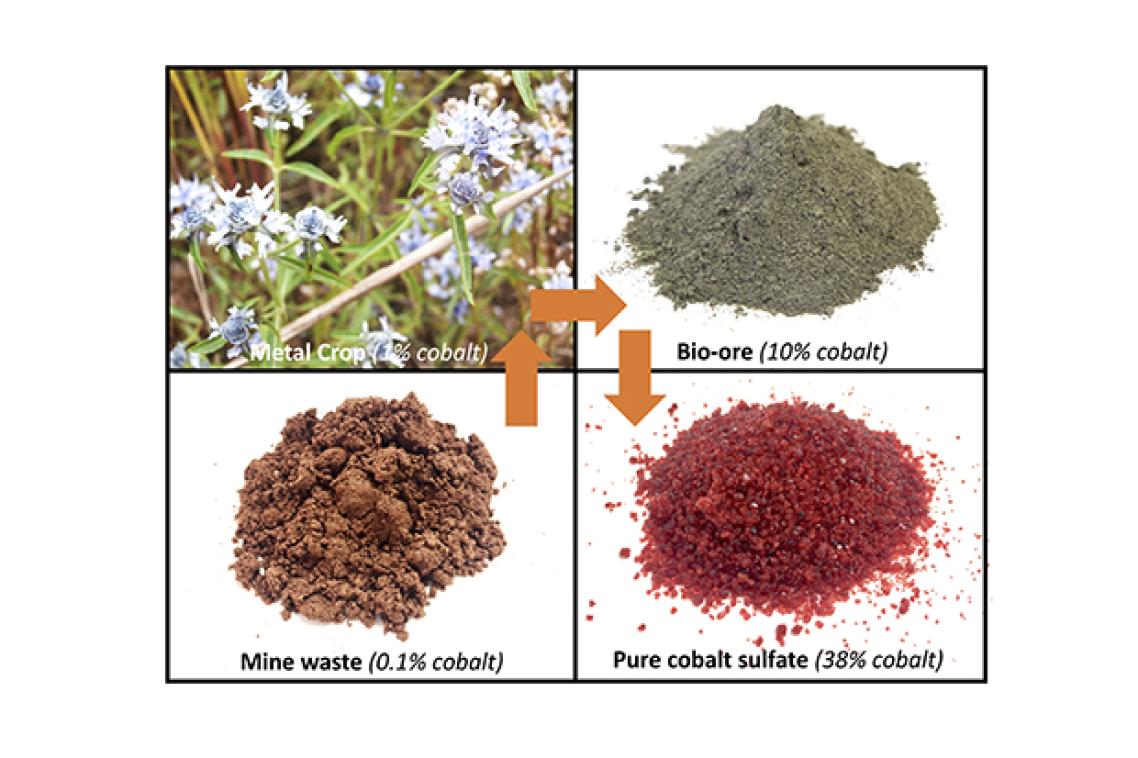
Increasingly scarce metals are being recovered from mining waste by University of Queensland researchers, who are making the most of native plants’ metal-absorbing nature.
Phytomining involves harvesting metals from the living tissue of a group of plants known as hyperaccumulators, which retain metals in high concentrations after absorbing them through their roots.
UQ’s Sustainable Minerals Institute (SMI) researcher Dr Philip Nkrumah has been developing the phytomining technology at the Centre for Mined Land Rehabilitation.
“Australia is one of the world's leading mineral resources nations with a number of mines around the country generating large quantities of processed mining wastes,” he said.
“These wastes, often stored in tailings facilities, contain valuable metals including cobalt, and represent some of the largest untapped resources globally.”
Tapping into this waste through phytomining not only creates additional revenue streams, it offers a sustainable solution to supply-side issues the industry is going to face.
“Cobalt consumption is projected to rise by between eight and ten per cent annually but supplies are likely to be limited by 2050, so the industry needs to identify additional sources,” Dr Nkrumah said.
“Phytomining is an innovative solution because it complements the global supply chain for critical minerals like cobalt while promoting the circular economy by utilising mining waste.
“Some species of plants can contain up to one per cent of cobalt or four per cent of nickel in their shoots, translating to more than 25 per cent metal in their ash which is dubbed ‘bio-ore'.
“The high purity of bio-sourced metals makes them especially suited for applications in the electrochemical industry, like producing rechargeable batteries.”
Intensive screening efforts in global herbaria had led to the discovery of more than 100 hyperaccumulator plants new to science.
Fieldwork at the Queensland’s MMG Dugald River Mine discovered zinc hyperaccumulation in the native legume Crotalaria novae-hollandiae, which opens up the possibility of zinc phytomining.
Media: Philip Nkrumah, p.nkrumah@uq.edu.au, +61 7 3346 4018; Connor Pound, c.pound@uq.edu.au, +61 7 3346 3258.
Related articles

What makes a winning environmental campaign? We studied six decades of activism to find out
