
Project to document climate change loss and grief in the Pacific Islands
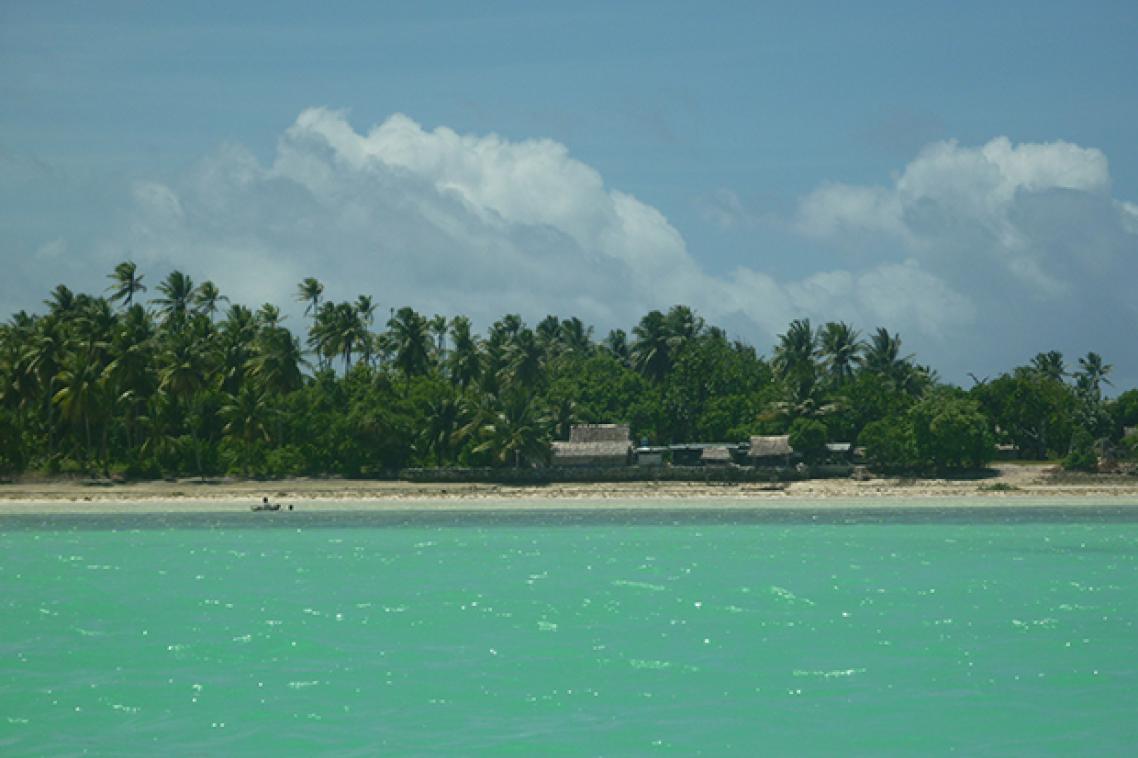
The way Pacific Island communities on the frontline of climate change are experiencing and working through loss and grief is being documented in a project that could become a ‘wake-up call’ for the rest of the world.
The University of Queensland human geography project will work with people in the Cook Islands, Marshall Islands and Vanuatu, and researchers are hopeful it can have a positive impact on those living across the Pacific.
UQ School of Earth and Environmental Sciences Future Fellow Dr Karen McNamara said communities are already experiencing loss and grief due to climate change.
“Listening deeply to their stories is a critical first step in building our understanding of these factors, which are often non-economic losses to life, health, culture, Indigenous knowledge and sense of place,” Dr McNamara said.
“If we know more, we can better plan for these losses and develop approaches to work through them by supporting healing and hope, and lessen their impact on people’s lives.”
The study will start next year, with extensive and in-depth fieldwork including interviews and workshops in each of the three countries with upwards of 200 participants from local communities and government.
“Various creative activities at the workshops will encourage participants to explore how grief might be worked through, individually and collectively,” Dr McNamara said.
“I’ll be partnering with local grassroots organisations who make up the project’s steering committee, including the Cook Islands National Council of Women, Jo-Jikum in the Marshall Islands and Further Arts in Vanuatu.”
Dr McNamara said that shining a spotlight on the plight of Pacific nations’ peoples would be a wake-up call for the rest of the world.
“We are often in denial about what we’re already losing from the impacts of climate change, whether it be the loss of species and places, changing seasons or the latest temperature record yet again being broken.
“We’re also in denial about what we will lose in the future, loss that we cannot even get our heads around, a huge ecological and social crisis.
“This research will better equip all of us to understand how to move from that denial, by exploring individual and collective mourning and grieving in the Pacific Islands.
“I hope we can be moved to take pragmatic action, fighting for nature, our ecological sustainment and health, and our human rights.”
The project also has a collaborative partnership with international leaders in loss and damage at the United Nations Framework Convention on Climate Change, University of Lund and Memorial University of Newfoundland.
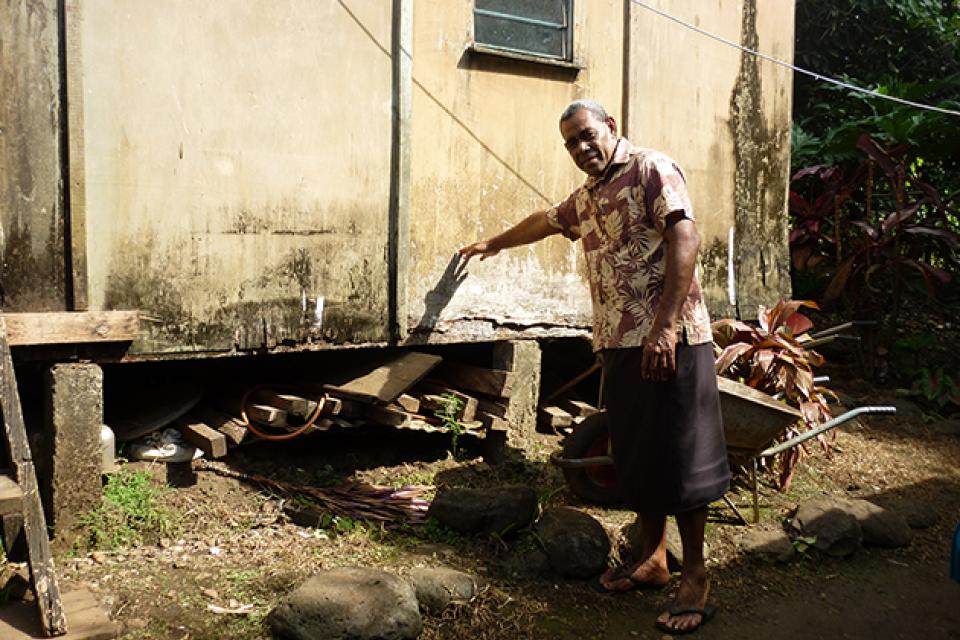
Pictured above: Turaga-ni-Koro (village headman) shows us where the last flood reached homes in Qeleni village, Taveuni, Fiji. (Credit: Karen McNamara)
Media: Dr Karen McNamara, karen.mcnamara@uq.edu.au, +61 403 438 342; Dominic Jarvis, dominic.jarvis@uq.edu.au, +61 413 334 924.
Related articles

‘Forever renting’ is common in New York, California and Europe. What lessons can we learn?
