
New shock tunnel making waves in hypersonic testing
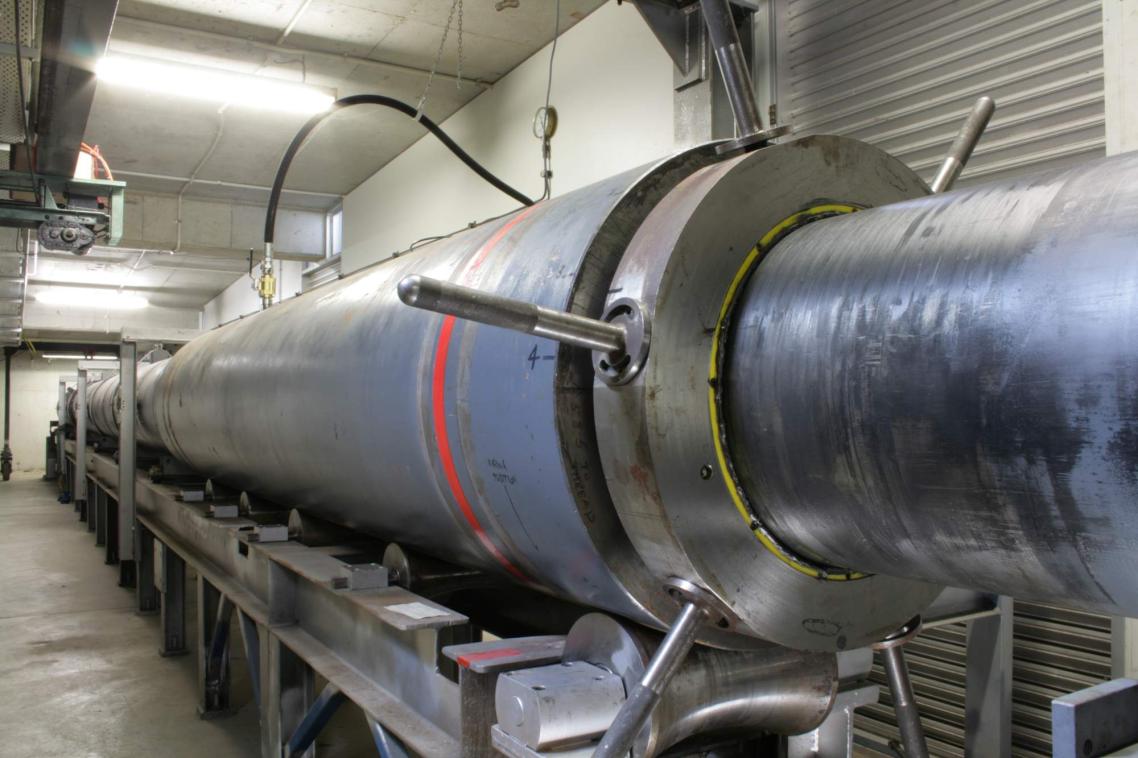
An upgrade of one of the largest expansion tube wind tunnels in the world will allow University of Queensland researchers to test larger scale vehicles at up to seven times the speed of sound.
Centre for Hypersonics researcher Dr David Gildfind said UQ’s large expansion tube facility X3, developed by Professor Richard Morgan, can now be reconfigured into a reflected shock tunnel with test time duration in excess of 10 milliseconds.
“That might not sound like a long time, but at these speeds, it more than triples what is now possible within Australia,” Dr Gildfind said.
“This new addition to our facility will allow us to test the type of vehicles that could one day travel from Australia to Europe in two hours.”
This reflected shock tunnel operating mode of X3 is known as X3R.
At the heart of the tunnel is a device called a free-piston driver, a concept invented by Australian Hypersonics Pioneer, the late Professor Ray Stalker.
Within that driver, in just a few hundred milliseconds, a 500mm diameter piston — weighing more than half a tonne — is accelerated down a 14-metre tube to nearly 500 kilometres per hour.
“The original X3 configuration is optimised for the most extreme flight speeds imaginable and can simulate planetary entry conditions well beyond 40,000 kilometres per hour, for about one millisecond,” Dr Gildfind said.
“With X3R, we operate the machine in a different way, which can extend the test time to over 10 milliseconds; while this restricts the maximum speed to around 8000 kilometres an hour, it’s this lower speed that will allow us to make big advancements in terrestrial hypersonic flight.”
“X3R is a transformational capability improvement for Australia, which makes it possible for researchers to investigate fundamental studies of hypersonic phenomena, of which we historically have a great legacy, at a larger scale,” he said.
“This has only been made possible by combining the expertise and resources of both UQ and the Department of Defence, Science and Technology.”
This development is the latest outcome of long-term research and educational collaboration in hypersonics between UQ and DST, covering hypersonic ground and flight testing and the development of transformational flight technologies.
The X3R facility will be relocated to a new DST laboratory at Eagle Farm in 2019/2020, which will become a focal point for National and International research partnerships in Hypersonic Technologies.
“This could lead to significant breakthroughs in hypersonic technologies in Australia, and will provide the vital infrastructure Australia needs to support our burgeoning space industry.”
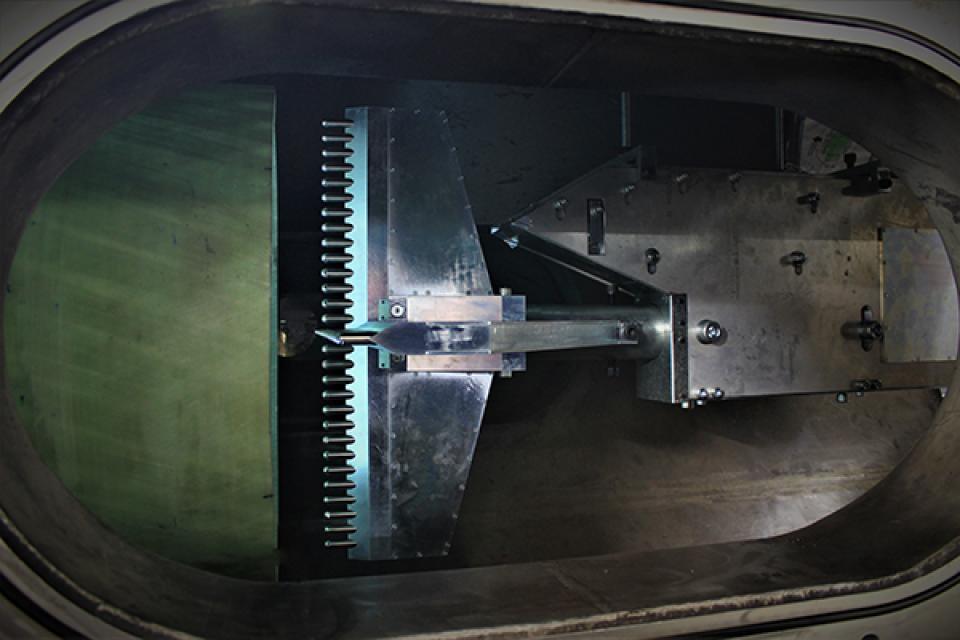
Image above left: Pitot rake to survey X3R's test flow.
Media: Centre for Hypersonics, Dr David Gildfind, d.gildfind@uq.edu.au, +61 412 834 266; EAIT Communications, Genevieve Worrell, g.worrell@uq.edu.au, +61 408 432 213.
Topics
Related articles

UQ to support development of mobile launcher for high-speed flight R&D
