
Large marine parks can save sharks from overfishing threat
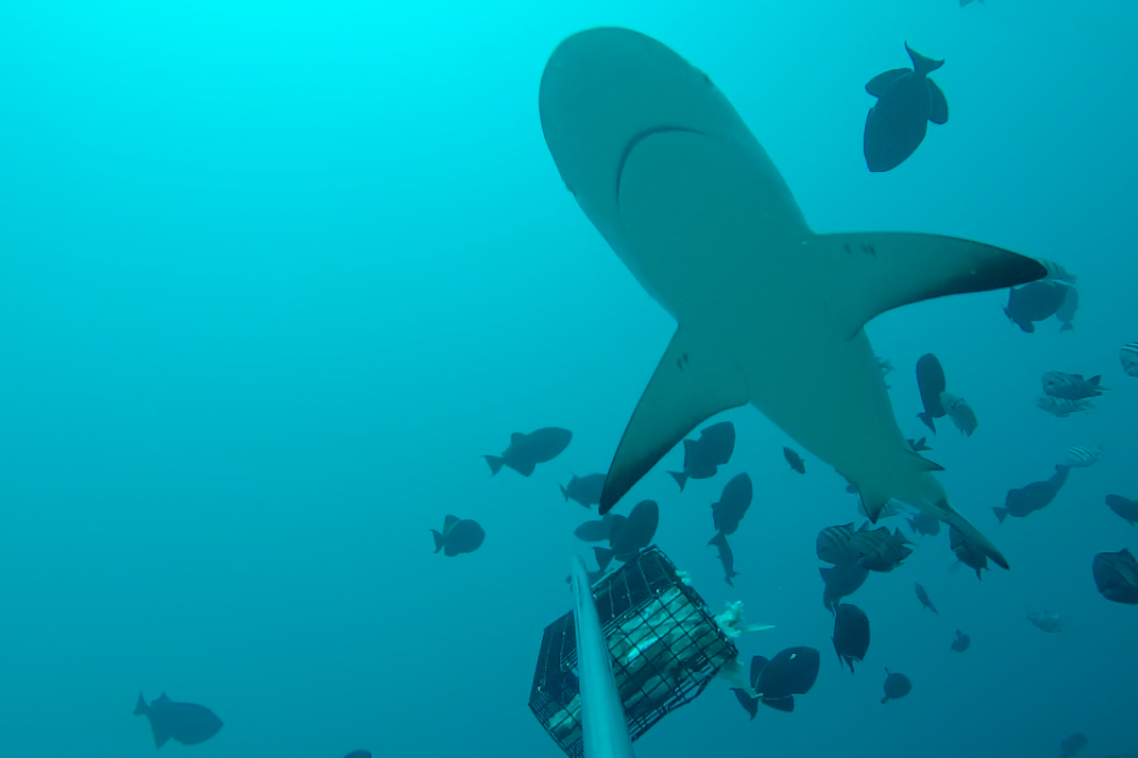
‘No-take’ marine reserves - where fishing is banned - can reverse the decline in the world’s coral reef shark populations caused by overfishing, according to an Australian study.
But University of Queensland, James Cook University (JCU) and University of Tasmania researchers found that existing marine reserves need to be much larger to be effective against overfishing.
UQ’s Dr Ross Dwyer said the study estimated that no-take reserves that extend between 10 and 50 kilometres along coral reefs can achieve significant improvements in shark populations.
“Existing protected areas on coral reefs would need to be enforced as strict no-take reserves and be up to five times larger to effectively conserve reef sharks,” Dr Dwyer said.
“Those in the Atlantic where reef sharks are generally less abundant would need to be on average 2.6 times larger than those in the Indian and Pacific Oceans.”
Species such as grey reef sharks have experienced severe population declines across parts of their distribution, largely due to their low fecundity, late age at sexual maturity, and high susceptibility to fishing pressure.
They are listed as Near Threatened in the International Union for Conservation of Nature's (IUCN) Red List of Threatened Species.
“This allowed us to predict the conservation benefits no-take reserves of different sizes could generate,” Dr Dwyer said.
JCU Professor Colin Simpfendorfer from James Cook University said shark populations were in trouble in most parts of the world.
“Finding ways to rebuild their populations is critical to ensuring our oceans remain healthy,” Professor Simpfendorfer said.
“This project is providing options for managers of coral reefs to address declines in shark populations which scientists know have occurred in many areas.”
Dr Nils Krueck from the University of Tasmania said researchers now have the ability to estimate conservation and fishery impacts of marine reserves much more precisely.
“Our results show that marine parks for reef sharks need to be large. But if reserves extend along 15 kilometres of coral reef, then fishing mortality can be reduced by fifty per cent,” Dr Krueck said.
The study, funded by the Shark Conservation Fund, is published in the journal Current Biology. (DOI: 10.1016/j.cub.2019.12.005)
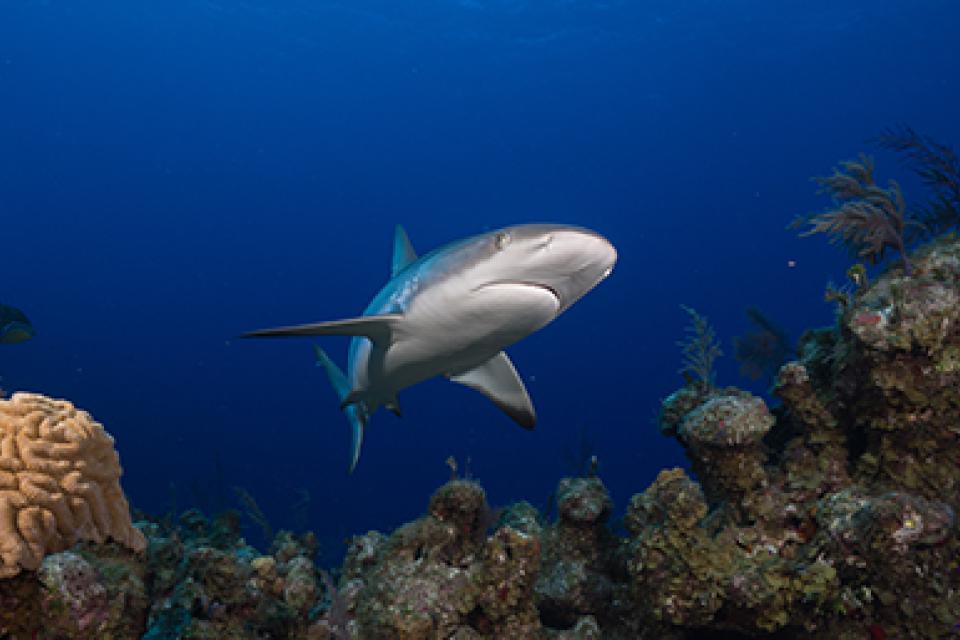
(Image above: Caribbean reef shark - credit Andy Mann)
Images for media are available at https://www.sharkraympa.org/news.
Media: UQ, Dr Ross Dwyer, ross.dwyer@uq.edu.au, +61 403 865 111; Dominic Jarvis, dominic.jarvis@uq.edu.au, +61 413 334 924. JCU, Professor Colin Simpfendorfer, colin.simpfendorfer@jcu.edu.au, +61 488 407963. University of Tasmania, Dr Nils Krueck, nils.krueck@utas.edu.au, +61 3 6226 8226.
Related articles

New data reveals how Australia’s threatened reptiles and frogs are disappearing – and what we have to do
