
Race to develop coronavirus vaccine
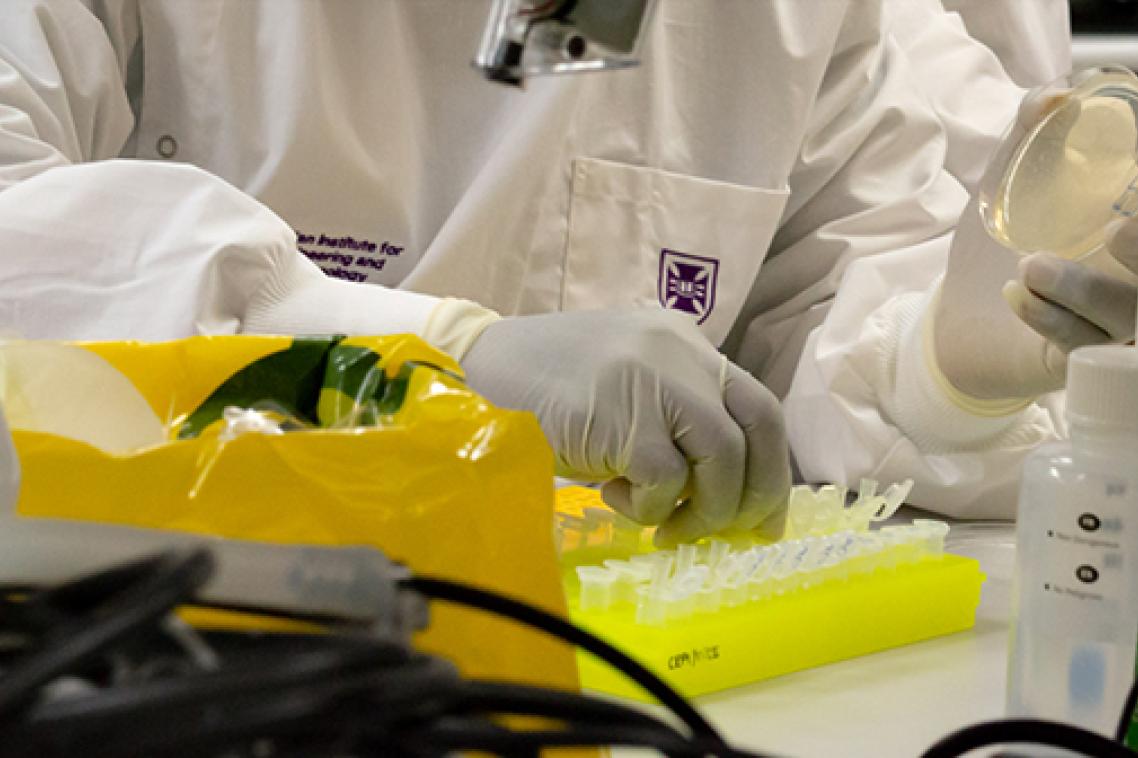
The University of Queensland has been asked to develop a vaccine for the recent coronavirus outbreak at unprecedented speed, using new technology.
The Coalition for Epidemic Preparedness Innovations (CEPI) has requested the University use its recently developed rapid response technology to develop a new vaccine, which could be available worldwide in as little as six months.
UQ Vice-Chancellor and President Professor Peter Høj AC said the fluidity of the current outbreak represented a significant challenge to the international community.
“There is a lot that is still unknown regarding how easily the virus is able to be transmitted between humans,” he said.
“Working with CEPI, The University of Queensland is using its vaccine technology to respond to this global health challenge.”
Head of University's School of Chemistry and Molecular Biosciences, Professor Paul Young said The University of Queensland had novel technology for the rapid generation of new vaccines from the knowledge of a virus’s genetic sequence information.
“The team hopes to develop a vaccine over the next six months, which may be used to help contain this outbreak,” he said.
“The vaccine would be distributed to first responders, helping to contain the virus from spreading around the world.”
Dr Keith Chappell describes the Vaccine Pipeline from The University of Queensland in 2019.
Dr Keith Chappell, from UQ’s School of Chemistry and Molecular Biosciences and the Australian Institute for Bioengineering and Nanotechnology said the key to the speedy development of this potential vaccine was the 'molecular clamp' technology, invented by UQ scientists and patented by UniQuest.
"The University of Queensland's molecular clamp technology provides stability to the viral protein that is the primary target for our immune defence," he said.
“The technology has been designed as a platform approach to generate vaccines against a range of human and animal viruses and has shown promising results in the laboratory targeting viruses such as influenza, Ebola, Nipah and MERS coronavirus.”
Images, captions, the full press conference and other video available via Dropbox.
Media: UQ communication, communications@uq.edu.au, +61 73365 1120; Tom Matthews, tom.matthews@uq.edu.au, +61 468 746 070.
Related articles

Global guidelines needed to address inequities in endometriosis care
