
Stone tools reveal humans survived a volcanic super-eruption
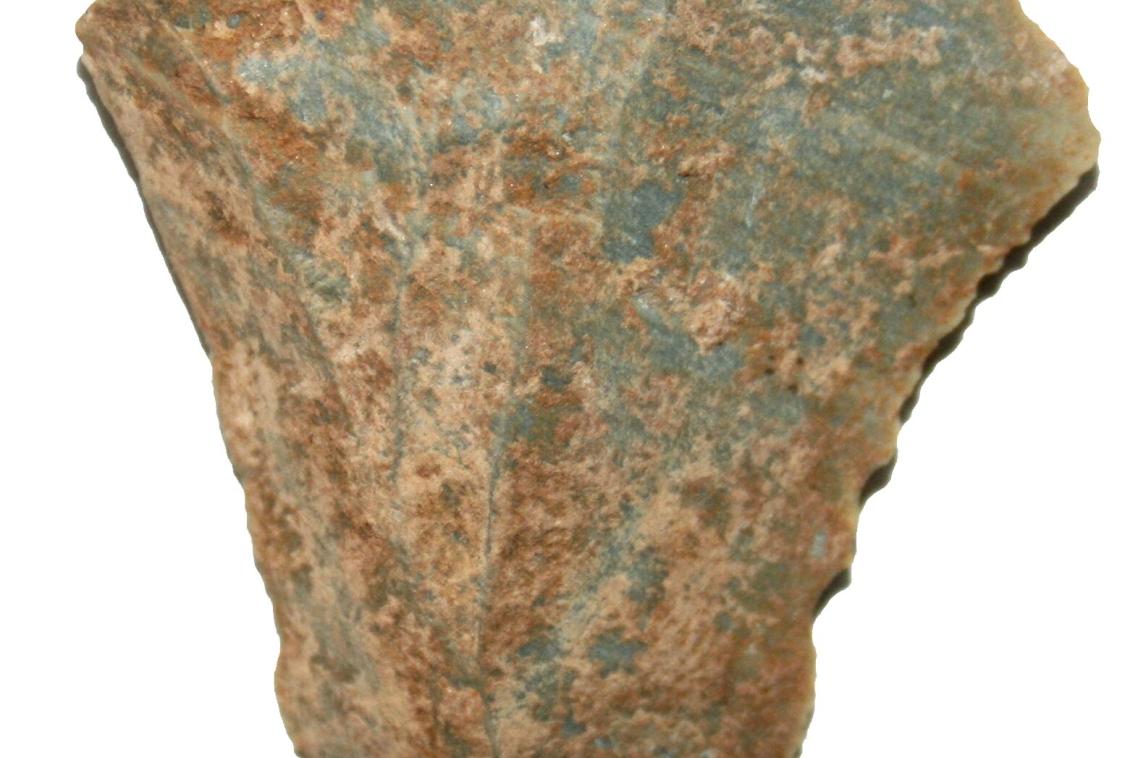
The recent discovery of stone tools in India has revealed that humans survived and coped with one of the largest volcanic events in human history.
The intensity and impact of the historic Toba super-eruption in Indonesia sparked a long-running debate among researchers involving climatic, geological, archaeological and genetic evidence, until now.
In a study released in Nature today, findings suggest Homo sapiens actually survived this natural disaster 74,000 years ago.
Lead author Professor Chris Clarkson from The University of Queensland said that populations at Dhaba in India were using stone tools that were similar to the toolkits being used by Homo sapiens in Africa at the same time.
“These toolkits were present at Dhaba before and after the Toba super-eruption, indicating that populations survived the so-called catastrophe,” Professor Clarkson said.
Previous claims stated that the eruption caused a ‘volcanic winter’ of around six years duration, resulting in a 1,000 year-long cooling of the Earth’s surface and the near extinction of our own species.
“A prominent theory is that the few human survivors in Africa coped by developing more sophisticated social, symbolic and economic strategies, in turn enabling them to repopulate Africa and then migrate into Europe, Asia and Sahul by 60-50,000 years ago,” he said.
Archaeological evidence from Africa, India and Asia supported the idea that the Toba eruption had minimal effects on humans and did not cause a population bottleneck.
“In fact, archaeological sites in southern Africa show human populations thrived following the Toba super-eruption,” Professor Clarkson said.
“Climate and vegetation records from Lake Malawi in East Africa likewise show no evidence for a volcanic winter at the time of the eruption.”
“In Sumatra, close to the eruption itself, colleagues found Homo sapiens teeth which dated back to 73,000-63,000 years ago.
“This indicates Homo sapiens was living in Sumatra in a closed canopy rainforest environment soon after the eruption,” Professor Clarkson said.
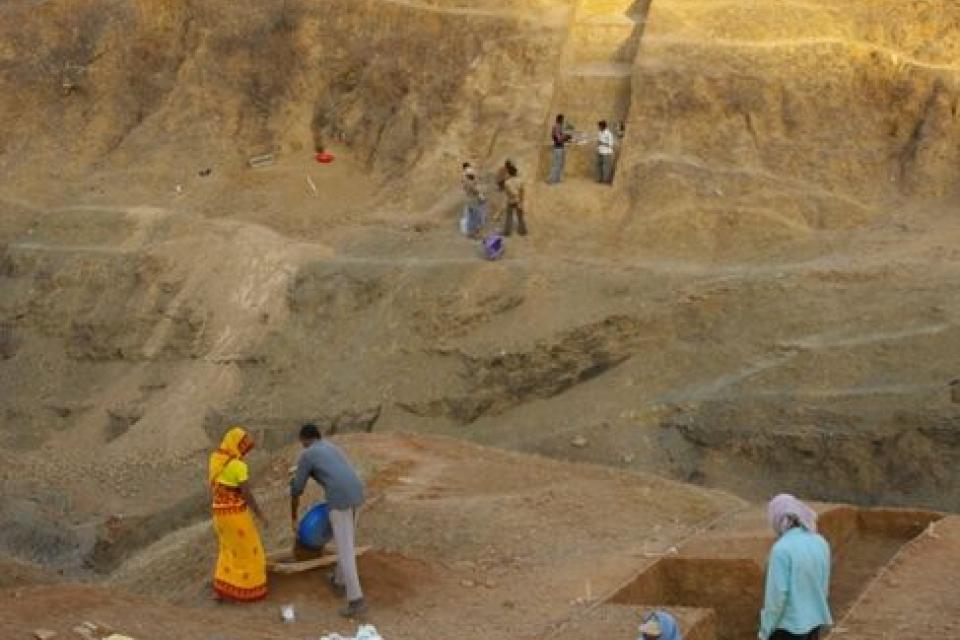
The study reports on a unique 80,000 year-long record from the Dhaba archaeological site in Middle Son Valley of northern India.
Principal investigator of the project Professor J.N. Pal said the site filled in a major chronological gap.
“Although Toba ash was first identified in the Son Valley back in the 1980s, until now we did not have associated archaeological evidence,” Professor Pal said.
These new findings suggest that small bands of hunter-gatherers were adaptable in the face of climate change and contribute to a revised understanding of the global impact of the Toba eruption.
“While the Toba super-eruption was certainly a colossal event, this natural disaster may only have had a minor impact on human populations living in India at the time,” Professor Clarkson said.
These findings follow on from a paper published in Science in 2007 and are part of a long-term project on the impact of the Toba eruption and arrival of modern humans in India.
This was a joint study with contributors from The University of Queensland, the University of Wollongong, Max Planck Institute, Australian National University, the University of Allahabad and other international colleagues.
Media: Professor Chris Clarkson, c.clarkson@uq.edu.au, +61 7 33653235; Professor J.N. Pal, jnpal@hotmail.com, +91 9415636643.
Related articles

UQ’s QARC wins at Engagement Australia Awards
