
The deep ocean is warming slowly – but dramatic changes are ahead
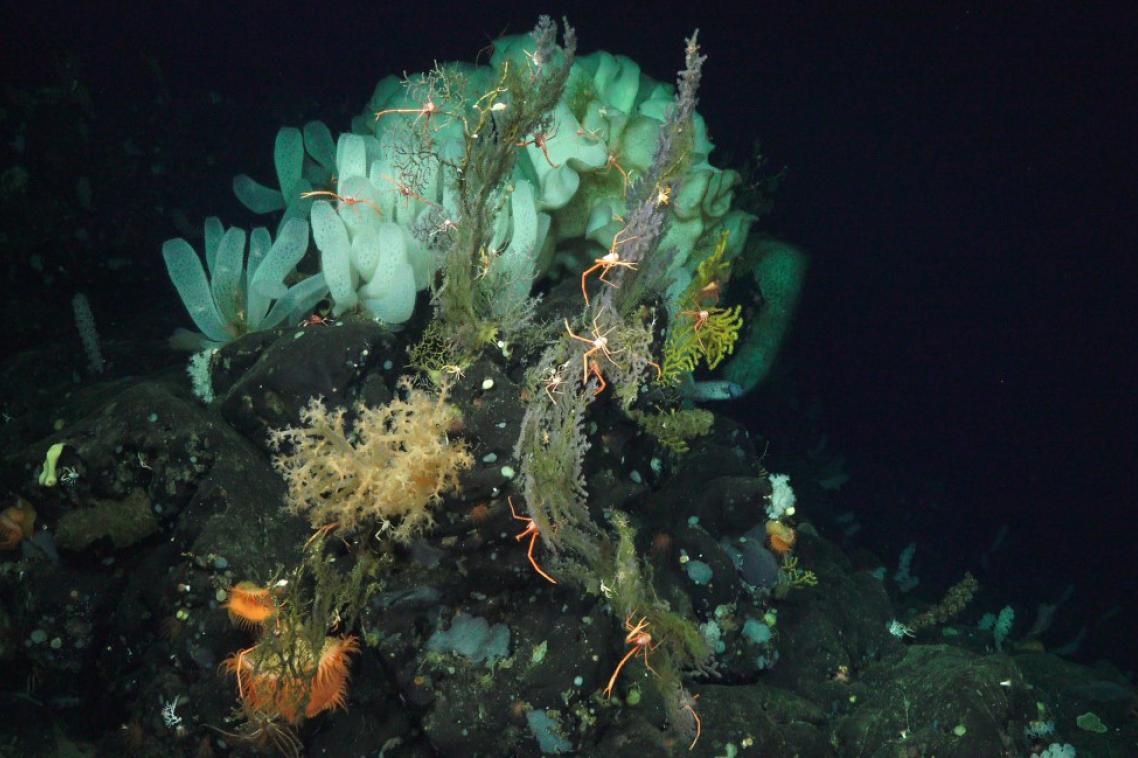
The world’s deep oceans are warming at a slower rate than the surface, but it’s still not good news for deep-sea creatures according to an international study.
The research, led by University of Queensland PhD student Isaac Brito-Morales, looked at how ocean life was responding to climate change.
“We used a metric known as climate velocity which defines the likely speed and direction a species shifts as the ocean warms,” Mr Brito-Morales said.
“We calculated the climate velocity throughout the ocean for the past 50 years and then for the rest of this century using data from 11 climate models.
“This allowed us to compare climate velocity in four ocean depth zones – assessing in which zones biodiversity could shift their distribution the most in response to climate change.”
The researchers found climate velocity is currently twice as fast at the surface because of greater surface warming, and as a result deeper-living species are less likely to be at risk from climate change than those at the surface.
“However by the end of the century, assuming we have a high-emissions future, there is not only much greater surface warming, but also this warmth will penetrate deeper,” Mr Brito-Morales said.
“In waters between a depth of 200 and 1000 metres, our research showed climate velocities accelerated to 11 times the present rate.
Senior researcher UQ’s Professor Anthony Richardson said the team believed action must be taken to aggressively manage carbon emissions.
“Significantly reducing carbon emissions is vital to control warming and to help take control of climate velocities in the surface layers of the ocean by 2100,” he said.
“But because of the immense size and depth of the ocean, warming already absorbed at the ocean surface will mix into deeper waters.
“This means that marine life in the deep ocean will face escalating threats from ocean warming until the end of the century, no matter what we do now.
“This leaves only one option – act urgently to alleviate other human-generated threats to deep-sea life, including seabed mining and deep-sea bottom fishing.
“The best way to do this is to declare large, new protected areas in the deep ocean where damage to ocean life is prohibited, or at least strictly managed.”
The research has been published in Nature Climate Change (DOI: 10.1038/s41558-020-0773-5).
The global team included UQ’s Dr Carissa Klein, UQ PhD candidate Mr Nur Arafeh-Dalmau, Professor David Schoeman from the University of the Sunshine Coast, Hokkaido University’s Assistant Professor Jorge García Molinos, and Professor Michael Burrows from the Scottish Association for Marine Science. Additional collaborators included members of the AquaMaps team.
Image above from Schmidt Ocean Institute
Media: Mr Isaac Brito-Morales, i.britomorales@uq.edu.au, +61 414 670 216, @isaaksonbm; Professor Anthony Richardson, Anthony.Richardson@csiro.au, +61 467 771 869; Dominic Jarvis, UQ Communications, dominic.jarvis@uq.edu.au, +61 413 334 924.
Related articles

Turning up the heat on chickpea yield
