‘Liquid fat’ to help incurable childhood disease
A dietary fat supplement could improve the prognosis and quality of life for the 40 Australian children living with the incurable degenerative disease Ataxia-telangiectasia (A-T).
A team of physicians and scientists from The University of Queensland and Wesley Medical Research will assess the efficacy of the supplement in a clinical trial, with the help of a $2.46 million federal government grant.
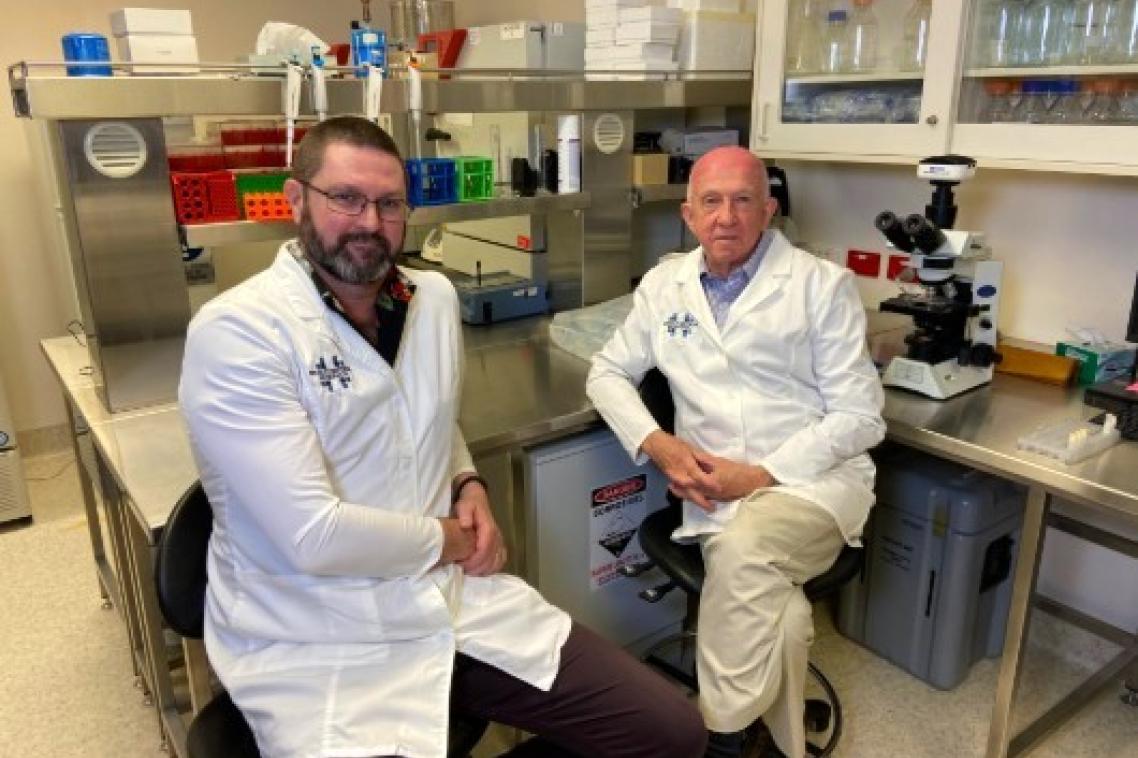
Researcher and paediatrician Professor Dave Coman said symptoms of A-T were described as 'the worst parts' of cerebral palsy, muscular dystrophy and cystic fibrosis combined, with children also at a higher risk of cancer and lung disease.
"Over 10 years of research into A-T has been quietly progressing at UQ, The Wesley Hospital, and Queensland Children’s Hospital in an attempt to find out why healthy cells die more readily under metabolic stress in people with A-T," Professor Coman said.
"Our previous research found a reduction in how calcium gets through to the mitochondria, which contributes to how the disease worsens and progresses over time.
“Younger children will begin walking, albeit wobbly, but by adolescence they will be wheelchair-bound; it’s a quick, degenerative and awful process.”
Professor Coman’s clinical trial is based on the idea that the liquid fat supplement plugs into the mitochondria to kick-start the cells and stop them from dying under stress.
Up until now, the theory had only been measured anecdotally in individual children’s biomarkers.
"We now have the means to run a clinical trial to test if the supplement is clinically useful for treating A-T and can stimulate anaplerosis," Professor Coman said.
Professor Coman said that if the supplement was shown to be effective, it would be a low-cost treatment with minimal side-effects.
The rarity of the condition means it has been difficult to attract funding to investigate new treatment options or to interest pharmaceutical companies.
UQ Centre for Clinical Research scientist Emeritus Professor Martin Lavin, who has been studying the genetic disorder for the past 40 years, said the clinical trial would build on his existing research.
“Over the past 10 years my research has linked closely with the A-T Clinic working with UQ professors Peter Sly and Claire Wainwright to investigate respiratory disease in children with A-T and also on nutritional deficiency in patients, with Professor Sandra Capra,” Professor Lavin said.
“Our recent research provides further evidence that A-T can be considered at least in part as a ‘mitochondrial disease’ and that all aspects of the mitochondrial defect can be corrected by the ‘liquid fat’ in A-T cells in the laboratory.
“I have great expectations for its use in patients with A-T.”
Wesley Medical Research General Manager, Dr Claudia Giurgiuman said an experienced clinical trials nurse would assist Professor Coman and the study’s metabolic dietitian.
“Wesley Medical Research has considerable experience working with families from all around Australia who are living with A-T,” Dr Giurgiuman said.
“We are also looking forward to hosting our bi-annual A-T Super Clinics again, for this special group of young Australians.
“In these overwhelming circumstances, having a sense of community is so important for these families and the A-T Super Clinics enable much-needed information, emotional support and an overall sense of hope.”
This research has been funded under the Medical Research Future Fund's Rare Cancers, Rare Disease and Unmet Needs grants scheme.
Media: UQ Communications, communications@uq.edu.au, +61 7 3364 1120.
Watch the coverage on ABC News here.
Related articles
UQ experts recognised for national impact