
Giant weeds slain by UQ innovation
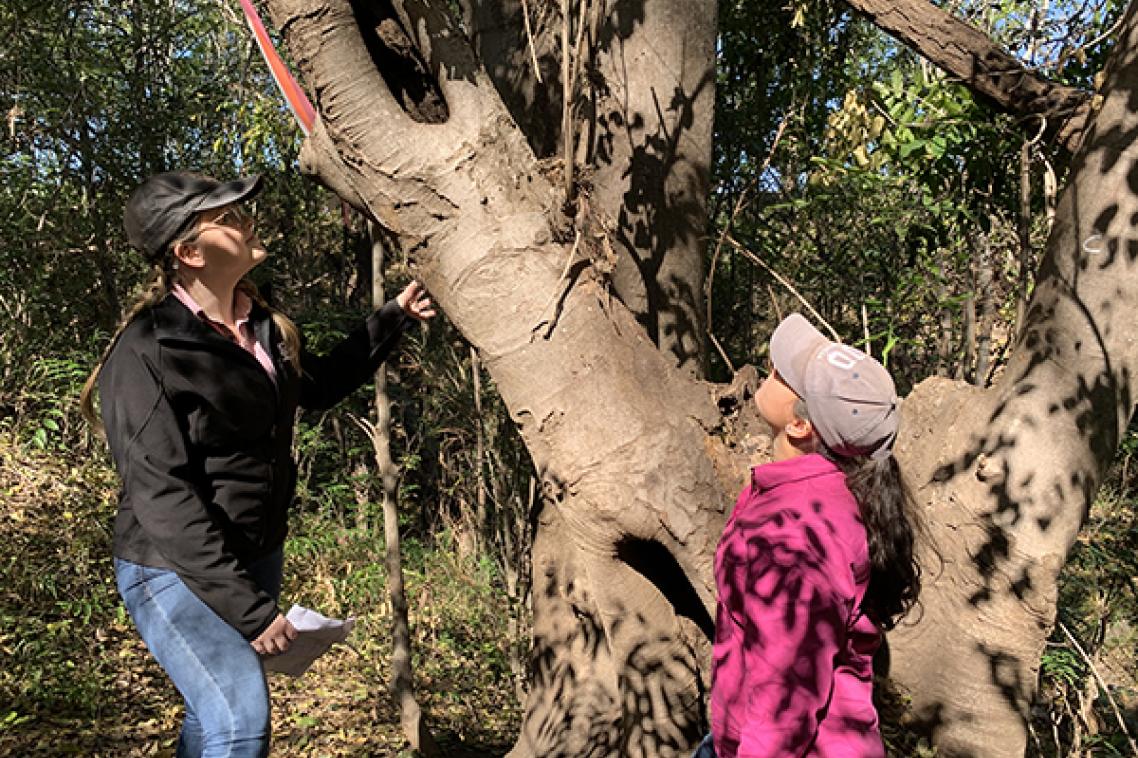
Giant, invasive Chinese elm trees with a trunk circumference of up to three metres are being swiftly slain thanks to a new herbicide technology developed by The University of Queensland and BioHerbicides Australia.
UQ PhD candidate Ciara O’Brien said the enormous trees, also known as celtis, were native to eastern Asia, but were highly problematic across eastern Australia.
“Chinese elms are an environmental weed that invade bushland, particularly along riparian zones like creeks and riverbanks,” Ms O’Brien said.
“They harm our native vegetation by aggressive overcrowding and shading – their dense and spreading canopy prevents the light reaching existing, native plants and makes it impossible for young plants to become established.”
Last year, Ms O’Brien began trials to manage vegetation along Franklin Vale Creek near Grandchester, Queensland, but said existing techniques to keep these enormous trees in check were not ideal.
“You could cut them down with a chainsaw and then paint or spray the stump with herbicide,” Ms O’Brien said.
“Or you could ‘frill and fill’ – using an axe to make shallow cuts around the stem or ‘drill and fill’ to make holes around the stem and then pour herbicide into the cuts or the holes.
“The issue is that these methods are problematic, as the celtis trees grow among the native vegetation we’re hoping to protect.
“Celtis trees are often near a creek bank or river, so poorly managed application of herbicides can lead to contamination of soil and water and harm adjacent native trees and vegetation downstream.
“Also, the labour involved is significant, and you often need to carry heavy equipment to do the job –particularly backpack sprayers, which require water and possibly chainsaws.”
But for Ms O’Brien, tackling the problem was a piece of cake, as she had access to Di Bak chemical herbicide capsules developed in Australia by UQ and BioHerbicides.
The technology is based on the fungal bioherbicide Di Bak Parkinsonia, created by UQ plant pathologist Professor Victor Galea and Dr Naomi Diplock.
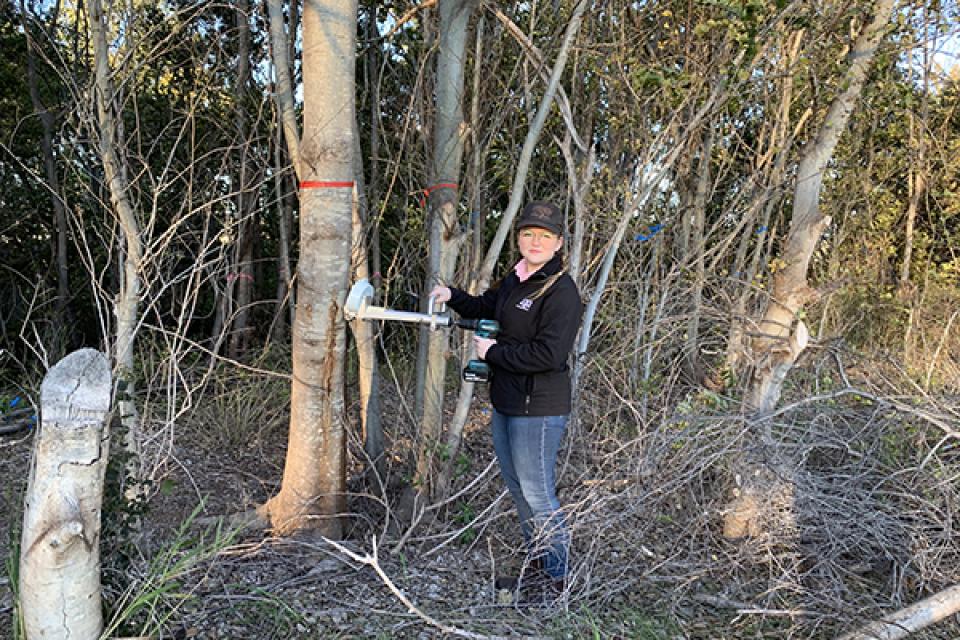
“This new invention is the formulation of conventional woody weed herbicides into a cellulose capsule that is simply implanted into the trunk,” Ms O’Brien said.
“The dose used is at least 30 per cent lower than that of other methods and is sealed into the tree preventing environmental escape.
“The application equipment – called the Injecta – is also lightweight and straightforward, and it’s safer and more time effective for the person treating the tree, with significantly less personal protective equipment needed.
“Landholders and council staff we’ve worked with are rather excited by it all – it’s fast, easy and effective.”
In addition, fellow UQ student Brooke Johnstone is working in partnership with the Lockyer Valley Regional Council, developing a best practice guide for use of the product across the region.
Image, UQ’s Ciara O’Brien using Injecta equipment to slay a Chinese elm tree.
Related articles

White wine drinkers help pinpoint what’s missing in no and low alcohol drinks
