Skip to menu Skip to content Skip to footer
News

Brisbane’s love of Queenslanders
30 July 2020
Decorative

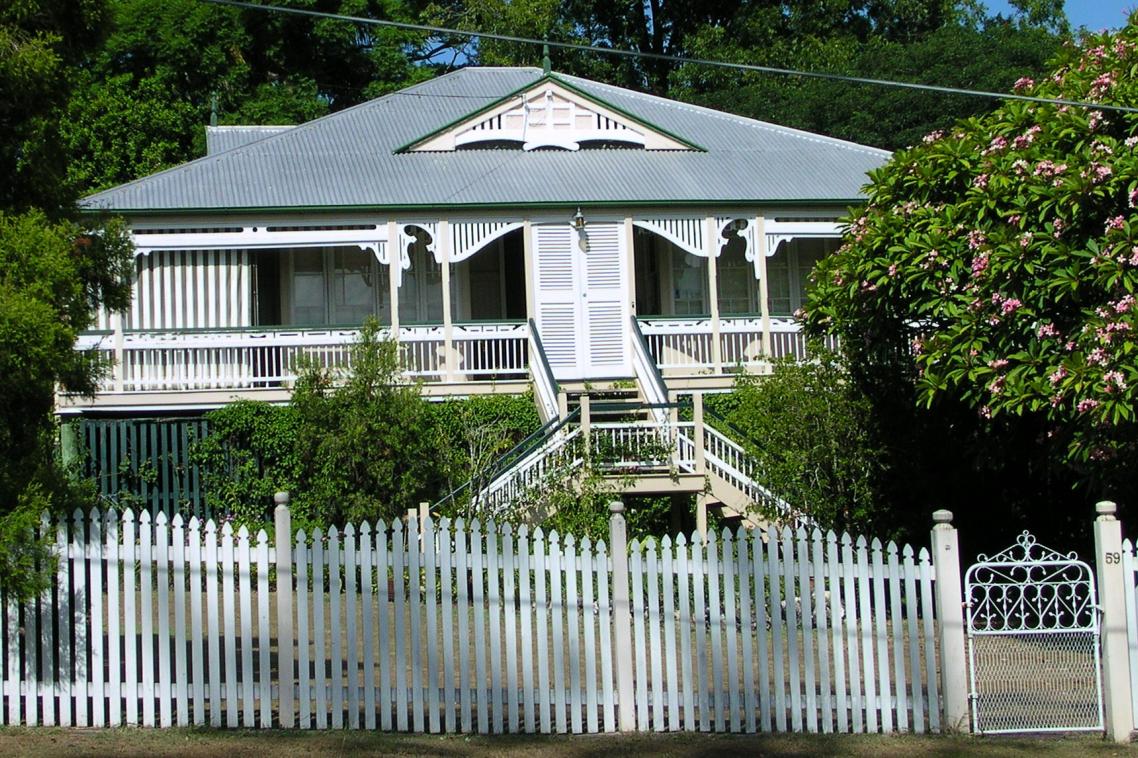
Brisbanites love their Queenslander-style homes, valuing them for their history, aesthetic pleasure and climatic comfort, according to University of Queensland research.

UQ’s Dr Dorina Pojani and Vanessa Neilsen set out to solicit the views of Brisbane residents regarding the preservation of the houses, which were built in the late nineteenth century to the early twentieth century.

“Through in-depth interviews with 20 participants, we sought to determine whether owner-occupiers of Queenslanders value this heritage and why,” Dr Pojani said.

“We wanted to know whether they’re actively engaged in the protection of this heritage, and if so, what their motivations are.

“What we found is that Queenslanders are valued on multiple levels.

“The love of beauty and craftsmanship has motivated most interviewees to purchase a Queenslander.

“Several interviewees cited a desire to recreate the past in place, and strengthen historical connections and conceptions of place – in planning circles, we call this ‘placemaking’.

“Finally, the value of climate-friendly design in Queenslanders is being rediscovered.

“Interviewees report loving the natural light and airflow of their homes, the versatile timber framing and the deep verandas, which keep the houses cool in summer and can also be used for sleeping during hot nights.”

While maintaining an older home involves a substantial amount of time and money – available mostly to the middle-class and middle-aged groups – this is viewed as fair, considering the benefits of living in a Queenslander.

“Brisbane residents truly love their Queenslanders and they’re very protective of the role of the Queenslander in the urban community,” Dr Pojani said.

“Residents believe that the local government can and should do more to protect what is left of the historical housing stock.

“However, one portion of the public only cares to preserve the outer shells of heritage homes, while extensively renovating and modernising interiors.

“And a concern for heritage is sometimes used as a screen for antagonism toward any type of development, a result of not-in-my-backyard sentiment, or ‘NIMBYism’.

“As a growing city, Brisbane needs to navigate a fine line between increasing the supply of apartment units and preserving the character of – traditionally lower-density – local neighbourhoods.”

The research has been publishing in the Journal of Housing and the Built Environment (DOI: 10.1007/s10901-020-09767-z).

Media: Dr Dorina Pojani, d.pojani@uq.edu.au, +61 473 989 847; Dominic Jarvis, dominic.jarvis@uq.edu.au, +61 413 334 924.

Related articles

Three researchers wearing blue protective lab gowns stand among rows of potted chickpea plants inside a controlled-environment plant research facility.

Turning up the heat on chickpea yield

A University of Queensland study has outlined a practical pathway for accelerating the development of heat adapted chickpeas using data from new ‘omic’ technologies. PhD candidate Callum Jamie said the suite of technologies offered tremendous opportunities to understand how a complex trait like heat tolerance works. “The narrow genetic diversity in the elite chickpea gene pool has limited conventional breeding’s effectiveness for stress tolerance,” Mr Jamie said. “These technologies have improved our capacity to dissect trait architecture and phenotype secondary traits but their use in chickpeas has been limited.” The technologies include genomics, epigenomics, transcriptomics, proteomics, metabolomics, phenomics and enviromics, and help provide a comprehensive picture of biological systems. Epigenomics helps understand what controls gene activity; transcriptomics considers gene expression; proteomics protein production; metabolomics looks at biochemical processes; phenomics observes traits; and enviromics considers environmental factors influencing outcomes. Mr Jamie said previous studies had focused on just 1 to 2 -omic datasets, a small number of genotypes, and single tissues. This has meant it was hard to infer what results meant for trait architecture and mechanisms and the ability to extrapolate the information to breeding populations was limited. There have also been challenges around cost, scalability and integrating very different types of data to make the technologies useful. To overcome the hurdles, Mr Jamie’s research at the Queensland Alliance for Agriculture and Food Innovation has resulted in a proposed staged approach. It would start with genomic prediction and phenotyping, before adding -omic layers as costs fall and unknowns were resolved. “These technologies are novel and we still don’t know which information provides added value and how best to integrate all of this data to achieve an outcome,” Mr Jamie said. His PhD is supported by the Grains Research and Development Corporation (GRDC) and the International Research Training Group (IRTG) Accelerating Crop Genetic Gain and is aligned to a project which aims to fast-track the development of chickpea varieties adapted to high temperatures. Project leader Dr Millicent Smith said heat stress causes severe yield implications through flower and pod loss, reduced pollen viability and impaired grain filling. “Late sown chickpea is particularly in the firing line across most of Australia's crop in southern Queensland and northern New South Wales,” Dr Smith said. “We want to ensure that Australian growers maintain their competitive edge. “New varieties with improved genetics to cope with heat stress are essential for the future. “This work, suggesting a staged approach to utilising the new -omic technologies, is an exciting frontier.” The research was published by Food and Energy Security. Callum Jamie’s PhD is supported by the Grains Research and Development Corporation (GRDC) and the International Research Training Group (IRTG) Accelerating Crop Genetic Gain.
15 October 2026
Close-up photograph of a red-bellied black snake coiled across pale, weathered wood. The snake has glossy black scales on its back and vivid red coloration along its sides and underside. The image highlights the texture of the scales and the contrast between the dark body and the light wood background.
Analysis

Deadly fungi are harming Australia’s wild reptiles. This is how to stop the spread

With spring underway and the weather warming, reptiles are on the move in suburbs, parks and bushland across Australia. Snake catchers and wildlife carers are responding to calls for help, and reptile enthusiasts – known as “herpers” – are heading outdoors in search of their next sighting.
13 October 2026

Media contact

Subscribe to UQ News

Get the latest from our newsroom.