
Collaboration is key to rebuilding coral reefs
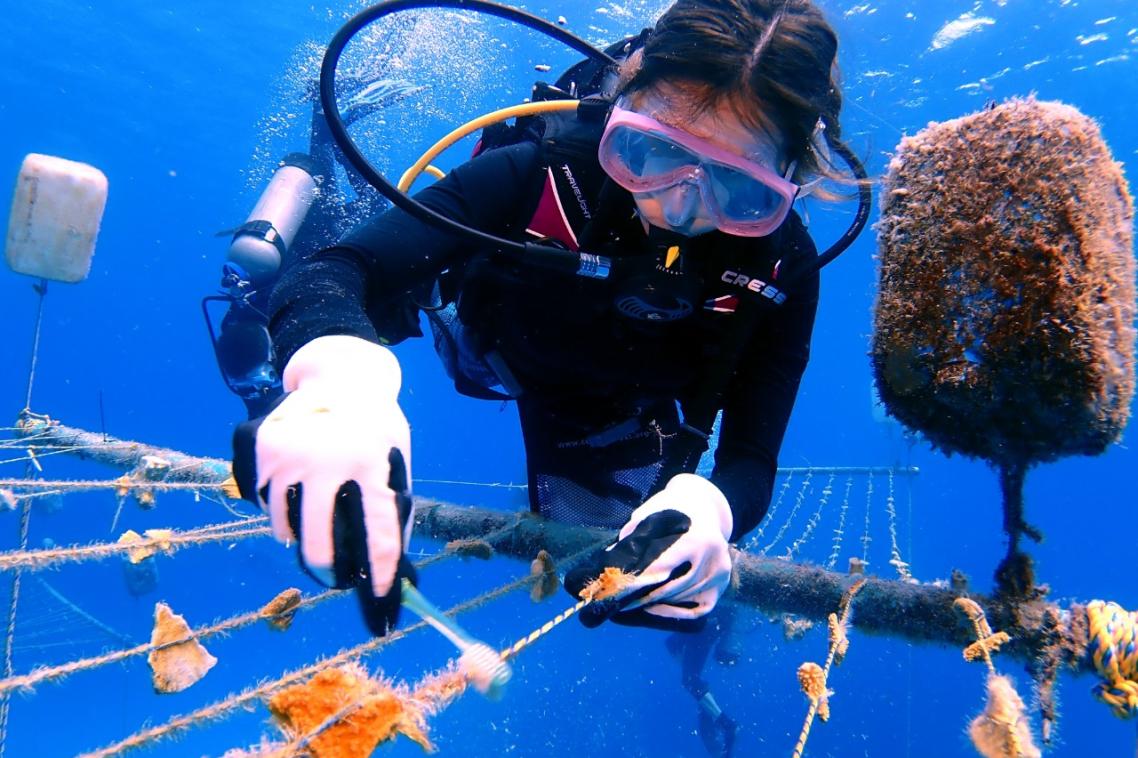
The most successful and cost-effective ways to restore coral reefs have been identified by an international group of scientists, after analysing restoration projects in Latin America.
The University of Queensland’s Dr Elisa Bayraktarov led the team that investigated 12 coral reef restoration case studies in five countries.
“Coral reefs worldwide are degrading due to climate change, overfishing, pollution, coastal development, coral bleaching and diseases,” Dr Bayraktarov said.
“Coral reef restoration – or rebuilding what we have lost – may become critical, especially for coral species that are threatened with extinction.
“Much of this work is led by environmental non-Government organisations (ENGOs), tourism operators, community groups, national resource management groups and governments who rarely publish their great depth of knowledge.
“So we decided to bridge the gap between academia, ENGOs and other groups that restore coral reefs.”
The researchers analysed the motivations and techniques used for each project, providing estimates on total annual project cost per unit area of reef restored, project duration and the spatial extent of interventions.
The team found the most successful projects had high coral survival rates or an increase in coral cover, but that they also offered socioeconomic benefits for their surrounding communities.
“Projects that train local fishermen or recreational divers to participate in restoration, or engage with dive operators or hotels to support the maintenance of the coral nurseries, were much more effective and long-lived,” Dr Bayraktarov said.
“We also found that coral reef restoration efforts in Latin American countries and territories were cheaper than previously thought – with the median cost of a project around US$93,000 (~AUD$130,000) to restore one hectare of coral reef.
“And best of all, an analysis of all the studied projects revealed a high likelihood of overall project success of 70 per cent.”
Co-author Dr Phanor Montoya-Maya, director and founder of the Colombian-based organisation Corales de Paz, said he was excited about the project’s collaborative nature.
“Twenty-five Latin-American coral reef restoration scientists and practitioners from 17 institutions in five countries worked on this research,” he said.
“We wanted to showcase the efforts of Spanish-speaking countries that depend on their local coral reefs to the global coral reef restoration community.
“And to share the diversity of objectives, techniques, tools used, and methods to measure success in Latin America to encourage others to carry out similar work.
“We’re providing critical project information – such as total annual project cost per unit area of reef restored, spatial extent of restored site and duration – on how to best save our degraded reefs.
“Collaboration and communication is helping make their futures brighter.” The research has been published in PLOS One (DOI: 10.1371/journal.pone.0228477). See a full list of supporting organisations.
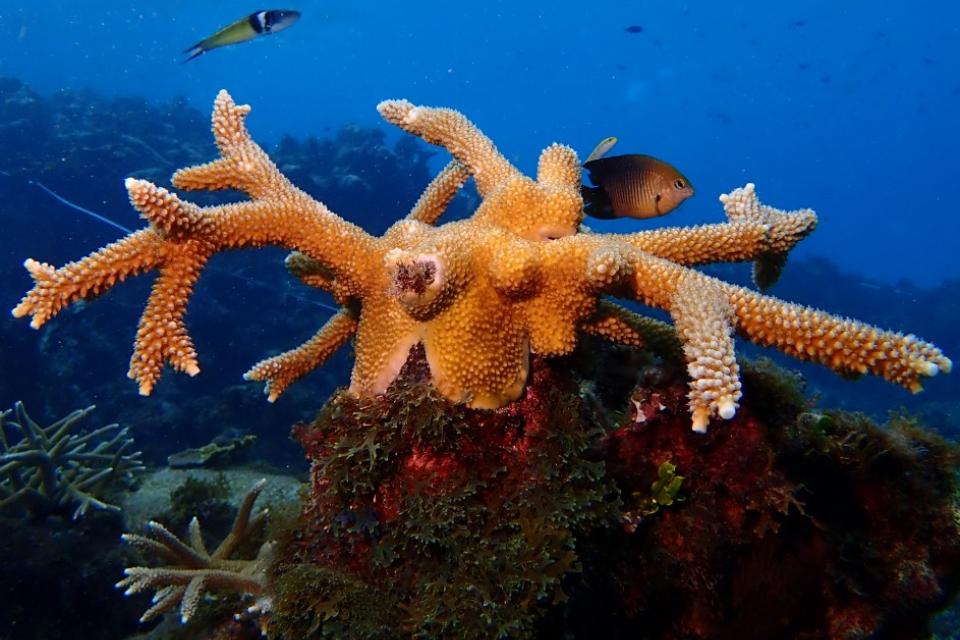
Image (above): A fully-grown Acropora sp. coral, which has been grown in a nursery and is now thriving at the reef of San Andres, Colombia. Photo: Corales de Paz.
Contact: Dr Elisa Bayraktarov, e.bayraktarov@uq.edu.au, +61 401 676 881; Dominic Jarvis, dominic.jarvis@uq.edu.au, +61 413 334 924.
Related articles

A new way to navigate tough land and water use decisions
