Skip to menu Skip to content Skip to footer
News

Students find sweet positives in carbon-negative hydrogen
23 October 2020
Decorative

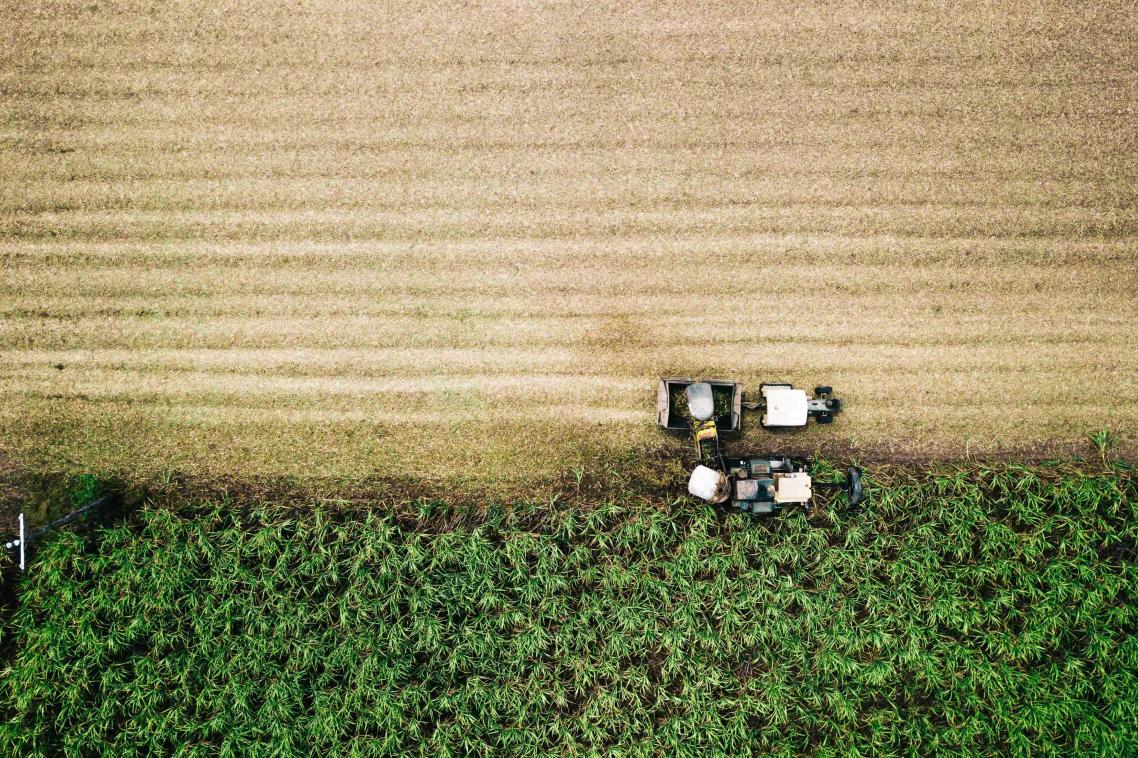
Final-year chemical engineering students at The University of Queensland are investigating how sugarcane can be used as a clean energy source to create hydrogen.

Professor Damien Batstone said bagasse and other agricultural residues were an abundant resource that could generate “green” or carbon-negative hydrogen at scale.

“One hundred and fifty students in 36 teams are analysing both thermal gasification, and the more cutting-edge ‘supercritical hydrothermal gasification’ method,” Professor Batstone said.

“The new approach looks promising, with the cost as low as one third that of the current options.”

The process uses waste biomass – crushed sugarcane stalks and leaf – to produce hydrogen for under $3 per kilogram.

Decorative
Professor Batstone (right) said any carbon dioxide produced was captured, making the process carbon negative.

“The technology can be used with any waste biomass, including green waste and municipal waste streams, and the students’ economic models and design processes show it can be put into practise immediately,” he said.

“Adopting this new hydrogen production approach could have a tremendous impact on the sugarcane industry as farmers seek alternative uses for their crops and mill infrastructure.

“This offers an alternative pathway with potential for higher profits for canegrowers who may have considered exiting the industry, as well as job opportunities for regional areas and clear environmental benefits.

“The process allows sugarcane to be used in ethanol and plastic production, while fully utilising the biomass residues.”

Professor Batstone said agricultural residues were heated to between 400 and 1000 degrees Celsius to create “syngas”, then a series of conversion and separation processes generated pure hydrogen.

“It can be done at atmospheric pressure or at very high pressure in the presence of water,” he said.

Decorative
“Gasification has been widely applied to coal processing but has not been applied to hydrogen production from biomass at large scale.”

Professor Batstone said the project required students to engage intensively with renewable energy and energy transformation, to give them an understanding of the industry’s key challenges at the outset of their careers.

“The federal government’s 2019 National Hydrogen Strategy identified hydrogen as a critically important future source of energy,” he said.

“It flagged creating hydrogen using fossil fuels at $3 per kilogram with significant carbon emissions, and non-fossil-based renewable electricity at significantly higher prices between $6 and $11 per kilogram.

“Industry professionals and UQ researchers are guiding the students in this emerging and vital field, and their work could have a real benefit for industry and the environment.”

Chemical and environmental engineering student Mr Kailin Graham said the project offered insight into real-life engineering work.

“Previous courses taught chemical engineering principles; this project required us to apply these as we would as engineers in the workforce,” he said.

“We engaged with the sugar industry and technology specialists, and it’s exciting to know that our work will have direct relevance to Australian industry.”

Professor Batstone said a position paper compiled from the teams’ findings would be made available to farmers and sugar companies for potential application in their businesses.

Images (above, right): Professor Batstone, and (above, left) Caitlin Welsh and Eva Lam from Professor Batstone's CHEE4001 course working on the study.

Contact: Professor Damien Batstone, damienb@awmc.uq.edu.au, +61 7 3346 9051, Genevieve Worrell, UQ Faculty of Engineering communications, ph (0)408 432 213, g.worrell@uq.edu.au.


Related articles

Three researchers wearing blue protective lab gowns stand among rows of potted chickpea plants inside a controlled-environment plant research facility.

Turning up the heat on chickpea yield

A University of Queensland study has outlined a practical pathway for accelerating the development of heat adapted chickpeas using data from new ‘omic’ technologies. PhD candidate Callum Jamie said the suite of technologies offered tremendous opportunities to understand how a complex trait like heat tolerance works. “The narrow genetic diversity in the elite chickpea gene pool has limited conventional breeding’s effectiveness for stress tolerance,” Mr Jamie said. “These technologies have improved our capacity to dissect trait architecture and phenotype secondary traits but their use in chickpeas has been limited.” The technologies include genomics, epigenomics, transcriptomics, proteomics, metabolomics, phenomics and enviromics, and help provide a comprehensive picture of biological systems. Epigenomics helps understand what controls gene activity; transcriptomics considers gene expression; proteomics protein production; metabolomics looks at biochemical processes; phenomics observes traits; and enviromics considers environmental factors influencing outcomes. Mr Jamie said previous studies had focused on just 1 to 2 -omic datasets, a small number of genotypes, and single tissues. This has meant it was hard to infer what results meant for trait architecture and mechanisms and the ability to extrapolate the information to breeding populations was limited. There have also been challenges around cost, scalability and integrating very different types of data to make the technologies useful. To overcome the hurdles, Mr Jamie’s research at the Queensland Alliance for Agriculture and Food Innovation has resulted in a proposed staged approach. It would start with genomic prediction and phenotyping, before adding -omic layers as costs fall and unknowns were resolved. “These technologies are novel and we still don’t know which information provides added value and how best to integrate all of this data to achieve an outcome,” Mr Jamie said. His PhD is supported by the Grains Research and Development Corporation (GRDC) and the International Research Training Group (IRTG) Accelerating Crop Genetic Gain and is aligned to a project which aims to fast-track the development of chickpea varieties adapted to high temperatures. Project leader Dr Millicent Smith said heat stress causes severe yield implications through flower and pod loss, reduced pollen viability and impaired grain filling. “Late sown chickpea is particularly in the firing line across most of Australia's crop in southern Queensland and northern New South Wales,” Dr Smith said. “We want to ensure that Australian growers maintain their competitive edge. “New varieties with improved genetics to cope with heat stress are essential for the future. “This work, suggesting a staged approach to utilising the new -omic technologies, is an exciting frontier.” The research was published by Food and Energy Security. Callum Jamie’s PhD is supported by the Grains Research and Development Corporation (GRDC) and the International Research Training Group (IRTG) Accelerating Crop Genetic Gain.
15 October 2026
Man smokes a cigarette in the early evening
Analysis

Queensland is leading Australia’s fight against illicit tobacco. Should other states follow suit?

Not a week goes by without a news story about illicit tobacco in Australia, which is now a serious problem across the country.
8 October 2026

Media contact

Subscribe to UQ News

Get the latest from our newsroom.