
Index reveals integrity issues for many of the world's forests
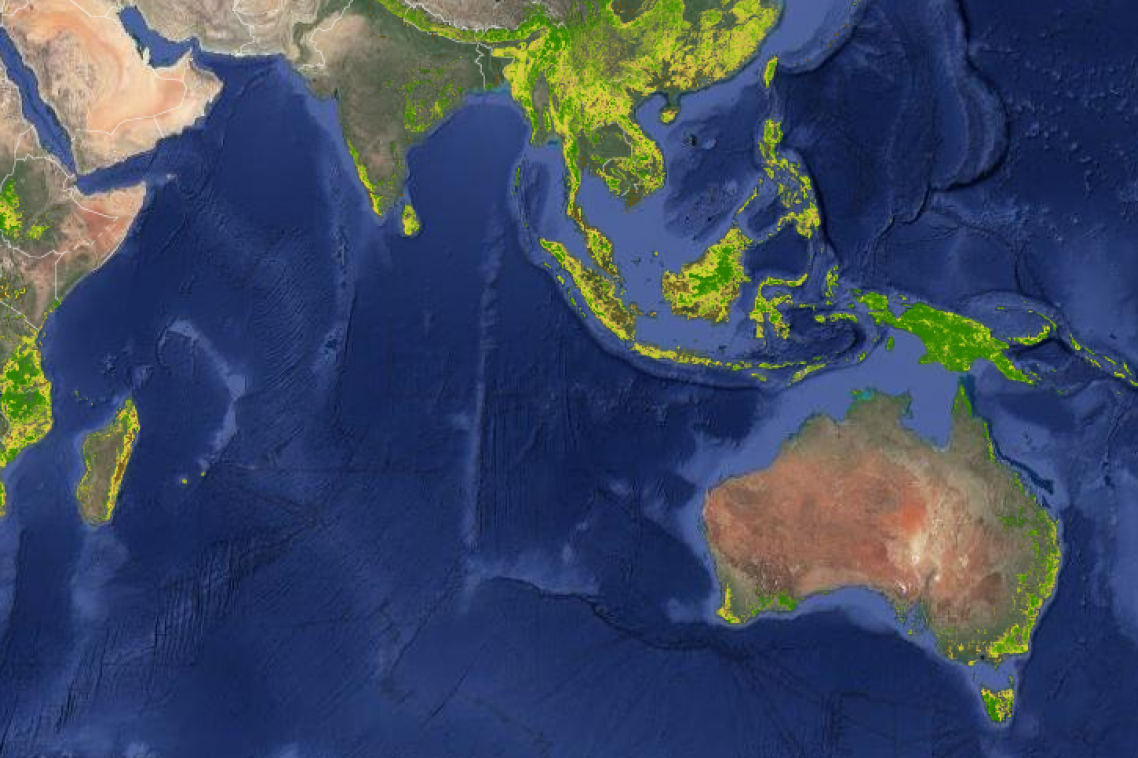
Only 40 per cent of forests are considered to have high ecological integrity, according to a new global measure, the Forest Landscape Integrity Index.
The Index was created by 47 forest and conservation experts from across the world, including Professor James Watson of The University of Queensland and the Wildlife Conservation Society.
“This extremely fine-scale analysis of the ecological integrity of the world’s forests has found that only 17.4 million square kilometres of Earth’s remaining forests – or 40 per cent of them – are considered to have high integrity,” Professor Watson said.
“And just 27 per cent of this area is found in nationally designated protected areas.
“High integrity forests are those which contain high levels of biodiversity, provide high quality ecosystem services and are more resilient to climate change.
“Many of our remaining forests have been heavily impacted by a variety of human activities, including logging, fires, hunting, wildlife exploitation and edge effects.
“These actions damage forest integrity.
“By protecting and expanding forests with high integrity, we can help slow the impacts of climate change, preserve biodiversity, protect the rights of indigenous peoples and local communities and prevent future pandemics.”
Professor Watson said the index was a result of rapid advances in remote sensing, big data and cloud computing.
“The use of this index is critical in allowing us to locate Earth’s remaining intact forests and ensure that they are better protected but also hold nations to account for how they treat their forests,” he said.
“We show how critical some countries are, including Canada, Brazil, Democratic Republic of Congo, Papua New Guinea and Australia, in sustaining the world’s last large intact forests.
“The fine-scale nature of the map will also allow land managers to plan activities more effectively and to monitor change over time.”
Dr Hedley Grantham, lead author of the study and WCS’s Director of Conservation Planning, said the study’s results were fundamental to talks at the Convention on Biological Diversity.
“The current draft of the post-2020 Global Biodiversity Framework wisely proposes targets relating to ecosystem integrity and there has been active discussion about how this can be quantified and monitored,” Dr Grantham said.
“Using this index, we can now set ambitious policy goals to improve the integrity of forests globally.”
The study is published in Nature Communications and the index can be accessed at forestlandscapeintegrity.com.
Media: Professor James Watson, jwatson@wcs.org, +61 409 185 592; Dominic Jarvis, Dominic.jarvis@uq.edu.au, +61 413 334 924.
Related articles

US agency selects UQ for ‘one of the world’s most ambitious biomanufacturing programs'
