
Physicists create time reversed optical waves
Optics researchers from The University of Queensland and Nokia Bell Labs in the US have developed a new technique to demonstrate the time reversal of optical waves, which could transform the fields of advanced biomedical imaging and telecommunications.
Time reversal of waves in physics doesn’t mean travelling back to the future; it describes a special type of wave which can retrace a path backwards through an object, as if watching a movie of the travelling wave, played in reverse.
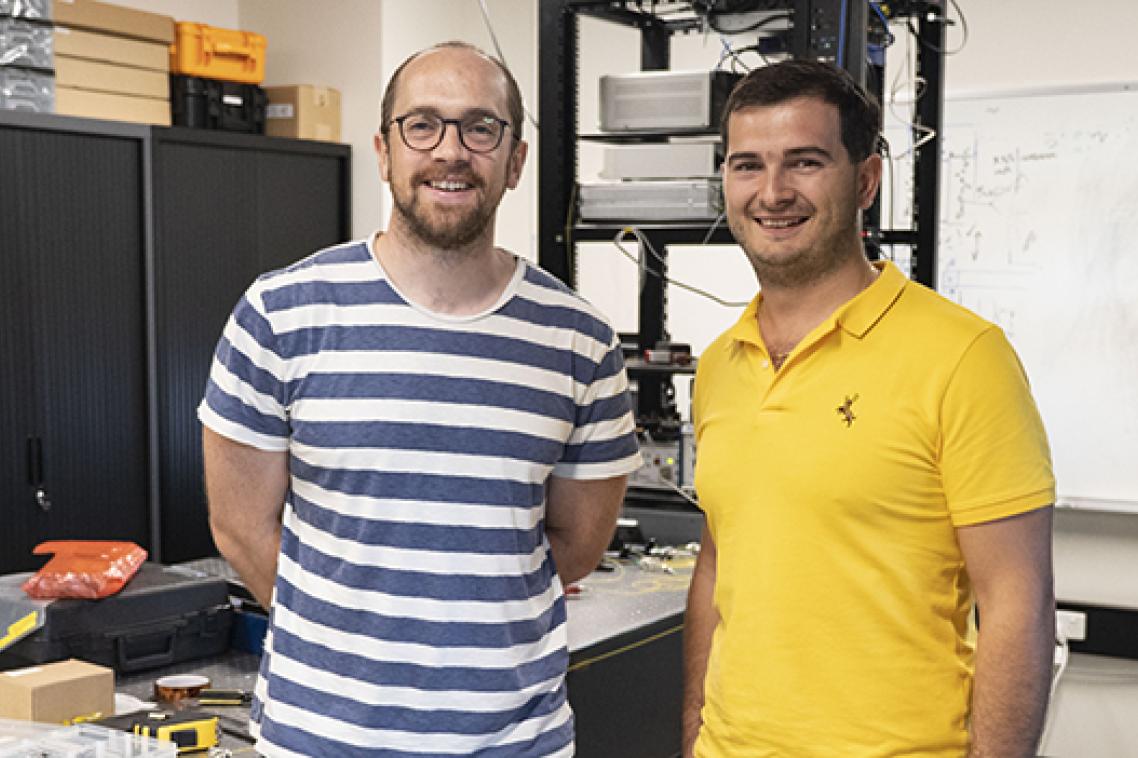
UQ’s Dr Mickael Mounaix and Dr Joel Carpenter, together with Dr Nick Fontaine’s team at Nokia Bell Labs, are the first to demonstrate this time reversal of optical waves, using a new device they developed that allows full 3D control of light through an optical fibre.
“Imagine launching a short pulse of light from a tiny spot through some scattering material, like fog,” Dr Mounaix said.
“The light starts at a single location in space and at a single point in time but becomes scattered as it travels through the fog and arrives on the other side at many different locations at many different times.
“We have found a way to precisely measure where all that scattered light arrives and at what times, then create a ‘backwards’ version of that light, and send it back through the fog.
“This new time reversed light wave will retrace the original scattering process like watching a movie in reverse - finally arriving at the source just as it began: a single position at a single point in time.”
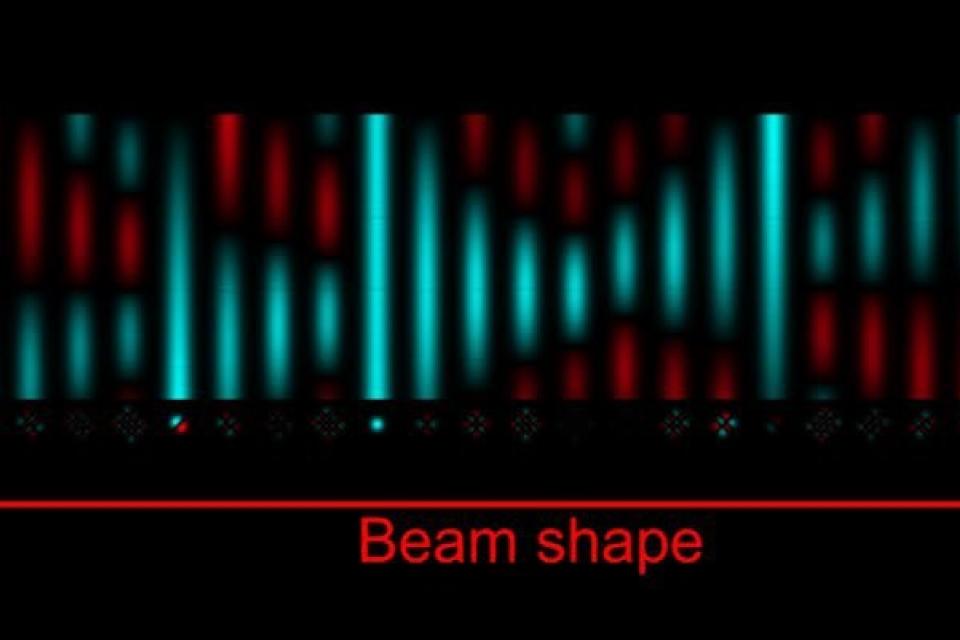
“To create that light cloud, you need to take an initial ball of light flying into the system, and then sculpt it into the 3D structure you want,” Dr Carpenter said.
“That sculpting needs to take place on time scales of trillionths of a second, so that’s too fast to sculpt using any moving parts or electrical signals - think of it like shooting a ball of clay at high speed through a static apparatus with no moving parts, which slices up the ball, diverts the pieces, and then recombines the pieces to produce an output sculpture, all as the clay flies through without ever slowing down.
Dr Fontaine said there was no device that could fully control and shape a light beam in 3D before the team developed this technique.
“It’s very important to control light delivery as accurately as possible for many applications, ranging from imaging to trapping objects with light, to creating very intense laser beams,” Dr Fontaine said.
Using the new device, researchers will be able to conduct experiments that were previously impossible, putting theoretical concepts in many fields to the test.

This research was published in Nature Communications.
Media: Dr Mickael Mounaix, m.mounaix@uq.edu.au, +61 7 3365 3529; Dr Joel Carpenter, j.carpenter@uq.edu.au, +61 7 3365 1656; UQ Communications, Genevieve Worrell, g.worrell@uq.edu.au, +61 408 432 213.
Related articles
UQ researchers fast-tracking therapies for cancer, arthritis, Alzheimer's, vaccines
