
A silver swining: ‘destructive’ pigs help build rainforests
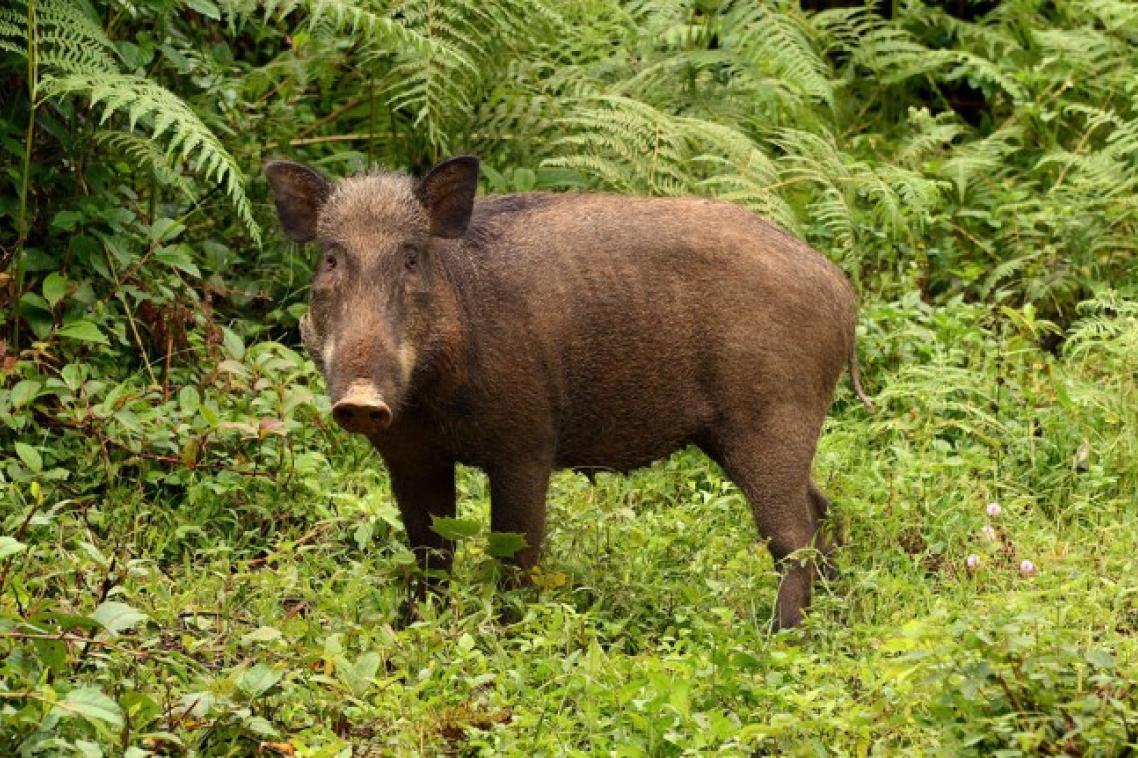
Wild pigs are often maligned as ecosystem destroyers, but a University of Queensland study has found they also cultivate biodiverse rainforests in their native habitats.
Dr Matthew Luskin has been researching the effect of native pigs in Malaysian rainforests and found their nests may be critical to maintaining diverse and balanced tree communities.
“We’ve shown that wild pigs can support higher diversity ecosystems and are not just nuisances and pests, thanks to a beneficial effect of their nesting practices,” Dr Luskin said.
“Prior to giving birth, pigs build birthing nests made up of hundreds of tree seedlings, usually on flat, dry sites in the forest.
“As they build their nests, the pigs kill many of the dominant seedlings and inadvertently reduce the abundance of locally dominant tree species, but usually not rarer local species, supporting tree diversity.”
Dr Luskin said wild pigs (Sus scrofa) descended from the same species of domestic pigs and both have generally been considered pests by farmers, land managers and conservationists.
“Their negative impacts on natural and cultivated ecosystems have been well documented – ranging from soil disturbances to attacking newborn livestock,” he said.
This is the first study to link animals to this key mechanism for maintaining hyper-diverse rainforests.
The researchers tagged more than 30,000 tree seedlings in a Malaysian rainforest and were able to examine how tree diversity changed in the areas where pigs nested after recovering more than 1800 of those tree tags from inside more than 200 pig birthing nests.
“You could consider pigs ‘accidental forest gardeners’ that prune common seedlings and inadvertently maintain diversity,” Dr Luskin said.
“In many regions, there’s a focus on managing overabundant pig populations to limit their negative environmental impacts.
“But our results suggest there may be some positives to maintaining pigs in the ecosystem.”
Dr Luskin said that as the fieldwork was conducted in Malaysia where pigs are native – the impacts of invasive pigs in Australia may not create similar effects.
“We’re currently in the process of designing new research to study the same pig processes here in Queensland,” he said.
“And we’ll also be comparing our initial Malaysian results with conditions in a nearby Malaysian forest that is heavily hunted and where many native pigs have been killed.
“It’s an intriguing insight, as pigs have become the most widespread large animal on earth, so documenting any new ecological impacts has massive repercussions globally.”
The research is published in Proceedings of the Royal Society B (DOI: 10.1098/rspb.2021.0001).
Media: Dr Matthew Luskin, m.luskin@uq.edu.au, +61 412 915 923; Dominic Jarvis, dominic.jarvis@uq.edu.au, +61 413 334 924.
Topics
Related articles

Hay fever can strike even when grass pollen concentrations are low
