
Tiny cat-sized stegosaur leaves its mark
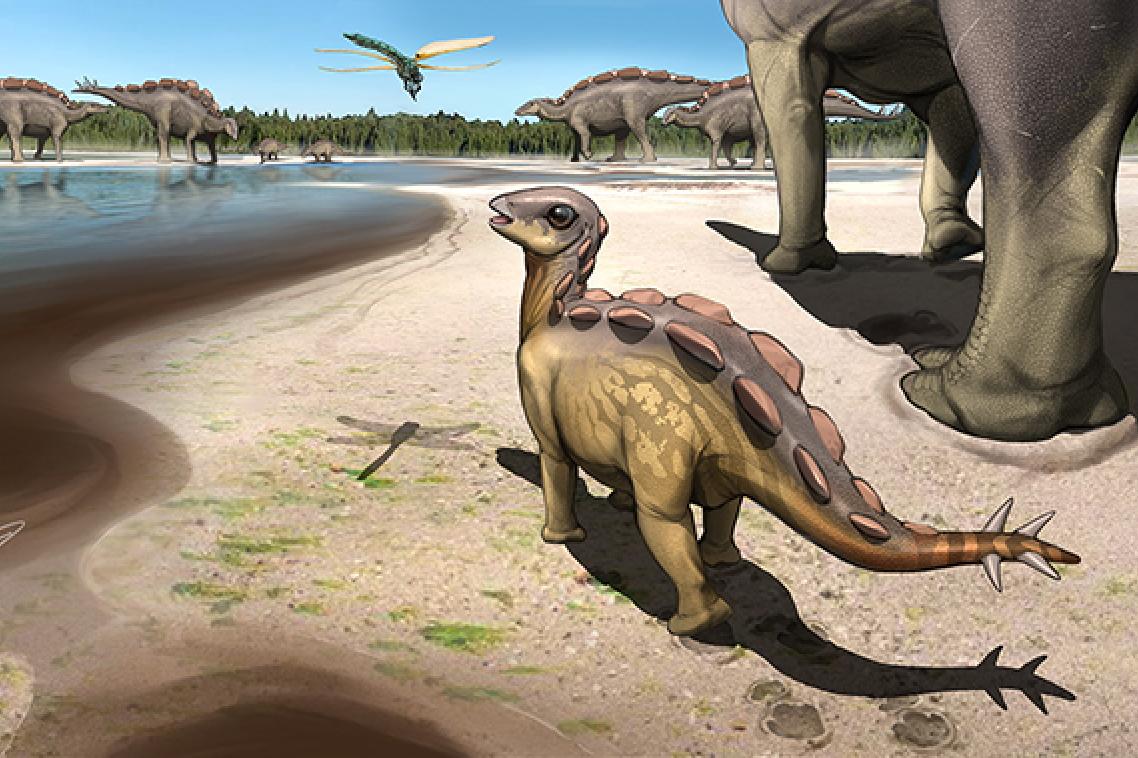
A single footprint left by a cat-sized dinosaur around 100 million years ago has been discovered in China by an international team of palaeontologists.
University of Queensland researcher Dr Anthony Romilio was part of the team that investigated the track, originally found by Associate Professor Lida Xing from the China University of Geosciences (Beijing).
“This footprint was made by a herbivorous, armoured dinosaur known broadly as a stegosaur – the family of dinosaurs that includes the famed stegosaurus,” Dr Romilio said.
“Like the stegosaurus, this little dinosaur probably had spikes on its tail and bony plates along its back as an adult.
“With a footprint of less than six centimetres, this is the smallest stegosaur footprint known in the world.
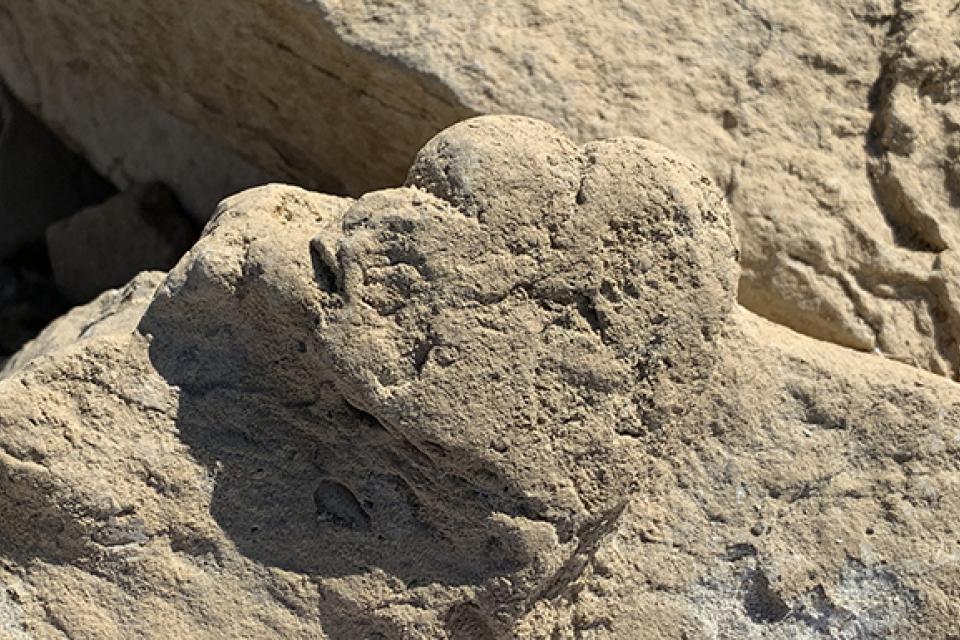
The tiny footprint has similar characteristics of other stegosaur footprints with three short, wide, round toe impressions.
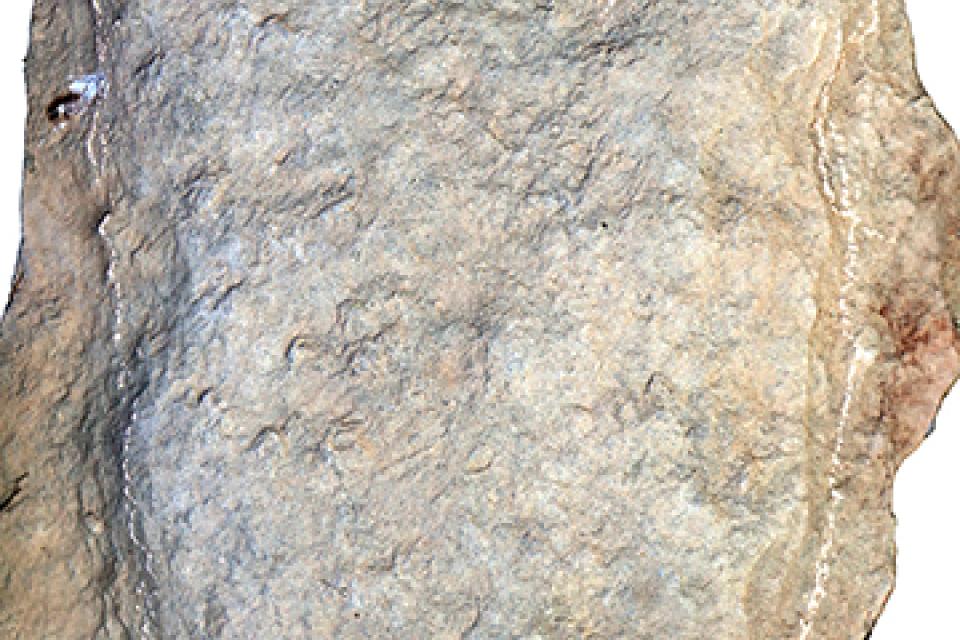
However researchers found the print wasn’t elongated like larger counterpart prints discovered at the track sites, which suggests the young stegosaur had a different behaviour.
“Stegosaurs typically walked with their heels on the ground, much like humans do, but on all fours which creates long footprints,” Dr Romilio said.
“The tiny track shows that this dinosaur had been moving with its heel lifted off the ground, much like a bird or cat does today.
“We’ve only previously seen shortened tracks like this when dinosaurs walked on two legs.”
Associate Professor Xing said that it was plausible young stegosaurs were toe-walkers.
“This could be possible as this is the ancestral condition and a posture of most dinosaurs, but the stegosaur could also have transitioned to heel-walking as it got older,” Dr Xing said.
Finding the tiny tracks on crowded track sites will be challenging for the researchers.
“The footprints made by tiny armoured dinosaur are much rarer than those formed by other groups of dinosaurs,” Associate Professor Xing said.
“Now that our study has identified nine different dinosaur track sites from this locality, we will look even closer to see if we can find more of these tiny tracks.”
The paper is published in Palaios (DOI: 10.2110/palo.2020.036) and includes collaborating researchers from China, the USA, Germany and Australia.
Image above left: The world's smallest stegosaur footprint (less than 6 cm long), Xingjiang, China. Photo credit - Lida Xing. Image right: A stegosaur footprint from the same site (more than 30cm long), Xingjiang, China. Photo credit - Lida Xing.
Media: Dr Anthony Romilio, a.romilio@uq.edu.au, +61 430 514 169; Associate Professor Lida Xing, xinglida@gmail.com; Dominic Jarvis, dominic.jarvis@uq.edu.au, +61 413 334 924.
Topics
Related articles

UQ to support development of mobile launcher for high-speed flight R&D
