
Leaders miss windows for climate change action
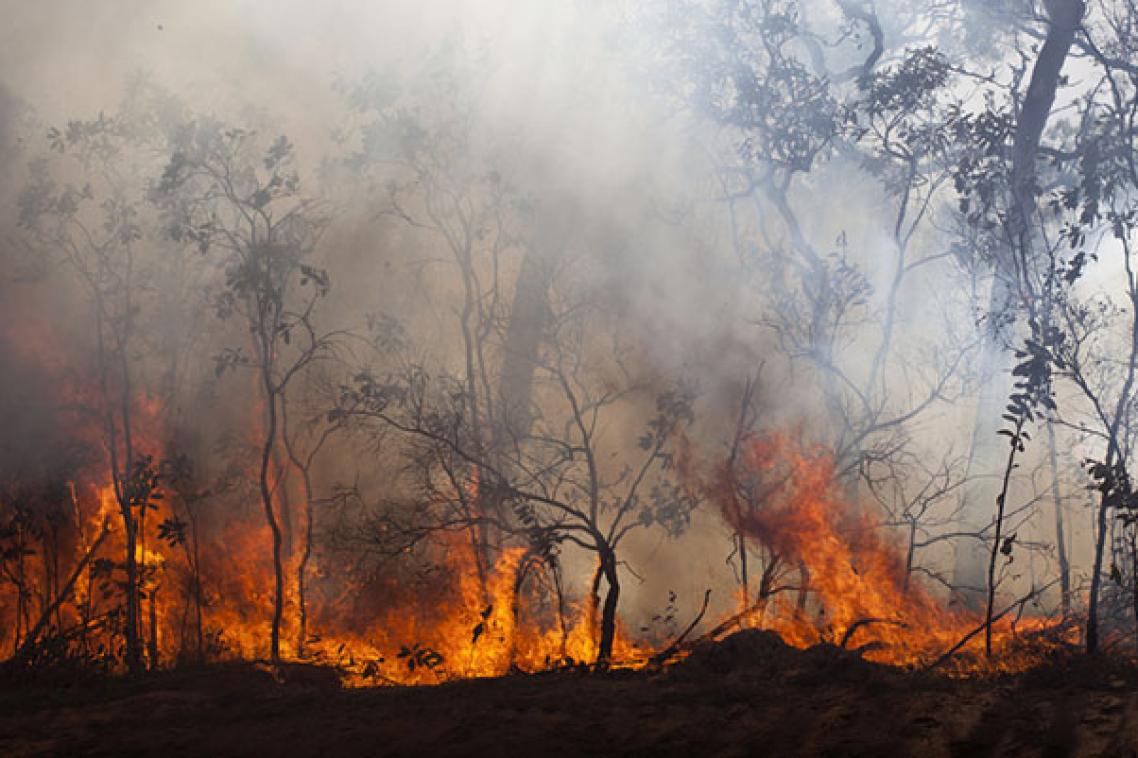
A window of opportunity to take action on climate change after a natural disaster is frequently being missed by leaders, according to University of Queensland researchers.
Professor Jolanda Jetten from UQ’s School of Psychology examined responses to the 2019/2020 Australian bushfires.
“The public sentiment was such that a political push for climate change action would have been widely supported after the 2019/2020 fires,” Professor Jetten said.
“At the beginning of 2020, Australia had the worst bushfire season on record, and there was widespread frustration about the perceived lack of political will to address the key cause.
“Our analysis shows that the 2019/2020 bushfires presented a critical juncture for Australia to take action on climate change, however it was missed due to, among other things, the absence of leaders willing to engage in constructive identity-based leadership.”
Dr Charlie Crimston said leaders have a critical role to play in capitalising on the shift in social perceptions.
“Leaders need to jump at the opportunity to facilitate real action to future-proof our country, with predictions that our fire seasons in Australia are likely to get worse,” Dr Crimston said.
Professor Ove Hoegh-Guldberg from UQ’s School of Biological Science has been co-author of several reports for the United Nations’ Intergovernmental Panel on Climate Change (IPPC) and notes that the current report enormously strengthens the connection between climate change and extreme events and calls for leaders to act.
“We seem to get used to each ‘record’ disaster, as if we can stand anything the climate throws at us.
“The reality is that time is running out. With solutions available, however, why then are we not doing more to solve the problem?”
The researchers used the Social Identity Model of Post-Disaster Action to analyse the 2019/2020 bushfires and recommend other researchers apply this framework to understand post-disaster reponses during or after other types of disasters.
The article was published in the European Psychologist Special Issue: Psychology and the Environmental Crisis (DOI:10.1027/1016-9040/a000432).
Media: Professor Jolanda Jetten, j.jetten@psy.uq.edu.au; Bridget Druery, b.druery@uq.edu.au, +61 435 221 246.
Related articles

Sick of being told to ‘just lose weight’? Health promotion shouldn’t come with weight stigma
