
What regulates the ‘glue’ needed for nerve repair?
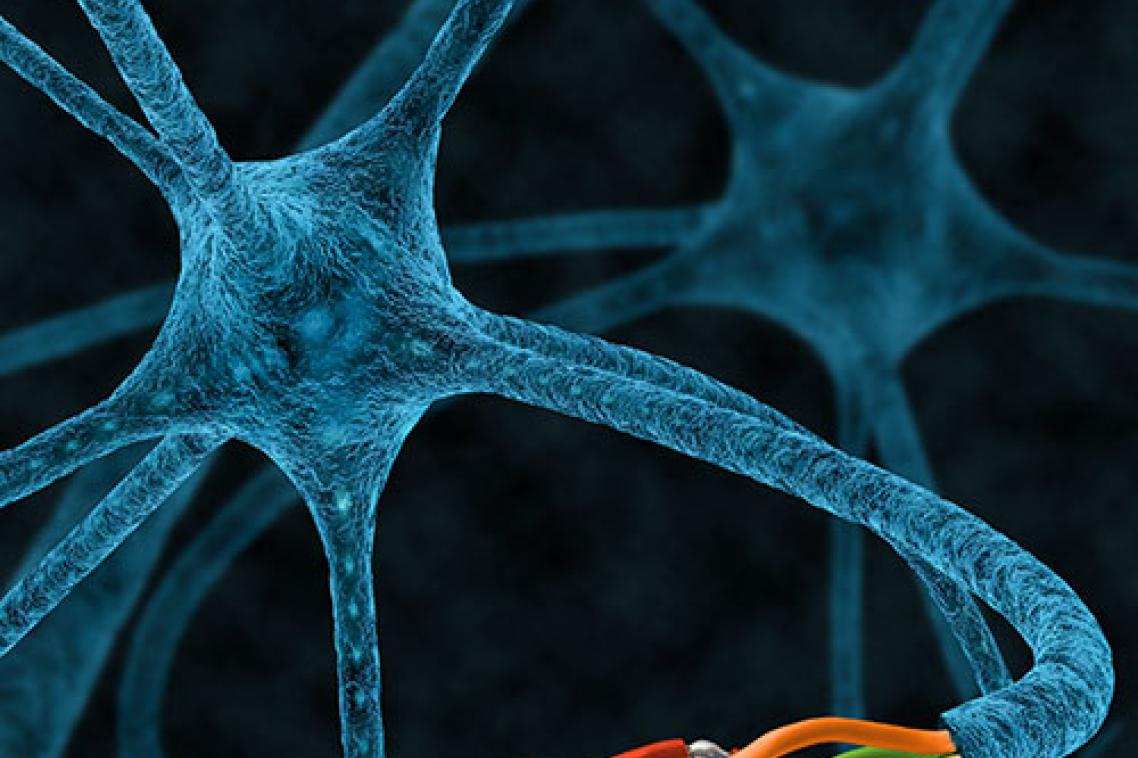
Researchers at The University of Queensland have identified a molecule essential for regulating the repair of injured nerves, which could help people recover from nerve damage.
The finding was made using the nematode worm C. elegans which has long been studied by researchers for its ability to self-repair nerve cells.
Professor Massimo Hilliard and his team at UQ’s Queensland Brain Institute (QBI) have identified that the enzyme ADM-4 is an essential protein regulating the molecular glue, or fusogen, needed for nerve repair.
“We have shown that animals lacking ADM-4 cannot repair their nerves by fusion,” Professor Hilliard said.
“ADM-4 must function within the injured neuron to stabilise the fusogen EFF-1 and allow the membranes of the separated nerves to merge.
“An exciting part of this discovery is that ADM-4 is similar to a mammalian gene, opening up the possibility that one day we may harness this process in humans.”
Study first author, Dr Xue Yan Ho, said the nematode provided a great platform for these studies.
“Our goal is to uncover the molecules and understand their role in nerve repair in C. elegans,” Dr Ho said.
“If we can understand how to control this process, we can apply this knowledge to other animal models.
“The hope is that one day, we can induce the same mechanical process in people who have had a nerve injury.
“We are still a long way from this goal, but the discovery of ADM-4’s role is an important step forward.”
Nerve cells communicate using long, cable-like structures called axons.
As they are long and thin, they are very susceptible to breaking, which stops nerve cells from communicating and leads to issues like paralysis.
A few years ago, Professor Hilliard and his team discovered that C. elegans could spontaneously re-join two separated axon fragments, a process called axonal fusion.
QBI’s Associate Professor Victor Anggono helped the team define the molecular mechanisms of this process.
“Using neurosurgery to stitch together damaged nerves has limited success,” Dr Anggono said.
“A different approach using gene technology to directly provide the molecular glue, or activate the fusogen regulator ADM-4, or using pharmacology to activate these components, may facilitate complete regeneration.”
This latest research was published in Science Advances (DOI: 10.1126/sciadv.abm2882).
Media: QBI Communications, communications@qbi.uq.edu.a, +61 (0)415 222 606, +61 (0)422 096 049.
Related articles

Feed the children: food provision in early childcare falls short
