
Researchers investigate garlic’s hidden powers
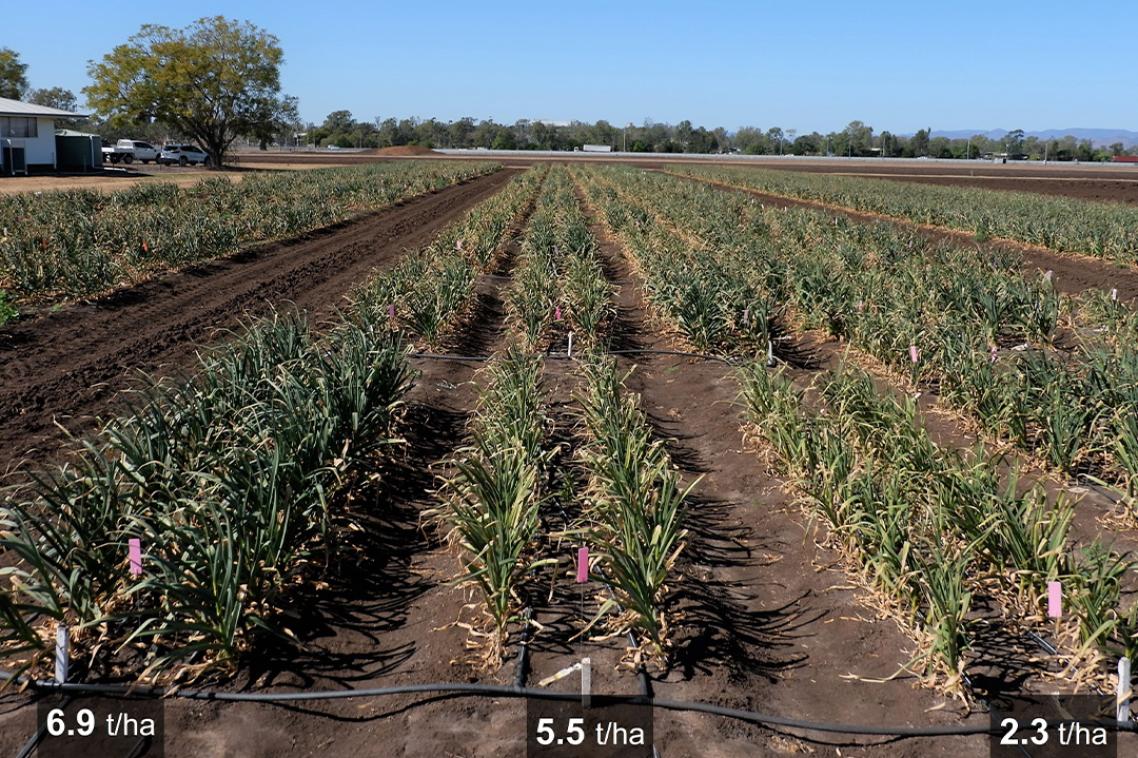
Garlic crops in fields, showing different yields for each seed category.
(Photo credit: Sari Nurulita. )
Garlic has traditionally been used to ward off evil spirits, but its reputed powers do not stop it from being infected by multiple viruses.
University of Queensland plant virologist Associate Professor John Thomas said garlic was unique, as it was difficult to get virus-free garlic anywhere in the world.
“There can be up to 10 or 12 viruses in infected plants and most garlic plants would have at least six viruses,” Dr Thomas said.
“All Australian commercial garlic varieties have viruses, which don’t seem to affect taste or nutrition but do have an impact on the crop’s yield.”
Understanding that suite of viruses and their impact is the problem Dr Thomas, UQ colleagues Dr Stephen Harper and Associate Professor Andrew Geering, the Department of Agriculture and Fisheries’ Dr Kathy Crew and PhD candidate Sari Nurulita, are investigating.
Ms Nurulita’s doctoral study aims to develop reliable virus detection tests and investigate why both superior and inferior garlic plants share the same viral profile.
“Garlic is a vegetatively propagated crop, and once it’s been infected, all the progeny are infected,” Dr Thomas said.
“It’s also possible for the crop to collect more viruses in the field, but not lose any plants.”
He said in previous work led by Dr Harper and funded by the Australian Centre for International Agricultural Research, researchers grew higher performing bulbs among virus-infected garlic crops.
“Through breeding selections over generations, Dr Harper was getting three times the yield from the best selections,” Dr Thomas said.
“However, Ms Nurulita’s work shows these elite garlic selections are still infected by the virus complement and we don’t know why that is occurring.”
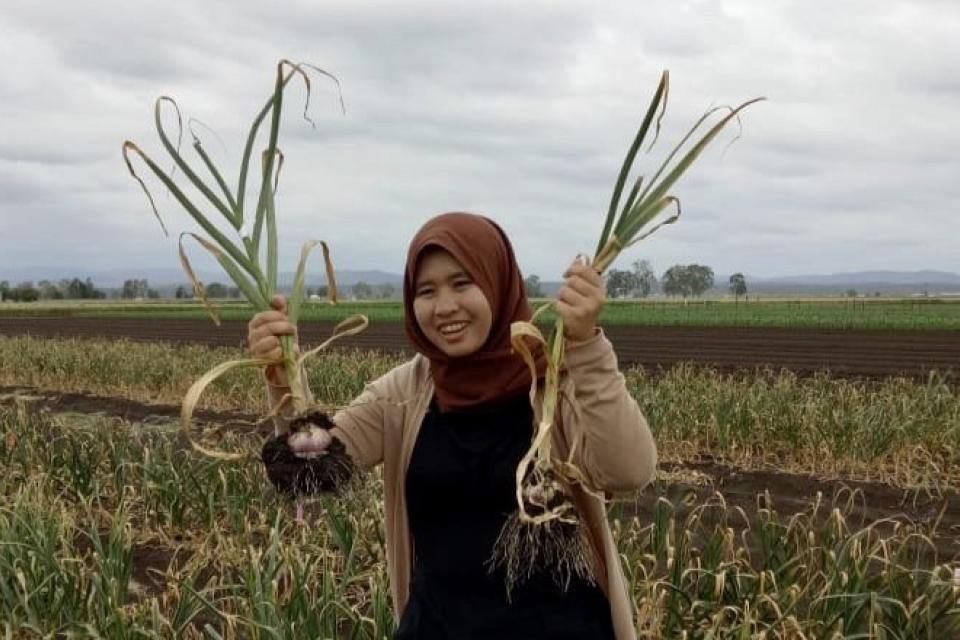
Sari Nurulita with high and low yielding garlic, which share the same viruses.
Ms Nurulita also investigated the viruses concentrations using next-generation sequencing, and mapped the full genomes of the viruses.
“I did not find any significant differences in the viruses levels and was unable to determine a clear-cut difference between the two different lines of elite and poor performing garlic seed,” Ms Nurulita said.
Dr Thomas said the team had also tried tissue culture propagation to generate virus-free garlic, but without success.
“We think maybe gene silencing is happening naturally in the plant,” he said.
“It may depend on which virus gets the upper hand in a particular clove, or the order they are infected in.
“There are so many different possibilities and it’s not a simple matter.
“But we are going to look at absolute levels of virus to see whether we can determine if gene silencing is responsible.”
Topics
Related articles

White wine drinkers help pinpoint what’s missing in no and low alcohol drinks
