
'Innovative, high-tech’ monitoring program a winner for the Reef
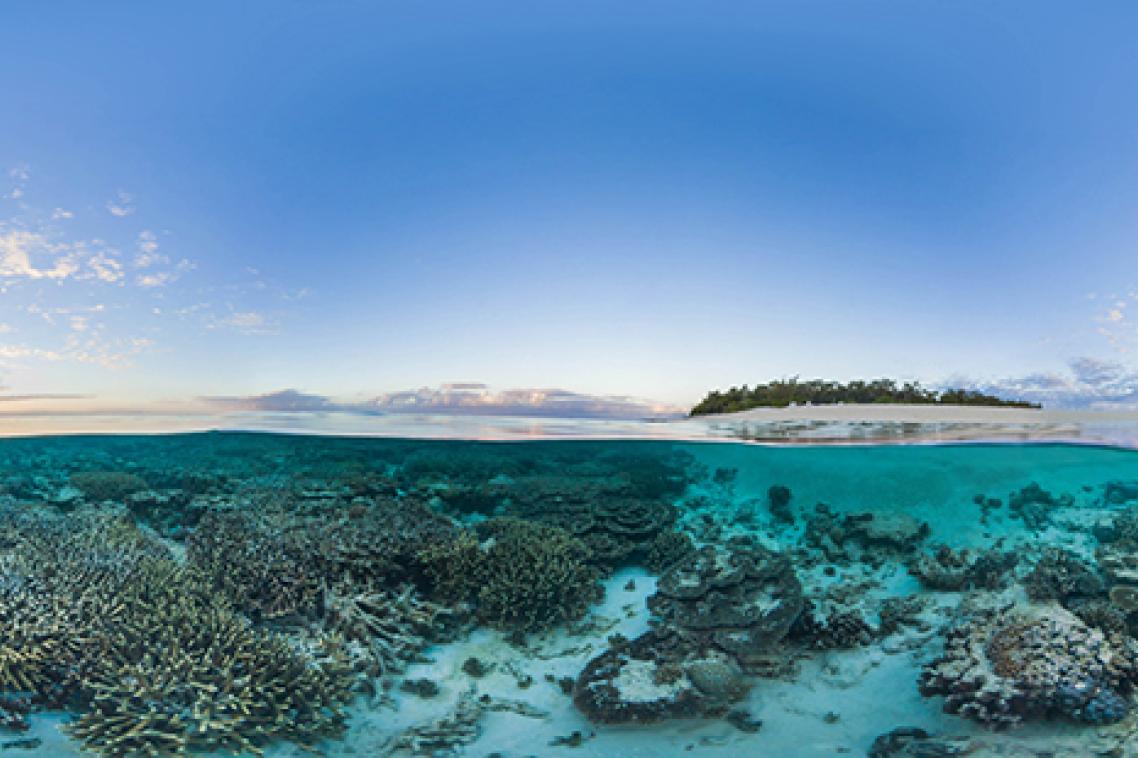
Water quality in the Great Barrier Reef will be improved thanks to a multimillion-dollar collaboration between The University of Queensland and the Queensland Department of Environment and Science.
The newly launched Reef Catchments Science Partnership (RCSP), led by UQ’s Associate Professor Michael Warne and Professor Stuart Phinn, is developing new and enhanced methods of land and water quality monitoring.
“Innovative, high-tech monitoring and modelling tools will allow us to better protect the Reef and achieve Queensland’s conservation goals,” Dr Warne said.
The $3.1 million Reef Catchments Science Partnership help implement key components of the Queensland Government’s Reef Protection Regulations and generate information to assist in the design and delivery of water quality improvement programs and projects.
“These regulations, passed in 2019, are designed to quickly improve practices to reduce land-based pollutant runoff from both industrial and new agricultural sources,” Dr Warne said.
“The RCSP will work to develop customised monitoring tools and data products for use in the field, bolstering both monitoring and compliance.
“A large part of the program will include building tools to support the calculation of various forms of nutrients and sediment entering the Reef.
“And it offers us a great platform to explore and develop collaborative projects with other research groups, NGOs and industry.”
Professor Stuart Phinn said the partnership will allow government agencies to work with communities to monitor, model and reduce pollutant and pesticide loads in Reef catchments.
“Appropriately developed technology and information will help us better understand and manage human impacts on the Reef,” Professor Phinn said.
“We’ll be able to transform scientific expertise into real, practical tools, with direct impacts on water quality in Reef catchments and on the Reef itself.”
UQ’s research team will also include a senior scientist, five post-doctoral fellows and one PhD student, with Queensland Government scientists also contributing.
The program is the first stage of on-going collaboration between UQ and the Queensland Department of Environment and Science.
Media: Associate Professor Michael Warne, michael.warne@uq.edu.au, +61 (0)424 133 053; Professor Stuart Phinn, s.phinn@uq.edu.au, +61 (0)401 012 996; Dominic Jarvis, dominic.jarvis@uq.edu.au, +61 (0)413 334 924.
Related articles

Shaping the future of medicine: UQ Medical School turns 90
