
UQ’s unique plan to keep new supercomputer up to date
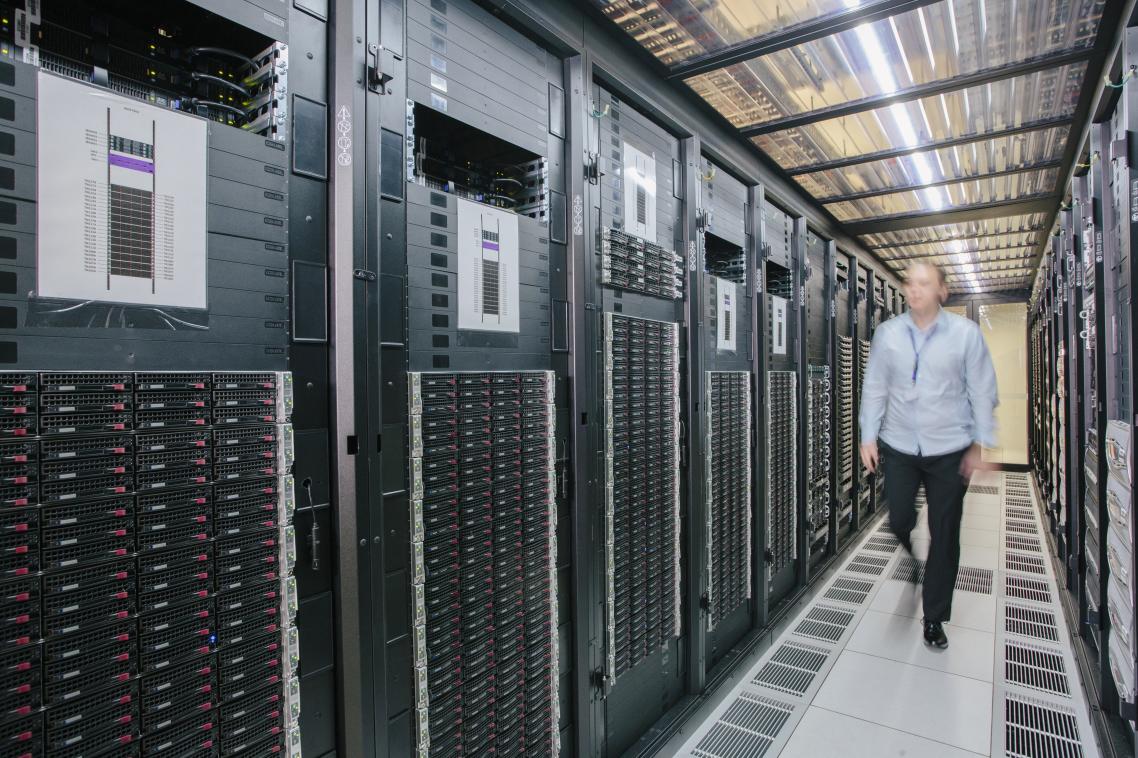
The University of Queensland has purchased a new supercomputer to replace three current high-performance computers (HPCs) and has a unique plan to keep the new computer up to date.
The new HPC, named ‘Bunya’ after the native Queensland tree, is expected to become operational in July.
Professor David Abramson, Director of UQ’s Research Computing Centre (RCC), said Bunya can perform across a wide range of research domains, from sciences to humanities.
“Bunya will strengthen UQ’s position as a tier-2 supercomputing capability,” Professor Abramson said.
RCC Chief Technology Officer Jake Carroll said Bunya will help maintain UQ’s competitive advantage.
“Bunya is more power efficient than the current HPCs and will allow us to minimise our environmental impact,” Mr Carroll said.
UQ will take a unique approach to upgrading Bunya.
The university will take advantage of changes in the computer component industry, allowing UQ to upgrade by technology layers, deploying in phases, and providing researchers a progressive performance improvement in Bunya as technology advances.
This approach will enable UQ to replace things as needed without overhauling components that are still performing well.
“To maximise shared value and to procure more efficiently, UQ will work closely with its partner, Dell Technologies Australia, to deliver improvements in each phase of Bunya," Mr Carroll said.
“But in order to maintain market intelligence, UQ may choose to source future upgrades from any vendor with the most competitive offer."
Bunya will replace three existing HPC’s, Awoonga, FlashLite and Tinaroo, which have served the university for almost seven years.
Mr Carroll said the internal network in Bunya is around four times faster than FlashLite and Tinaroo.
“While those HPCs can transfer an entire 23 gigabyte Blu-ray movie into a node in around 3.28 seconds, Bunya can achieve the same transfer in 0.92 seconds,” Mr Carroll said.
“This means applications that are communication intensive or move a lot of data as part of their workflow, could run many times faster on Bunya, when compared to our previous platforms, reducing research discovery time significantly.”
Awoonga was decommissioned in March, FlashLite will be shut down by August once Bunya is up and running, and Tinaroo later in 2022.
Wiener, UQ’s four-year-old imaging-intensive supercomputer, will continue to operate.
The name Bunya was chosen partly because of the native tree’s structural similarities to a supercomputer.
“The fruit of the Bunya is a tightly clustered super structure of individual segments making up a cohesive whole, just as supercomputers have interconnections to form a powerful whole,” Mr Carroll said.
The new HPC was funded by UQ with contributions from the Institute for Molecular Bioscience (IMB), the Australian Institute for Bioengineering and Nanotechnology (AIBN), and the Queensland Cyber Infrastructure Foundation (QCIF).
Bunya will be housed in the Polaris Data Centre in Springfield, Queensland.
Media: Shannon Lindsay, Senior Communications Officer, UQ Research Computing Centre, s.lindsay@uq.edu.au, ph: +61 420 524 392.
Related articles

Transforming communities: 2026 UQ Alumni Award winners
