
Research centre to tackle global pollution with ‘green’ plastic
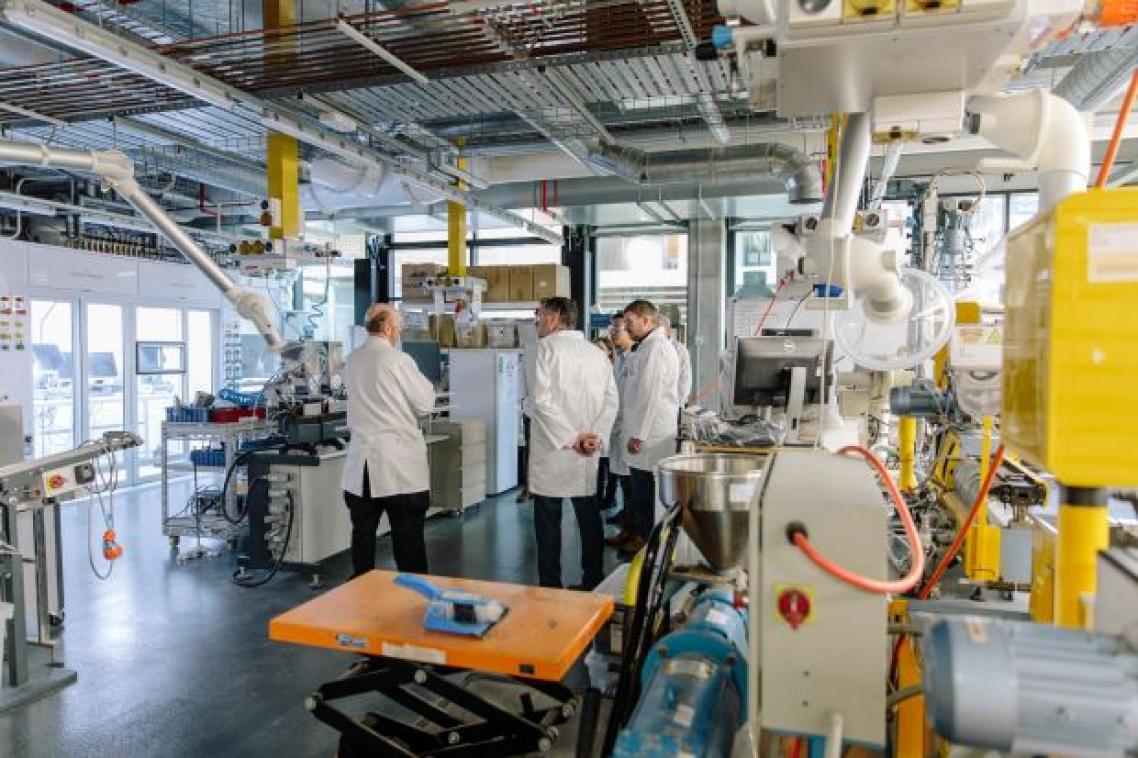
A new University of Queensland-led training centre is set to become a hub for world-leading research in ‘green’ plastic.
The $13 million Australian Research Council (ARC) Industrial Transformation Training Centre for Bioplastics and Biocomposites, based at UQ’s School of Chemical Engineering, aims to make large-scale plastic pollution a problem of the past.
Centre director, Associate Professor Steven Pratt said scientists will work toward developing bio-derived and bio-degradable plastics that have a minimal environmental impact.
“Every year it’s estimated more than 10 million tonnes of plastic leaks into oceans as part of the almost 400 million tonnes of plastic that’s destined for landfill,” said Dr Pratt.
“Urgent change is needed, and biodegradable bioplastics along with their natural fibre composites, will be pivotal.
“It’s an exciting prospect to work toward manufacturing a commercially-available plastic with exceptional properties but without the legacy of accumulation in the environment.”
Dr Pratt said there was a rapidly growing local and international market for better bioplastics.
“But we need to consider their full life cycle, from the sustainable resources to make them right up to their end of life,” he said.
The training centre is a partnership between The University of Queensland and The Queensland University of Technology, alongside the Queensland Government, Kimberly-Clark Australia, Plantic Technologies, Australian Packaging Covenant Organisation, Minderoo Foundation and City of Gold Coast.
Kimberly-Clark Australia Managing Director Belinda Driscoll said the company had set an ambitious goal to halve its use of fossil fuel-based plastic in the next eight years.
“This partnership with the University of Queensland takes an important step toward creating more sustainable products and reducing our environmental footprint,” said Ms Driscoll.
Plantic Technologies Chief Technology Officer Nick McCaffrey said the company looked forward to further expanding the science and engineering behind its unique products.
“The research outcomes could further improve bio-based materials and extend the shelf life of packaged foods,” Mr McCaffrey said.
The training centre will also focus on training to develop industry-ready researchers in chemical and materials engineering, polymer chemistry, environmental science, social science, policy and business.
Media: ARC Training Centre for Bioplastics and Biocomposites Manager, Dr Lisa Pope, l.pope@uq.edu.au, + 61 (07) 3346 6466.
Related articles

Fishmeal alternative aims to protect marine wildlife from overfishing
