
Demand booms for experimental mRNA from UQ BASE
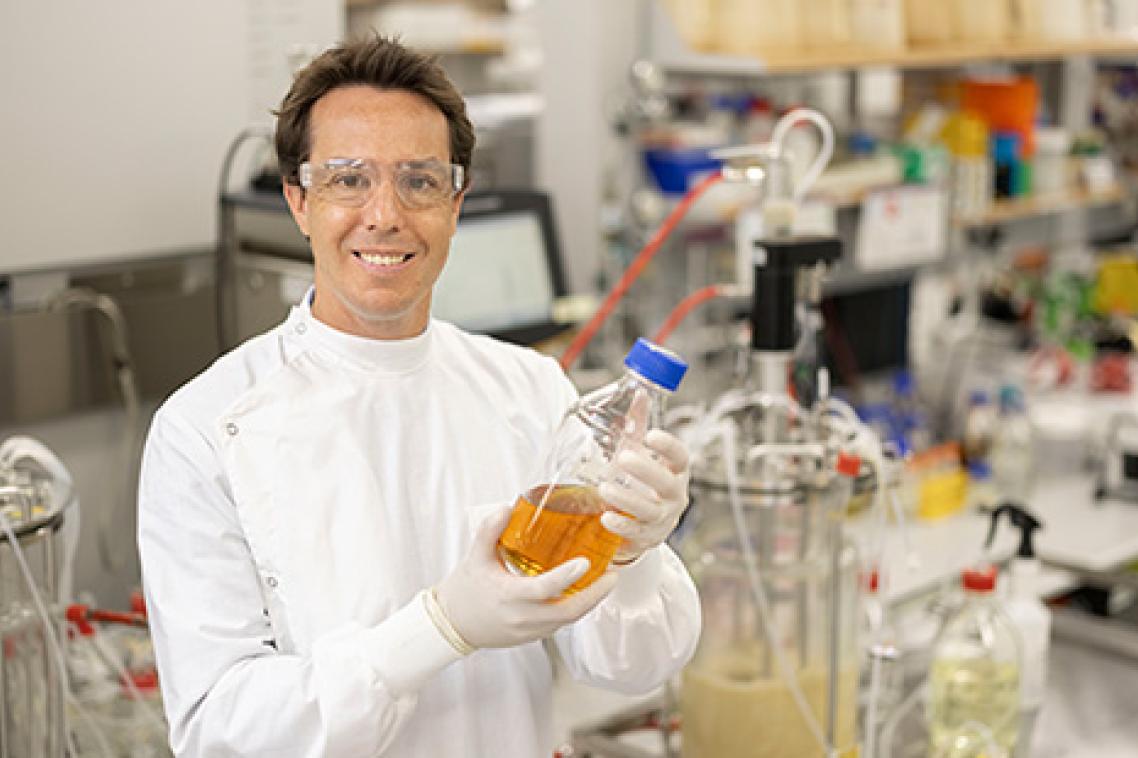
A University of Queensland team has become the biggest supplier of experimental mRNA vaccines and therapies in Australia, with burgeoning demand from research and industry across the country.
The BASE facility is producing mRNA at UQ’s Australian Institute for Bioengineering and Nanotechnology for pre-clinical research on vaccines, cancers and autoimmune diseases.
Director Associate Professor Tim Mercer said demand for BASE’s products had rapidly escalated since it was established, with the scientific community keen to explore ways to use the revolutionary mRNA platform.
“We are now at the epicentre for mRNA production in Australia, providing access to high-quality mRNA at the scale needed to support early research and pre-clinical studies,” Dr Mercer said.
“Our team started out with 3 researchers about 18 months ago, and is likely to grow to about 40 people this time next year – all producing a new generation of mRNA vaccines and treatments.
“We’ve built more than 50 experimental vaccines and therapies, supplying mRNA to 34 labs at UQ alone.”
Global healthcare company Sanofi toured BASE this week to discuss potential collaborations under the Translational Science Hub.
Sanofi and the Queensland Government have agreed to establish a $280 million facility in Brisbane together with UQ and Griffith University.
Dr Mercer said that mRNA vaccines and therapies work differently to other drugs.
“mRNA encodes the instructions to make the drug, so rather than delivering the drug, mRNA instead delivers the instructions for the patient's body to make the drug,” he said.
“The COVID-19 mRNA vaccines encoded part of the viral spike protein so when injected, these mRNA instructed the patient’s cells to make the spike protein which then trained the patient's immune system.”
Dr Mercer says mRNA can also be used to encode different vaccines and therapies and treat a wide range of diseases, including cancer and autoimmunity.
Pharmaceutical companies are also investigating whether conventional vaccines and therapies could be better encoded within mRNA, which is easier to make and deliver.
“Scientists are excited that mRNA provides a new way to treat disease, and this is driving high demand for mRNA.”
“We are working hard to make sure Australian scientists can access the high-quality mRNA needed to develop new and innovative treatments.”
UQ Professor for Research Development, Professor Paul Young, said the BASE facility was providing the essential support that research and development organisations needed to work with this revolutionary technology before they are ready to go to large scale manufacturing.
“It is vital that Australia develops these capabilities to enable early-stage R&D by Australian researchers to connect with the biotechnology industry,” Professor Young said.
“We have a highly skilled team here doing important research in an emerging area that will make a difference to national and global health.”
The not-for-profit facility sits alongside UQ’s other internationally recognised vaccine and drug development programs, and is supported by Therapeutics Innovation Australia (TIA) and UQ.
Media contact
communications@uq.edu.au
+61 429 056139
Related articles

UQ innovators progress therapies to tackle dementia
