
Cutting costs and emissions in beef production
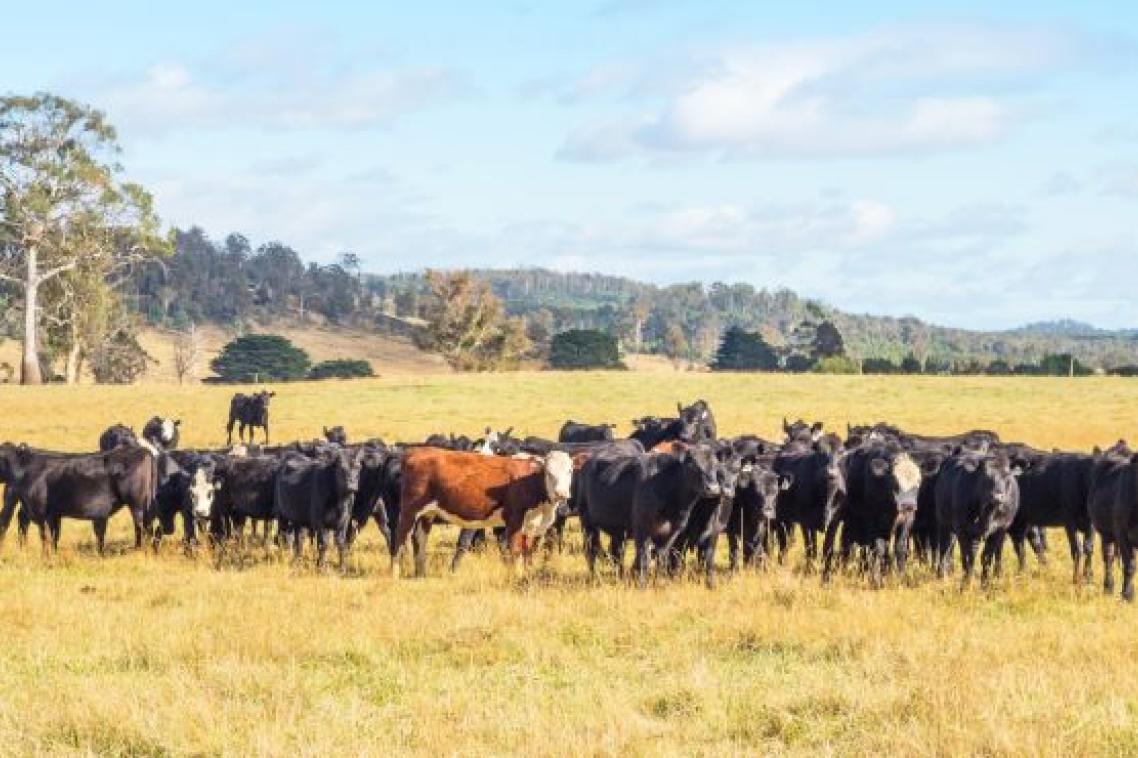
A research team led by the University of Queensland has developed a tool to help the global beef industry simultaneously reduce costs and greenhouse gas emissions while meeting demand for meat.
The team assessed the economic and emissions impacts of different cattle feeds at different locations around the globe to formulate a framework to guide and inform industry sustainability efforts.
Postdoctoral Research Fellow Adam C. Castonguay from UQ’s School of Veterinary Science said the study showed that as much as 85 per cent of emissions could be cut without an overall economic hit to the beef sector.
“This can be achieved by opting for more efficient feeds and locations, and restoring forests in inefficient areas, without increasing global costs of production or reducing demand for beef,” Mr Castonguay said.
“We have mapped out the most efficient locations around the world to produce beef and the maps change when factors are altered, such as how much society values reducing emissions over reducing production costs.
“This has given us an unprecedented insight into the ‘what, where, and why’ of beef production at a global level and decisions about the future of the industry can be informed by inputting trade-offs and opportunities.”
The research group says the tool could be used by governments and industry to develop policy and strategy.
“There will be continued global demand for beef and there are a huge number of livelihoods associated with it, so this research aims to find an appropriate balance to maintain the bottom line of the sector,” Mr Castonguay said.
“Further economic modelling and fine-tuning the data for specific locations would reveal the implications of any changes, including on beef prices for consumers.”
Mr Castonguay said the optimisation method developed by the team using mapping technology overcame historic roadblocks to finding an environmental-economic balance.
“There are many innovations in cattle feed to increase productivity or reduce emissions which have not been analysed as a trade-off with other values and goals,” he said.
“Our results highlight the massive potential for improvements in the way we produce beef, to help us to meet global sustainability goals.
“The extent to which we reduce emissions and production costs depends on our values or preferences as a society.”
This research has been published in Nature Sustainability.
Media: Mr Adam C. Castonguay, a.charettecastonguay@uq.edu.au, +61 426 016 949; Faculty of Science Media, science.media@uq.edu.au, +61 438 162 687.
Related articles

What makes a winning environmental campaign? We studied six decades of activism to find out
