Skip to menu Skip to content Skip to footer
News

Vaccine to protect pigs from Japanese encephalitis virus
16 February 2023
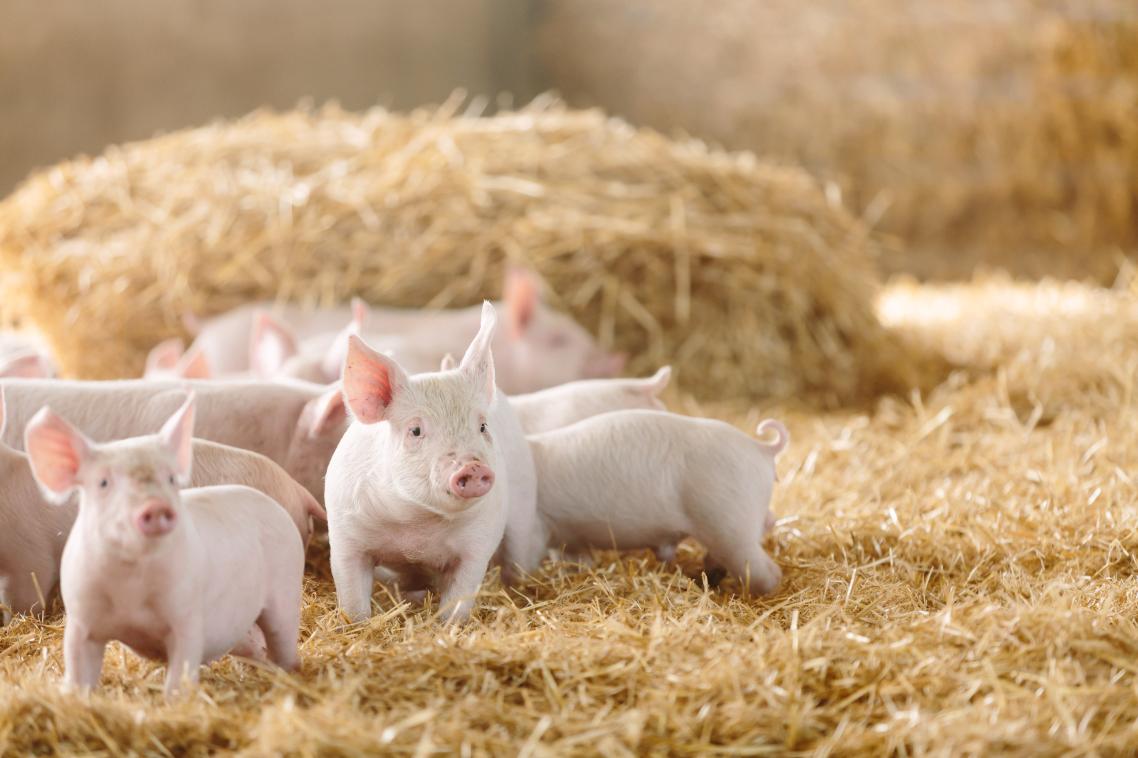
A group of piglets in the hay.

The vaccine protected 90 per cent of piglets in a trial from JEV infection.

(Photo credit:  Australian Pork Limited.  )

Scientists at The University of Queensland have developed a novel vaccine for Japanese encephalitis virus (JEV) in pigs, to help stop the spread of the disease in Australia.

The mosquito-borne disease can also severely affect humans, but cannot be passed from pigs to people and commercially-produced pork products remain safe to consume.

Dr Jody Hobson-Peters from UQ’s School of Chemistry and Molecular Biosciences said the new vaccine will help keep the virus at bay.

“Japanese encephalitis virus can cause production problems on pig farms, but more alarmingly it can lead to serious neurological symptoms in humans that are sometimes permanent or fatal,” Dr Hobson-Peters said.

“When pigs are bitten by virus-carrying mosquitoes the virus is amplified, increasing the risk to people who may be bitten by a mosquito.

“By vaccinating pigs and stopping them from contracting the virus we’ll help stop this pathway to humans – hopefully saving lives as well as keeping pigs healthy.”

UQ-developed chimera virus technology was used to make a ‘hybrid’ version of the virus, using a harmless-to-humans, mosquito-only Australian virus – the Binjari virus.

“The resulting chimeric – or hybrid – virus looks identical to JEV but can only grow in mosquito cells and also happens to be dead in this vaccine, so is very safe to use,” Dr Hobson-Peters said.

“When injected into pigs – or other species – the hybrid virus is recognised as JEV by the immune system which generates antibodies and provides immunity.

“We’re hoping it will be developed into a JEV vaccine for humans and a version for horses, which can also suffer from JEV-induced neurological symptoms.”
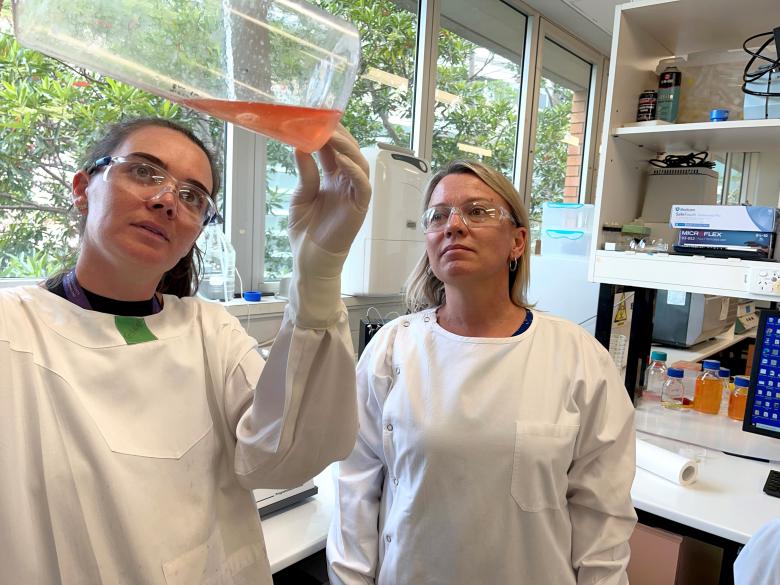
Researchers looking up at cells in a container.

Dr Jody Hobson-Peters looks at cells used for the vaccine manufacture in culture in a container held by Dr Jessica Harrison.

The project was supported by Australian Pork Limited, with recent efficacy trials conducted on pigs at the Elizabeth MacArthur Agriculture Institute.

UQ’s Professor Roy Hall said the vaccine performed extremely well.  

“More than 90 per cent of the young pigs in the trial were protected from JEV infection, and we expect the same in other species like humans and horses,” Professor Hall said.

“The researchers are now working with veterinary company Treidlia Biovet on manufacturing the vaccine so it can undergo safety trials on a larger scale.

“Pending successful outcomes, we hope to roll the vaccine out commercially later in 2023 – a fantastic outcome.”

Professor Hall said the development of an effective vaccine in Australia is now critical, with JEV likely to be here to stay.

“This dangerous virus will remain a major health threat to humans, and a big problem to the pig and horse industries,” he said.

“Australia’s current weather patterns are conducive to its further spread here, so it’s crucial that we have a safe and effective Australian-made vaccine available.

“We’re proud that Australian science can be at the forefront of tackling this virus.”

Related articles

Three researchers wearing blue protective lab gowns stand among rows of potted chickpea plants inside a controlled-environment plant research facility.

Turning up the heat on chickpea yield

A University of Queensland study has outlined a practical pathway for accelerating the development of heat adapted chickpeas using data from new ‘omic’ technologies. PhD candidate Callum Jamie said the suite of technologies offered tremendous opportunities to understand how a complex trait like heat tolerance works. “The narrow genetic diversity in the elite chickpea gene pool has limited conventional breeding’s effectiveness for stress tolerance,” Mr Jamie said. “These technologies have improved our capacity to dissect trait architecture and phenotype secondary traits but their use in chickpeas has been limited.” The technologies include genomics, epigenomics, transcriptomics, proteomics, metabolomics, phenomics and enviromics, and help provide a comprehensive picture of biological systems. Epigenomics helps understand what controls gene activity; transcriptomics considers gene expression; proteomics protein production; metabolomics looks at biochemical processes; phenomics observes traits; and enviromics considers environmental factors influencing outcomes. Mr Jamie said previous studies had focused on just 1 to 2 -omic datasets, a small number of genotypes, and single tissues. This has meant it was hard to infer what results meant for trait architecture and mechanisms and the ability to extrapolate the information to breeding populations was limited. There have also been challenges around cost, scalability and integrating very different types of data to make the technologies useful. To overcome the hurdles, Mr Jamie’s research at the Queensland Alliance for Agriculture and Food Innovation has resulted in a proposed staged approach. It would start with genomic prediction and phenotyping, before adding -omic layers as costs fall and unknowns were resolved. “These technologies are novel and we still don’t know which information provides added value and how best to integrate all of this data to achieve an outcome,” Mr Jamie said. His PhD is supported by the Grains Research and Development Corporation (GRDC) and the International Research Training Group (IRTG) Accelerating Crop Genetic Gain and is aligned to a project which aims to fast-track the development of chickpea varieties adapted to high temperatures. Project leader Dr Millicent Smith said heat stress causes severe yield implications through flower and pod loss, reduced pollen viability and impaired grain filling. “Late sown chickpea is particularly in the firing line across most of Australia's crop in southern Queensland and northern New South Wales,” Dr Smith said. “We want to ensure that Australian growers maintain their competitive edge. “New varieties with improved genetics to cope with heat stress are essential for the future. “This work, suggesting a staged approach to utilising the new -omic technologies, is an exciting frontier.” The research was published by Food and Energy Security. Callum Jamie’s PhD is supported by the Grains Research and Development Corporation (GRDC) and the International Research Training Group (IRTG) Accelerating Crop Genetic Gain.
15 October 2026
A teenage girl consulting with a female doctor.

Global guidelines needed to address inequities in endometriosis care

Adolescents, gender-diverse people and those with lived experience are underrepresented in endometriosis guidelines worldwide, a University of Queensland study has found.
15 October 2026

Media contact

Subscribe to UQ News

Get the latest from our newsroom.