
Setting a course for markets to improve Queensland’s waterways
University of Queensland scientists are leading efforts to explore a water quality trading scheme to improve the state’s waterways.
UQ researchers met with Queensland Government representatives, economists and industry groups to consider the principles and what would be required for a market mechanism to be successful in Queensland.
UQ researcher Joseph McMahon from the Reef Catchments Science Partnership within the School of the Environment said such schemes have the potential to significantly improve degraded or at risk water environments.
“We’re at a critical turning point for water quality in Queensland and we need to explore new approaches,” Mr McMahon said.
“A comprehensive water quality trading network would be a game changer for Queensland if structured appropriately.
“For example, if a wastewater treatment plant releases treated water into a river, it increases the concentration of nutrients, which can pollute that river.
“Currently the plant may have to find ways to mitigate or offset this impact.
“Trading could allow the plant to buy nutrient savings from another company or organisation, which has reduced its pollution or has actively restored catchments.
“Such a scheme would also allow for non-polluting organisations, such as superannuation funds, corporate ethical investors, and philanthropic organisations to invest in water quality improvements at specific locations such as the Great Barrier Reef or Moreton Bay.
“A well-designed water quality trading scheme has the potential to lead to an overall improvement in water quality and catchment health, all while the population grows and living standards increase.”
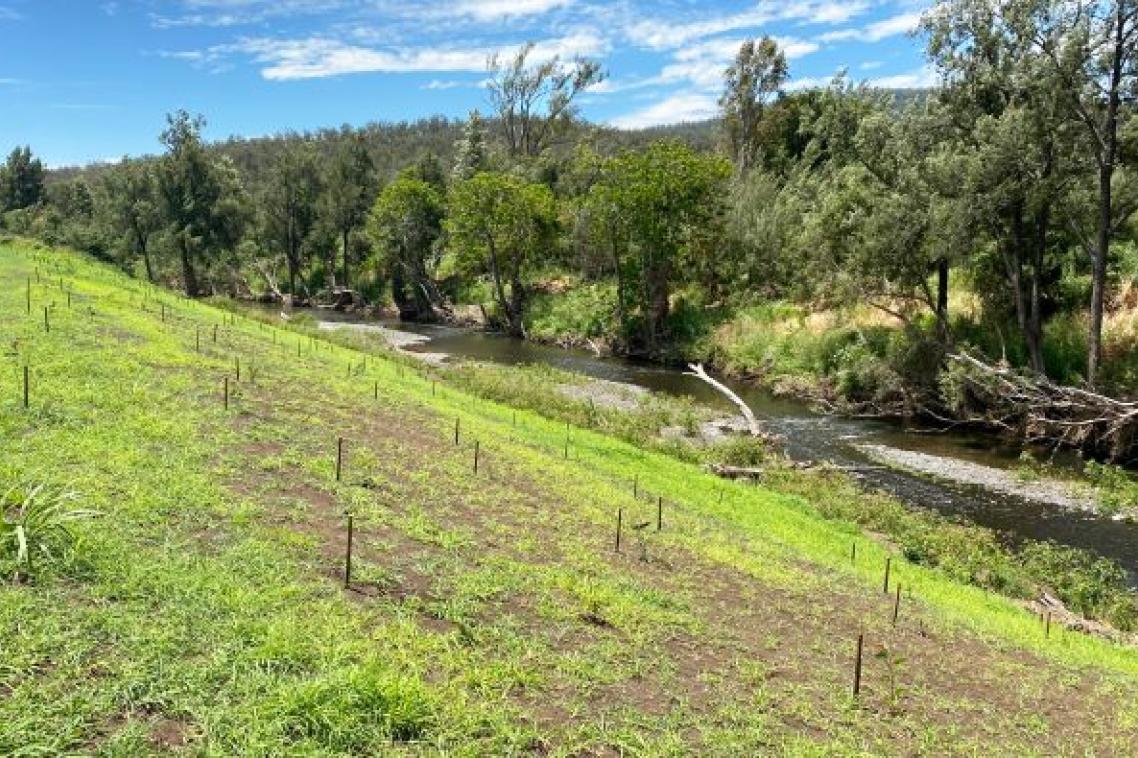
Activities that would generate nutrient savings could include riverbank revegetation, which would also sequester carbon, improve aquatic ecosystems, and create vegetated corridors between conservation areas.
Dr Ryan Turner from UQ’s Reef Catchments Science Partnership, said the symposium at UQ’s St Lucia campus established important principles for a trading scheme.
“Together we’ve developed a crucial guide for developing water quality trading in Queensland, now known as The St Lucia Declaration.
“The Declaration identifies key elements that would help ensure water quality trading generates beneficial outcomes for Queenslanders.
“It tackles key issues, such as consistency, transparency and integrity necessary for a successful scheme.
“A water quality trading scheme could help protect our precious environment and achieve major policy goals such as the United Nations Sustainable Development Goals and a green Brisbane Olympics in 2032.”
Media: Joseph McMahon, joseph.mcmahon@uq.edu.au, +61 415 837 890; Dr Ryan Turner, ryan.turner@uq.edu.au; UQ Faculty of Science Media, science.media@uq.edu.au, +61 438 162 687.
Related articles

Shaping the future of medicine: UQ Medical School turns 90
