
Saving Queensland’s earless dragons
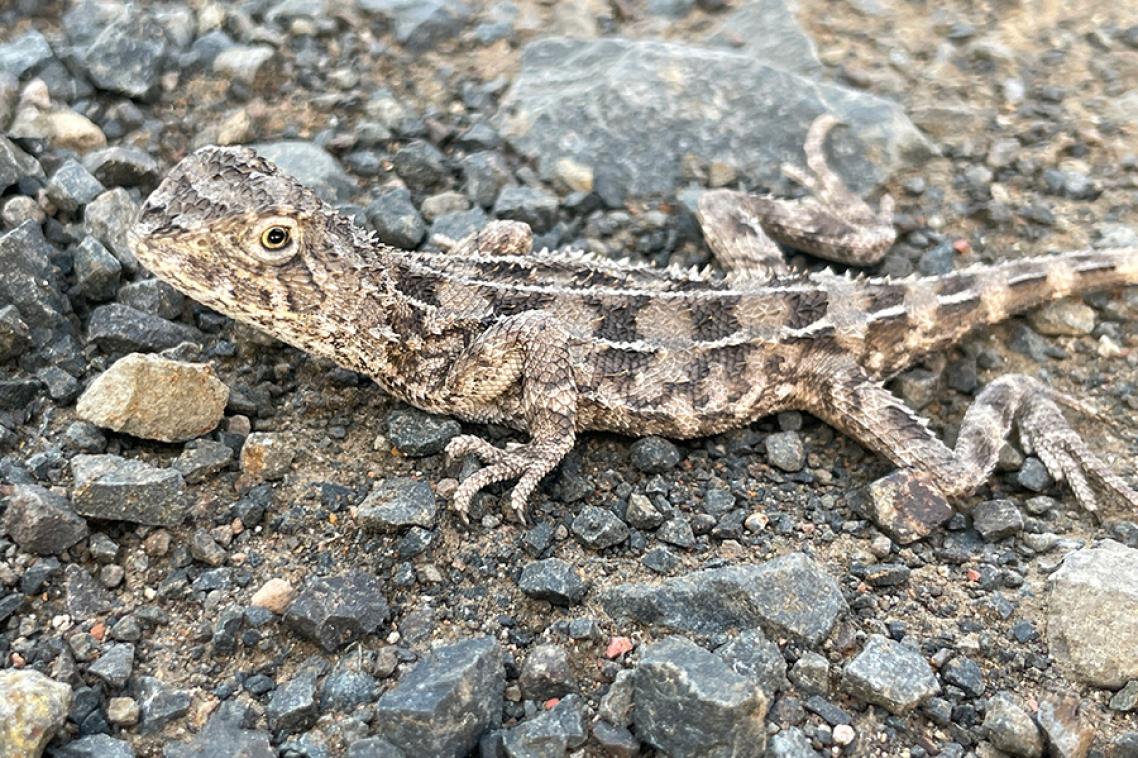
The earless dragons are so small they are difficult to spot with the naked eye.
Remote cameras and conservation dogs will be deployed as part of a University of Queensland research project aiming to conserve four threatened Queensland reptile species.
Dr April Reside from UQ’s School of the Environment said project was funded through the Queensland Government’s Threatened Species Program and will investigate threats to the Condamine earless dragon, the Roma earless dragon, the grey snake, and the five-clawed worm-skink.
“It’s vital key threats to these unique species are better understood before it’s too late,” Dr Reside said.
“Half of the Australian reptiles most at risk of extinction are found in Queensland - four are grassland earless dragons and we know surprisingly little about them.
“Earless dragons are tiny lizards who, as the name suggests, lack any external ear structures, instead having ear drums simply covered with scaly skin.
“These creatures live in and around crops, but we are yet to determine why they can survive in some cropped areas but not others.”
Dr Reside said invasive species such as cats and foxes are threats to the earless dragon, but little is known about the true impact they have on the reptiles.
“We will investigate this by monitoring the behaviour of both the reptiles and their predators, to determine if they are being targeted,” she said.
“Remote cameras and small ink pads will be used to track the activity of the reptiles and their predators, an effective way of finding out who is hanging out where.”
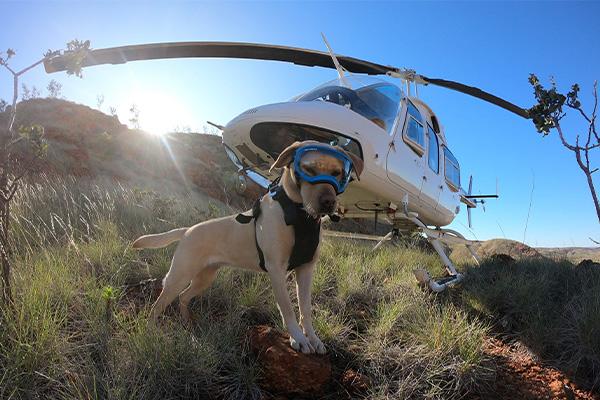
The researchers are also training a team of conservation dogs, funded by a separate Queensland Government Community Sustainability Action grant and a collaboration with conservation organisation Detection for Good.
Dr Megan Barnes from Detection for Good said while it’s possible to find earless dragons with human-only surveys, detection rates are sometimes low.
“The dragons are difficult to spot with the naked eye, but in the initial trials, our trained dog Evie demonstrated she could locate those hiding underneath layers of grass, an area that would otherwise be invisible to the researchers,” Dr Barnes said.
“Sometimes we could only see a dragon because Evie showed us where to look.
“With the dogs, we hope we will be able to survey in different areas and times of year when the dragons are normally difficult for people to find, helping us to learn new things about the behaviour and needs of these endangered creatures.”
The team hopes the research will be a step towards developing threat mitigation and threatened reptile recovery, while working collaboratively with farmers for better species protection.
“Working closely with landholders is the only way we can ensure that threatened species like the earless dragon will continue to survive, and to thrive,” Dr Reside said.
Collaboration and acknowledgements
Researchers would like to acknowledge the contribution of Detection for Good and Queensland Government’s Department of Environment and Science to this ongoing research.
Related articles

All-in-one on-farm genetic testing proves to be quick and reliable
