
Study exposes risks of skin cancer in elite swimmers
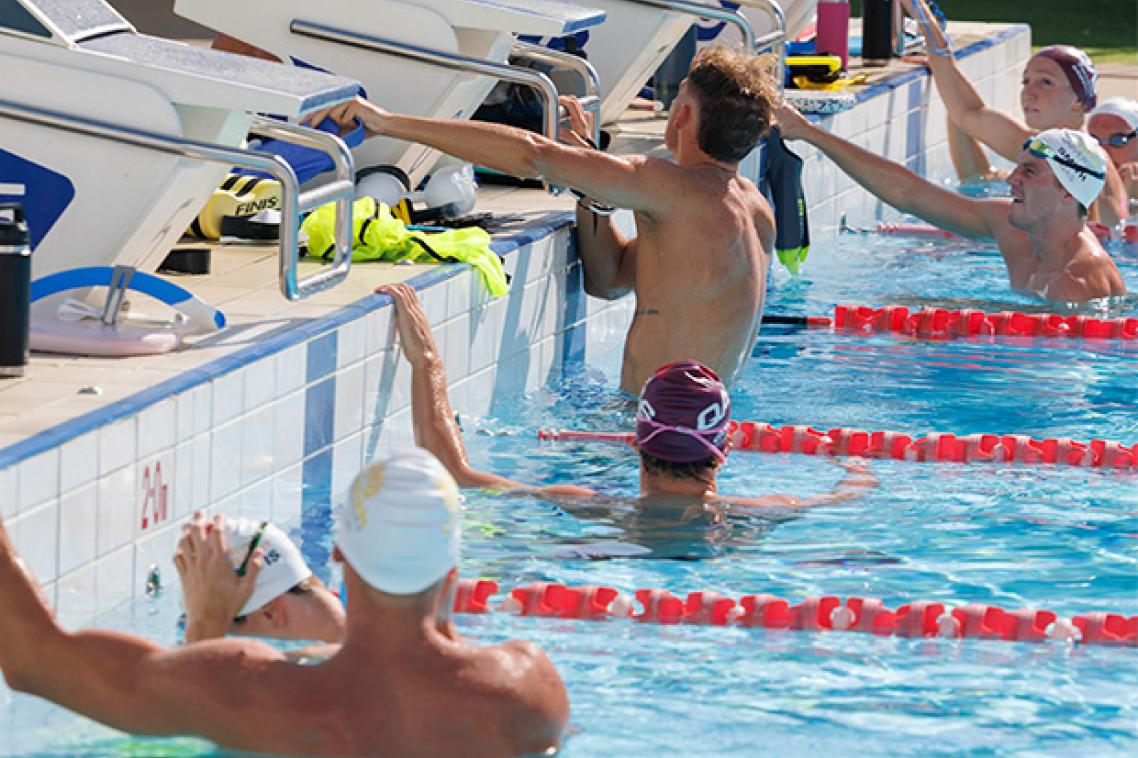
Only a small proportion of elite swimmers regularly checked their skin for signs of cancer despite being at increased risk, according to University of Queensland research.
Forty-four South East Queensland athletes and 23 support staff took part in a pilot study conducted by the Frazer Institute’s Professor H. Peter Soyer and Professor Monika Janda from the Centre for Health Services Research.
Professor Soyer said three athletes who took part in the study reported a previous history of melanoma, while 61 per cent of athletes and 96 per cent of support staff had experienced one or more severe sunburns.
“Worryingly, 16 per cent of the athletes and 22 per cent of support staff reported being severely sunburnt 50 or more times,” Professor Soyer said.
“During training and competitions, athletes and support staff are exposed to high levels of ultraviolet radiation (UVR) for long periods of time, and this is important as UVR exposure is thought to cause 95 per cent of all skin cancers.
“Although training is in the early morning and late afternoon, there is still significant sun exposure as we witnessed clear tanning lines in many of the athletes.
“The most frequently used sun protection methods for the swimmers were sunscreen and limiting time outdoors, while staff relied more frequently on sunglasses and hats.”
The study also asked participants to self-report their melanoma risk, on a scale from 0 (much below average) to 5 (much above average).
“The average melanoma risk athletes reported was 3.2, and it was slightly lower for support staff at 2.6,” Professor Janda said.
“No skin cancers were found during the course of the study.
“Education and skin awareness are very important for coaches and swimmers as they are a group experiencing high sun exposure.”
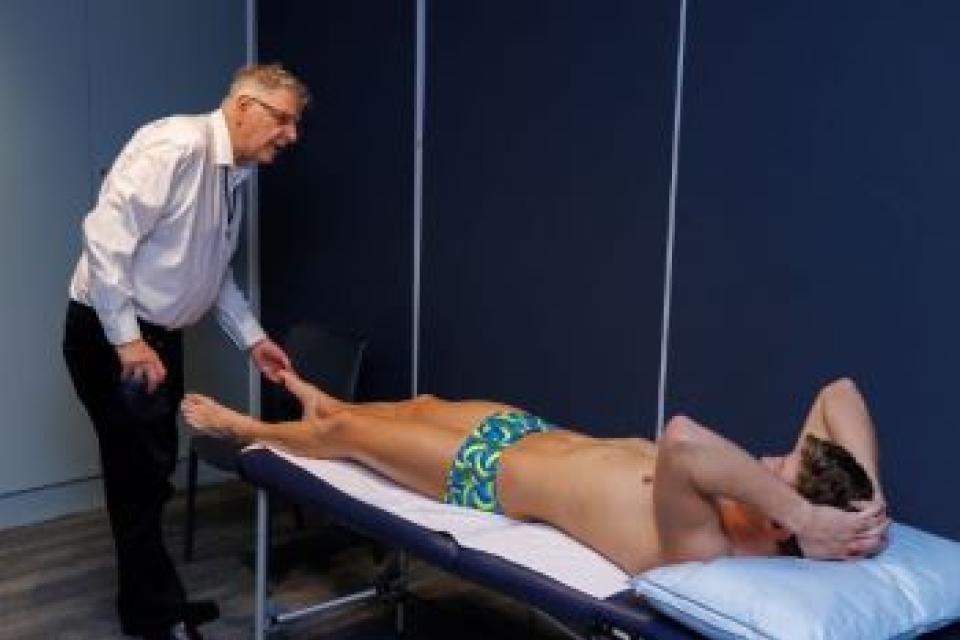
The researchers are now keen to conduct a more formal research project that involves full body imaging and genetic testing for melanoma risk.
The Skin Cancer Prevention and Early Detection in Sun Exposed Athletes report was conducted with advice and assistance from Swimming Australia.
Swimming Australia Sport and Exercise Physician Dr Rachel Harris said it was vital to get an early detection program off the ground to safeguard the health of athletes.
“We want to spread the message of prevention and we certainly consider this cohort has a higher exposure to UV rays just because of their occupation,” Dr Harris said.
“Most of our athletes are younger than 30 years and prevention is always better than the cure, so the support of UQ and programs like this is vital.”
Image above left: Professor Peter Soyer conducts a skin check on a champion swimmer. Image, UQ
Topics
Related articles

Sick of being told to ‘just lose weight’? Health promotion shouldn’t come with weight stigma
