
Humpbacks happier during pandemic pause
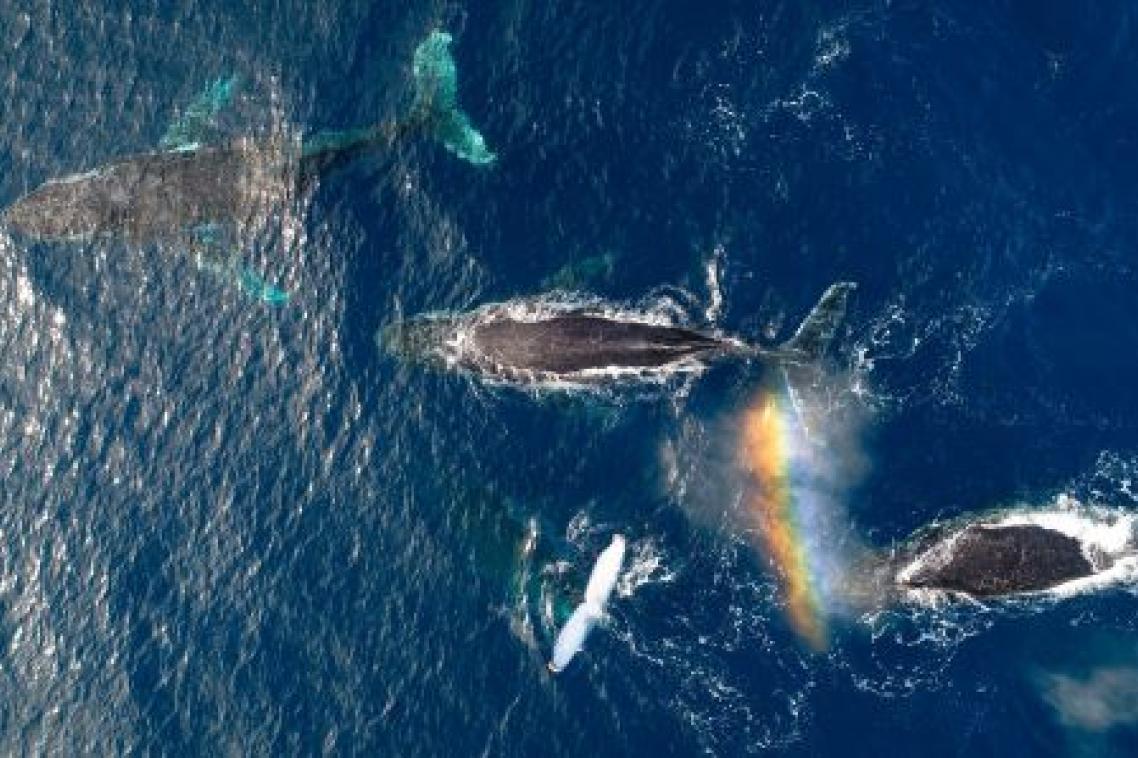
University of Queensland-led research has found migrating humpback whales off Australia’s east coast became less stressed over the first year of the COVID-19 pandemic.
Dr Jake Linsky from UQ’s School of the Environment led a study out of Moreton Bay Research Station to measure the health of the species during a time of unprecedented change in human activity.
“We used drone photographs and blubber samples to assess the health of eastern Australian humpback whales in the waters off Minjerribah – North Stradbroke Island – during their migration in 2020 and 2021,” Dr Linsky said.
“This population has made one of the most successful recoveries from historical whaling, so we wanted to use the latest tools at our disposal to provide a check-up on their health.”
The researchers used drone images to measure whale size and body condition.
“These are essential indicators of energy stores used during their long annual migration and intense breeding period,” Dr Linsky said.
“We also used small boats to approach whales and collect small samples of skin and blubber from the whales’ flanks.
“These blubber samples were analysed for hormones and gene expressions related to stress, energy reserves and immune health.”
The lab results revealed significantly lower cortisol concentrations in the whales in 2021 compared to 2020.
“This change in their physiology suggests a decline in environmental stressors between the two years,” Dr Linsky said.
“Several things happened during this period that likely contributed to our findings, including a shift in climate into La Niña and dramatic changes to human activity during the pandemic.
“Our gene expression results also raise a further hypothesis that the whales may have been responding to a decline in pollutants in their remote feeding waters.
“Previous studies have found similar changes to stress hormones in whales on the opposite side of the Antarctic continent – our findings support the idea that these changes occurred throughout the Southern Ocean.”
The researchers said the results highlight the role of migratory whales as indicators of the health of Antarctic marine ecosystems.
“Eastern Australian humpback whales have demonstrated a remarkable ability to adapt to changes in their environment, but our study emphasises the importance of mitigating human impacts so they can continue to thrive in our rapidly changing oceans,” Dr Linsky said.
“By continuing to monitor and protect humpback whales off Australia’s east coast, we can ensure their health and stability while also offering valuable insights into how other struggling whale populations might be conserved.”
The research paper was published in Marine Environmental Research.
Images supplied by the researchers were taken with the Cetacean Ecology Group under permit.
Media assets
Download images and drone footage from Dropbox
Media contact
UQ Communications
communications@uq.edu.au
+61 429 056 139
Related articles

Doping Control Officer course delivered for first time in Australia
