
UQ training centre to tackle antimicrobial resistance in agribusiness and environment
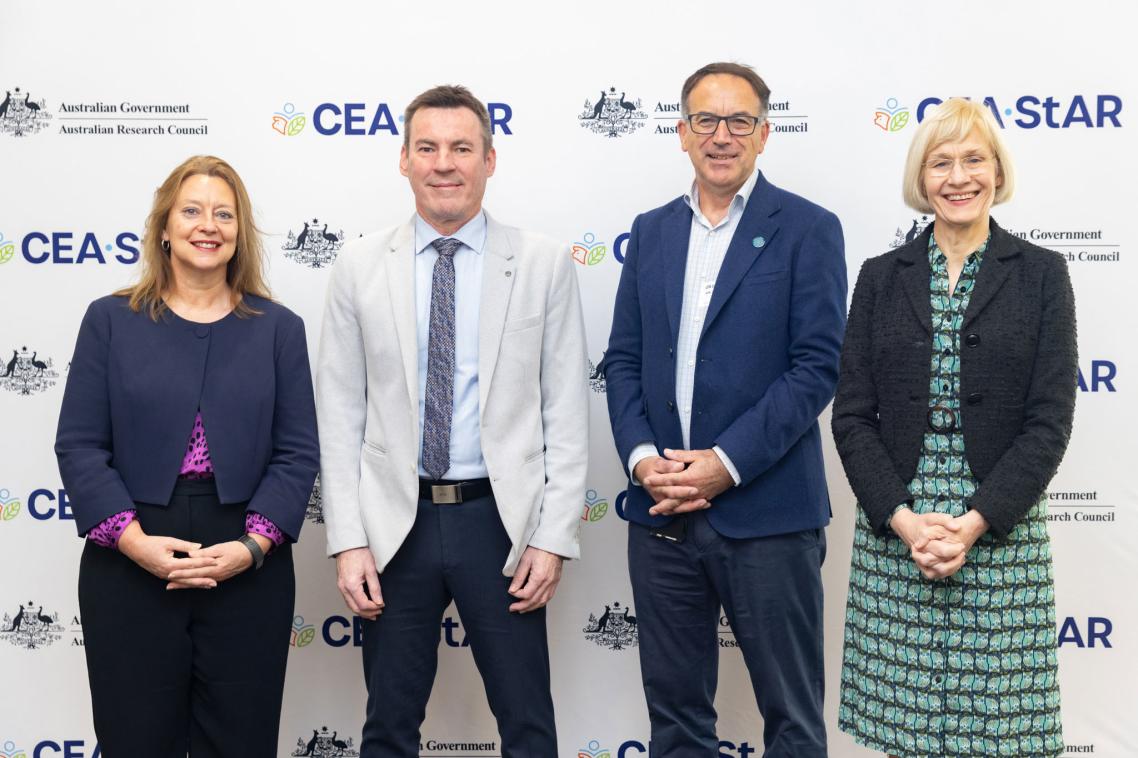
A new training Centre led by The University of Queensland is partnering with industry to tackle the global crisis of antimicrobial-resistant infections, which affect humans, animals and the environment.
Headquartered at UQ’s Institute for Molecular Bioscience (IMB), the Australian Research Council Centre for Environmental and Agricultural Solutions to Antimicrobial Resistance (CEAStAR) was created to develop innovative approaches to curb this problem.
Centre Director Professor Mark Blaskovich from IMB emphasised the critical need for alternatives to antibiotics, especially in agriculture and veterinary medicine, where the same antibiotics are often used to prevent and treat infections as in human medicine.
“One of the main drivers of drug-resistant pathogens is the misuse and overuse of antibiotics, both in humans and animals,” Professor Blaskovich said.
“Nearly two-thirds of all antibiotics used worldwide in 2017 were for animals, and these are often used promote growth or prevent diseases rather than treat infections.
“It is imperative that treatments for livestock and companion animals don’t overlap with equivalent human therapeutics to reduce transmission of resistance across sectors.”
The Centre brings together multidisciplinary teams and applies a ‘One Health’ approach to antimicrobial resistance to acknowledge the interconnections between humans, animals, and the environment.
“CEAStAR is developing solutions specific to animal health and the environment, but this will also have a positive impact on human health,” Professor Blaskovich said.
The Centre aims to deliver new antimicrobials solely for animal use and alternative treatments that don’t require antibiotics as well as enhance detection, surveillance and monitoring of antimicrobial resistance in our environment.
Professor Blaskovich said these strategies will reduce infections and transmission of resistant microbes across sectors and preserve the efficacy of existing antibiotics for human use.
CEAStAR was established with $4.5 million in Commonwealth funding from an Australian Research Council Industrial Transformation Research Program grant and more than $4 million in partner and industry funds.
A key mission of CEAStAR is training of PhD students and postdoctoral researchers who will work with industry partners to advance technologies that address antimicrobial resistance.
The 13 PhD students trained through the Centre will have access to bootcamps, professional development activities, and industry placements that will equip them with fundamental antimicrobial resistance research skills.
"Brisbane-based biotechnology company, MGI Australia Pty Ltd (MGI Australia), a subsidiary of MGI Tech Co., Ltd., is one of CEAStAR’s industry partners." MGI’s proprietary DNBSEQTM technology, renowned for its high accuracy and efficiency in genetic sequencing, plays a pivotal role in CEAStAR’s efforts.
“We have successful established collaborations with UQ, utilising our cutting-edged sequencing technology to detect SARS-CoV-2 variants and antibiotic resistance genes in wastewater,” said Dr Bicheng Yang, Director of MGI Australia. “We look forward to expanding this partnership, continuing to develop and apply innovative solutions to combat AMR.”
CEAStAR is a partnership between UQ, University of Adelaide, BiomeMega Global, Calix Limited, Edenvale Beverages, Invion Pty. Ltd, Lixa, MGI Tech and Neoculi Pty Ltd.
Learn more about CEAStAR by visiting their website.
Media contact
Veah Tapat
v.tapat@uq.edu.au
+61 4 7807 1044
Related articles

UQ’s QARC wins at Engagement Australia Awards
