
UQ swimming program a win for young people with cerebral palsy
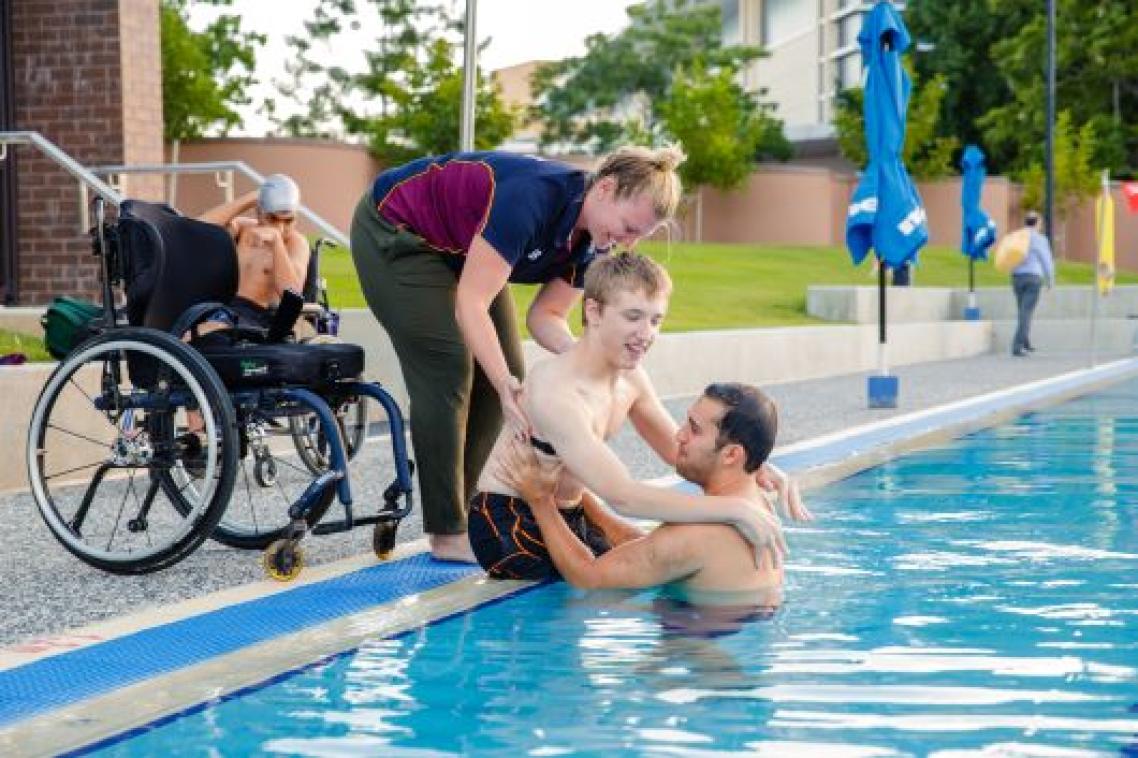
A competitive swimming program developed by University of Queensland researchers for young people with severe cerebral palsy has reversed motor decline associated with the condition.
Professor Sean Tweedy from UQ's School of Human Movement and Nutrition Sciences and the Queensland Centre for Olympic and Paralympic Studies leads the ParaSTART program, a longitudinal research program aimed at evaluating whether performance-focused sports training improves clinical outcomes for people with severe disabilities.
“Our first ParaSTART intake included 3 young people with severe cerebral palsy,” Professor Tweedy said.
“We deliberately selected people with no prior swimming experience to ensure the findings would apply to anyone with severe cerebral palsy.
“The training program replicated the sporting environment that Para athletes experience when training for competitions, including 2-3 training sessions per week complemented by strength and conditioning work, diet and sleep.
“The participants worked extremely hard, and despite not being able to stand or walk independently, they can now swim one kilometre in a training session – which would test some non-disabled swimmers.”
The results from the first 4 years of the program were impressive.

“But there were also very important clinical improvements – all 3 athletes with cerebral palsy not only maintained, but improved their motor function, defying the typical decline associated with the condition.
“Their weekly training loads also met the World Health Organisation’s recommended physical activity levels, significantly reducing the participants' risk of cardiovascular disease, type 2 diabetes mellitus and a range of other diseases associated with inactivity.”
ParaSTART is the first program in Australia to focus on training and evaluating athletes with high support needs.
It is delivered by a UQ team of exercise physiologists, physiotherapists, occupational therapists and coaches and supported by UQ clinicians including a medical doctor, dietitian, speech pathologist and sports psychologist.
Professor Tweedy said 3 key aspects contributed to the successful outcomes.
“Firstly, the competitive sport environment of the program offers numerous benefits for young people with severe disabilities including age-appropriate competition, teamwork, interaction and friendships,” he said.
“The multidisciplinary team is also an important aspect in delivering the program.
“And finally, the participants live with clinically complex conditions and the ParaSTART team is qualified to ensure safe and effective participation in competitive sport.
“We now hope to secure funding to be able to investigate whether similar results are achieved by people with other diagnoses and in other sports.
“We are also interested in pursuing the upscale and dissemination of the ParaSTART program across Australia.”
The findings from the first 4 years of the program were published in the British Journal of Sports Medicine.
Image above left: Professor Sean Tweedy.
Media contact
Faculty of Health and Behavioural Sciences
habs.media@uq.edu.au
+61 412 307 594
Related articles

Shaping the future of medicine: UQ Medical School turns 90
