
Coral adaptation unlikely to keep up with global warming
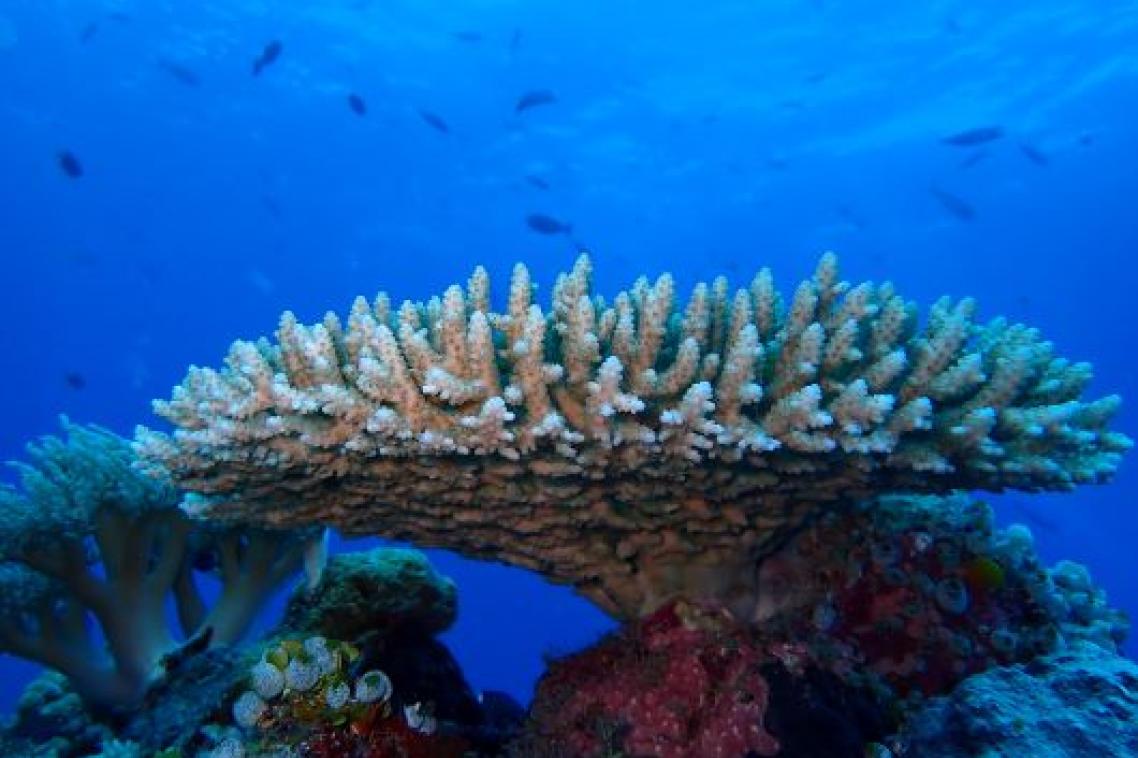
Coral adaptation to global warming will likely be overwhelmed without rapid reductions in global greenhouse gasses, according to an international team of scientists.
Professor Peter Mumby from The University of Queensland’s School of the Environment worked with Dr Liam Lachs from Newcastle University’s Coralassist Lab in the United Kingdom to model the consequences of different scenarios of global development and fossil fuel usage on coral populations.
Professor Mumby said the research revealed that it may be plausible for coral heat tolerance adaptation to keep pace with ocean warming via natural selection if Paris Agreement commitments are realised.
“If we don’t achieve commitments to reduce greenhouse gas emissions, our world is expected to warm by 3 to 5 degrees by the end of this century,” Professor Mumby said.
“Under such levels of warming, natural selection may be insufficient to ensure the survival of some of the more sensitive yet important coral species.
“The reality is that marine heatwaves are triggering mass coral bleaching mortality events across the world’s shallow tropical reefs, and the increasing frequency and intensity of these events is ramping up under climate change.”
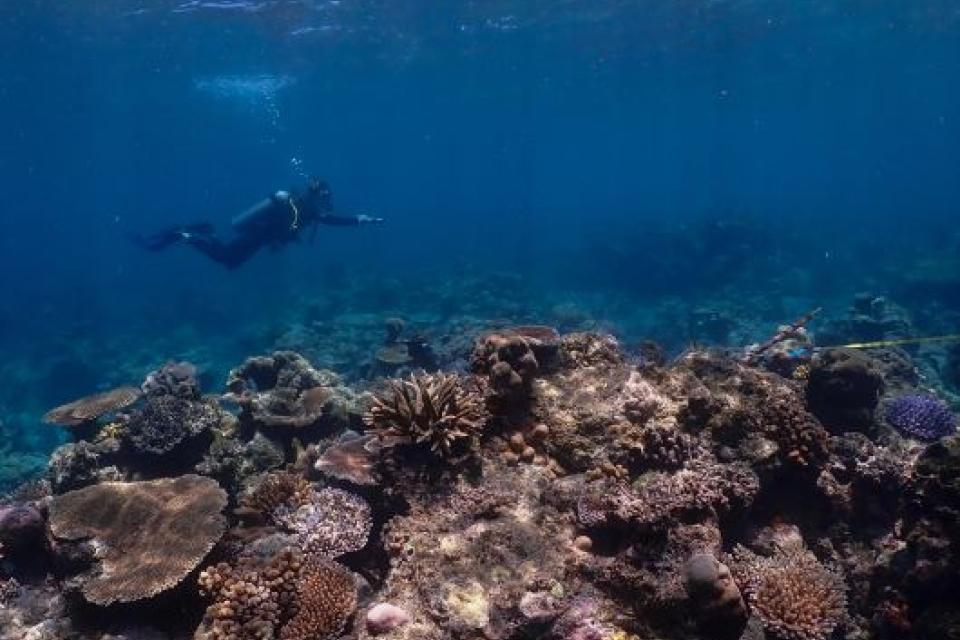
This model incorporates new experimental data on the thermal and evolutionary biology of common thermally sensitive corals in the Acropora genus, and simulates population trajectories under a series of alternative future climate scenarios.
The study’s lead author, Dr Lachs, said the world was on track for 3 degrees of warming with current climate policies, and that their results suggest that it is possible some coral populations could adapt and survive.
“Our modelling for this moderate emissions scenario shows we would expect to see profound reductions in reef health and an elevated risk of local extinction for thermally sensitive coral species,” Dr Lachs said.
“We acknowledge that considerable uncertainty remains in the ‘evolvability’ of coral populations.”
Dr Lachs said there was an urgent need to understand how to design climate-smart management for coral reefs.
“We need management actions that can maximise the natural capacity for genetic adaptation, whilst also exploring whether it will be possible to further boost adaptation rates in wild populations with targeted interventions,” he said.
“While still at the experimental stages, this could include planting corals which have been selectively bred for heat tolerance.
“We can still have fairly healthy corals in the future, but this requires more aggressive reductions in global emissions and strategic approaches to coral reef management.”
The paper is published in Science.
Image above left: Coral reef ecological surveys in Palau, western Pacific Ocean with the Palau International Coral Reef Center. Image: Dr Eveline van der Steeg.
Media assets
Photos and video available via Dropbox
Media contact
Professor Peter Mumby
p.j.mumby@uq.edu.au
Dr Liam Lachs
liam.lachs@newcastle.ac.uk
UQ Faculty of Science Media
science.media@uq.edu.au
+61 438 162 687
Related articles

US agency selects UQ for ‘one of the world’s most ambitious biomanufacturing programs'
