
Biodiversity at risk in most rainforests
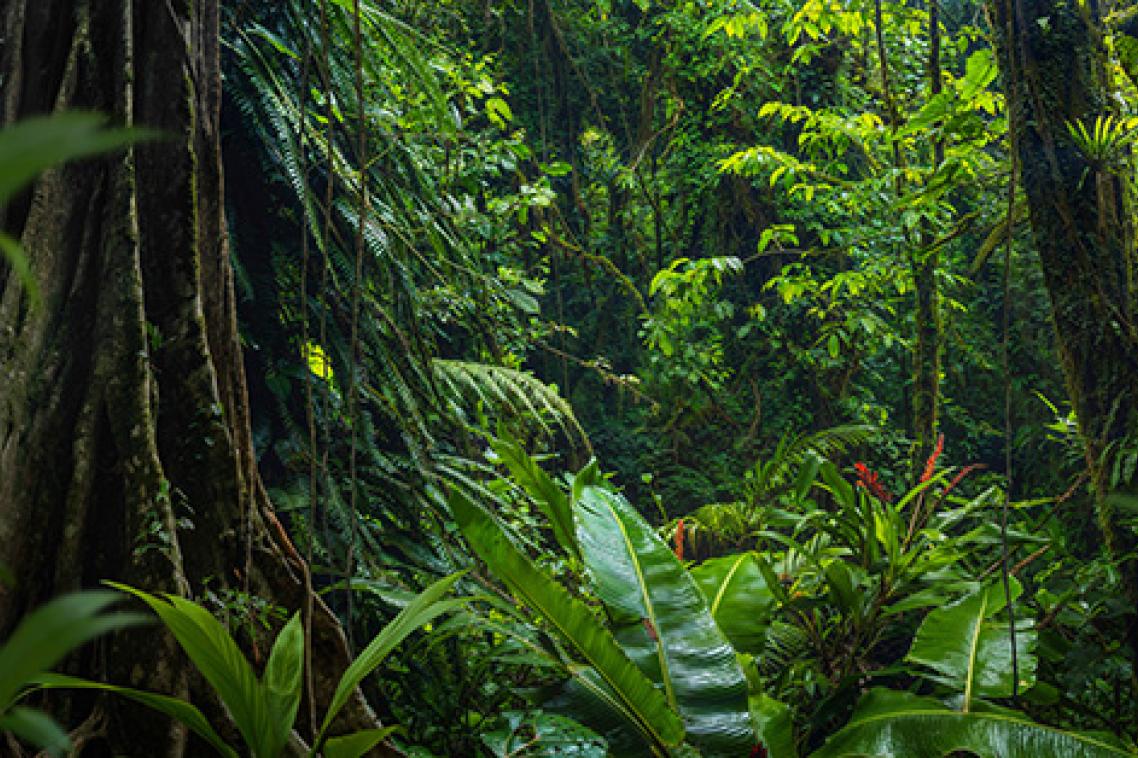
New research has revealed less than a quarter of the remaining tropical rainforests around the globe can safeguard thousands of threatened species from extinction.
The research, co-authored by The University of Queensland’s Professor James Watson, evaluated the global availability of structurally intact, minimally disturbed tropical rainforests for more than 16,000 species of mammals, birds, reptiles, and amphibians.
“Using remote sensing and forest integrity indicators, we analysed the quality of the rainforests across the ranges of the forest-dependent vertebrates,” Professor Watson said.
“Overall, up to 90 per cent of forest cover still remains within these species’ ranges but only 25 per cent of it is of high quality, which is a critical factor in reducing extinction risk.
“We knew high-integrity rainforests were vital for biodiversity, but no one had quantified just how limited these key habitats have become.
“Our research shows that structurally intact rainforests – which are essential for many forest-dependent species – are alarmingly rare, particularly in regions most affected by human pressures such as logging and infrastructure development.”
The study also revealed contrasts in habitat quality based on the conservation status of different species.
“Only 8 per cent of the rainforest habitat for species classified as threatened or with declining populations is of high integrity,” Professor Watson said.
“In comparison, non-threatened species have ranges with about 25 per cent of high-integrity rainforest habitat, highlighting how habitat degradation disproportionately impacts species already at risk.”
The golden bowerbird (Prionodura newtonia), which is classified as having a decreasing population in Queensland’s wet tropics, was included in the study which found while 84 per cent of its habitat remained, only 36 per cent is high-integrity rainforest.
University of Northern British Columbia’s Dr Rajeev Pillay, who led the research, said the results point to the urgent need for conservation strategies that go beyond preserving forest cover to maintaining forest quality.
“Simply having forest cover isn’t enough if the structural complexity and low human disturbance necessary for biodiversity are gone,” Dr Pillay said.
“To protect the remaining high-integrity tropical rainforests, global coordination to minimise human disturbance is key, especially in unprotected forests that remain vital for biodiversity.
“As international conservation targets emphasise ecosystem integrity, this study provides a critical baseline.
“Protecting high-integrity rainforests is essential to meeting the Convention on Biological Diversity’s 2030 targets and to averting further biodiversity loss.
“As human pressures continue to mount, preserving these remaining forests may be the best hope to secure a sustainable future for the planet’s biodiversity.”
The research is published in Proceedings of the National Academy of Sciences.
Media contacts
UQ Faculty of Science Media
science.media@uq.edu.au
+61 438 162 687
Related articles

Calls for global regulation of AI are growing. What exactly could it look like?
