
Drug-resistant hookworms put pets and people at risk
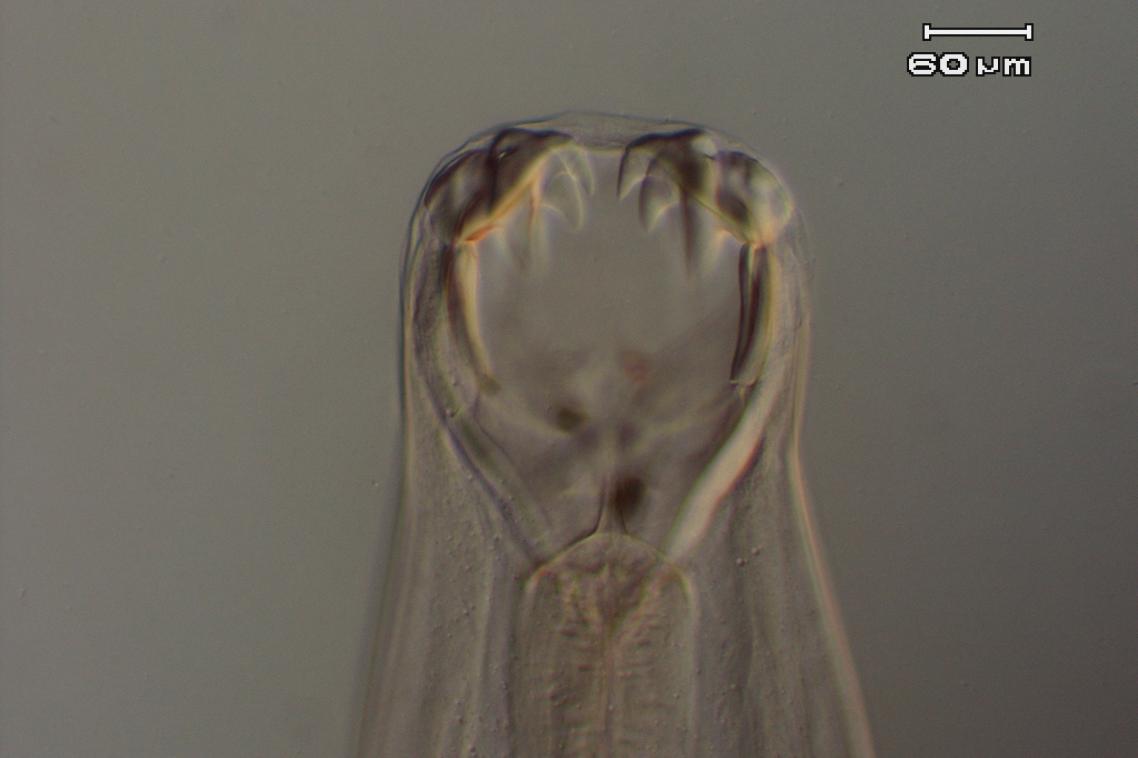
A hookworm viewed under the microscope.
(Photo credit: Lyn Knott. )
Canine hookworms are becoming increasingly resistant to drugs across Australia, according to new research.
Scientists at The University of Queensland and The University of Sydney have identified widespread resistance to benzimidazole-based dewormers which are commonly used to treat gastrointestinal parasites in dogs.
Dr Swaid Abdullah from UQ’s School of Veterinary Science said almost 70 per cent of the hookworm samples studied showed genetic mutations that can cause drug resistance.
“This is a big problem, as hookworm infections can be dangerous for both humans and animals,” Dr Abdullah said.
“In dogs, hookworm infections primarily affect the small intestine leading to anaemia, diarrhea, and malnutrition.
“But worse still, the parasites can spread to humans through the skin.
“In people, hookworms from dogs can cause cutaneous larva migrans (CLM) disease – or ‘creeping eruption’ – which is a winding, snake-like rash with blisters and itching.”
Dr Abdullah said the best weapons against canine hookworms have been benzimidazole-based dewormers, but they are starting to fail.
“This level of resistance is an urgent issue for pet and public health,” he said.
The study team used advanced parasitological diagnostics to examine samples from more than 100 animals in Australia and New Zealand.
The results showed resistance was spreading through hookworm species including the northern hookworm, which had previously been thought to be unaffected.
Professor Jan Šlapeta from The University of Sydney said routine reliance on deworming drugs is likely fuelling the development of resistance.
“Responsible parasite management by veterinarians is going to be vital moving forward,” Professor Šlapeta said.
“We’re calling for a shift toward targeted, risk-based treatment to curb the spread of resistant hookworm.
“Responsible doctors don’t give blanket antibiotics to any and all of their patients, and deworming should be approached in the same way if we’re to limit drug resistance.
“As resistance spreads, we need ongoing monitoring and the development of new control strategies to protect animal and human health.
“This study is a wake-up call for both pet owners and veterinarians alike – the era of effortless parasite control may be coming to an end.”
The research is published in the International Journal of Parasitology.
Related articles

A viral SNL skit exposed how unpaid care too often defaults to women. Why won’t more men help?
