
Hot crocs show impacts of a warming climate
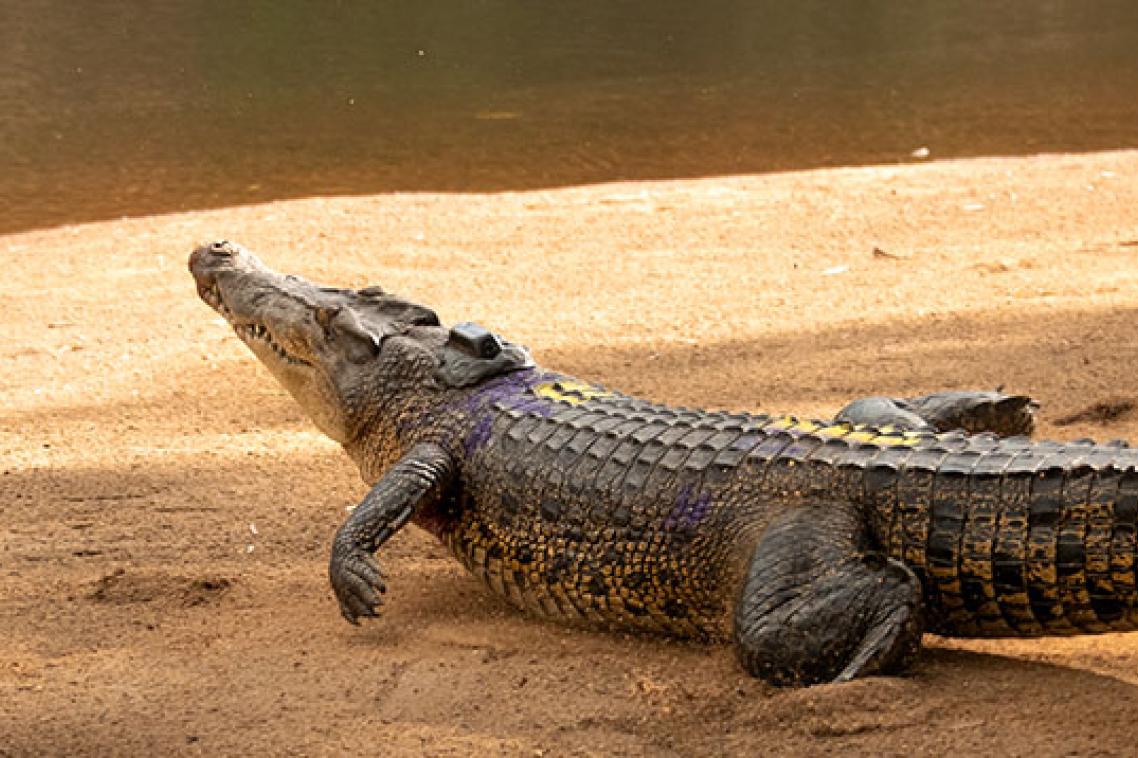
Crocodiles in northern Australia are heating up as the climate warms, with higher body temperatures changing their behaviour.
Research led by The University of Queensland’s School of the Environment analysed 15 years of information from sensors and trackers on 203 wild crocodiles on the Wenlock and Ducie rivers on Cape York Peninsula.
PhD candidate Kaitlin Barham said the data revealed crocodiles were spending more time at or close to their critical thermal limit of 32-33°C, when behavioural performance decreases.
“As ectotherms crocodiles can’t regulate their own temperature like birds and mammals, so as their environment is becoming warmer the animals in our study are also getting hotter and needing to spend more time on cooling behaviours,” Ms Barham said.
“But if their time and energy is dominated by the need to stay cool, activity necessary for hunting, keeping safe from predators or reproducing is reduced.”
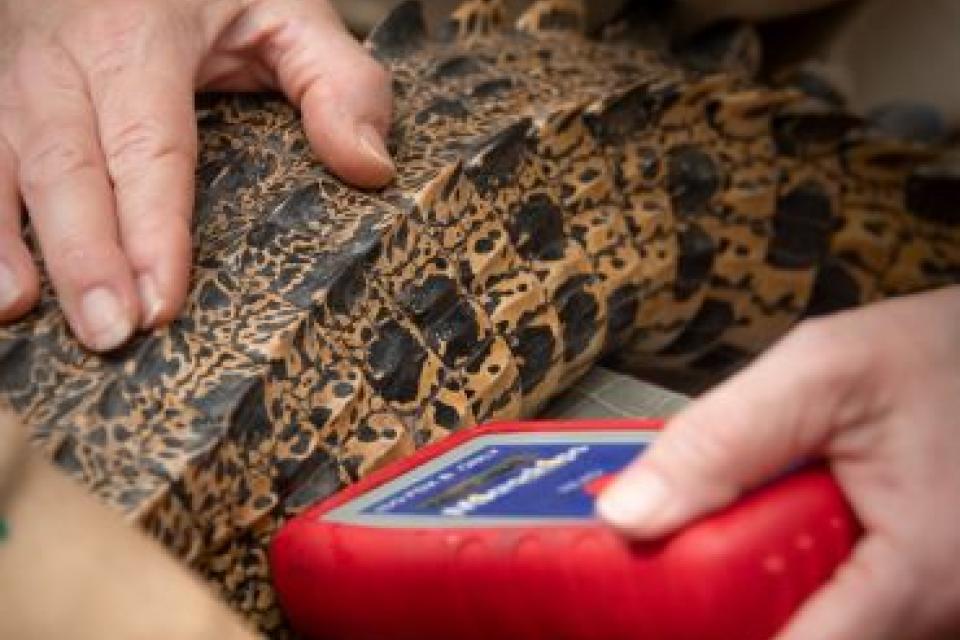
Researchers check the temperature of a crocodile. Image: Australia Zoo.
Since 2008 the temperature peaks experienced by the crocodiles in the study have increased by 0.5°C, and their median body temperature has increased by 0.11°C.
The Northern Australia Climate Program reports the region’s mean temperatures are increasing 0.05 - 0.2°C per decade.
Forty-five of the crocodiles in the study experienced body temperatures above 34°C at least once.
Co-author Professor Craig Franklin said high body temperatures were recorded even while the crocodiles were actively trying to stay cool.
“When they’re above 32-33°C, a crocodile’s diving and swimming performance is impacted,” Professor Franklin said.
“Hotter crocodiles don’t dive for as long which is concerning because as ambush hunters, they need to wait underwater holding their breath for a wallaby or feral pig to come past.
“The next step in our research will be to look at what impacts behaviour change related to higher body temperatures may be having on the overall health of the crocodile population.”
This long-term research project has been carried out in collaboration with crocodile experts from Australia Zoo and based from the Steve Irwin Wildlife Reserve.
The research has been published in Current Biology.
Media assets
Images available via Dropbox
Related articles

Turning up the heat on chickpea yield
