
Machine learning helps construct an evolutionary timeline of bacteria
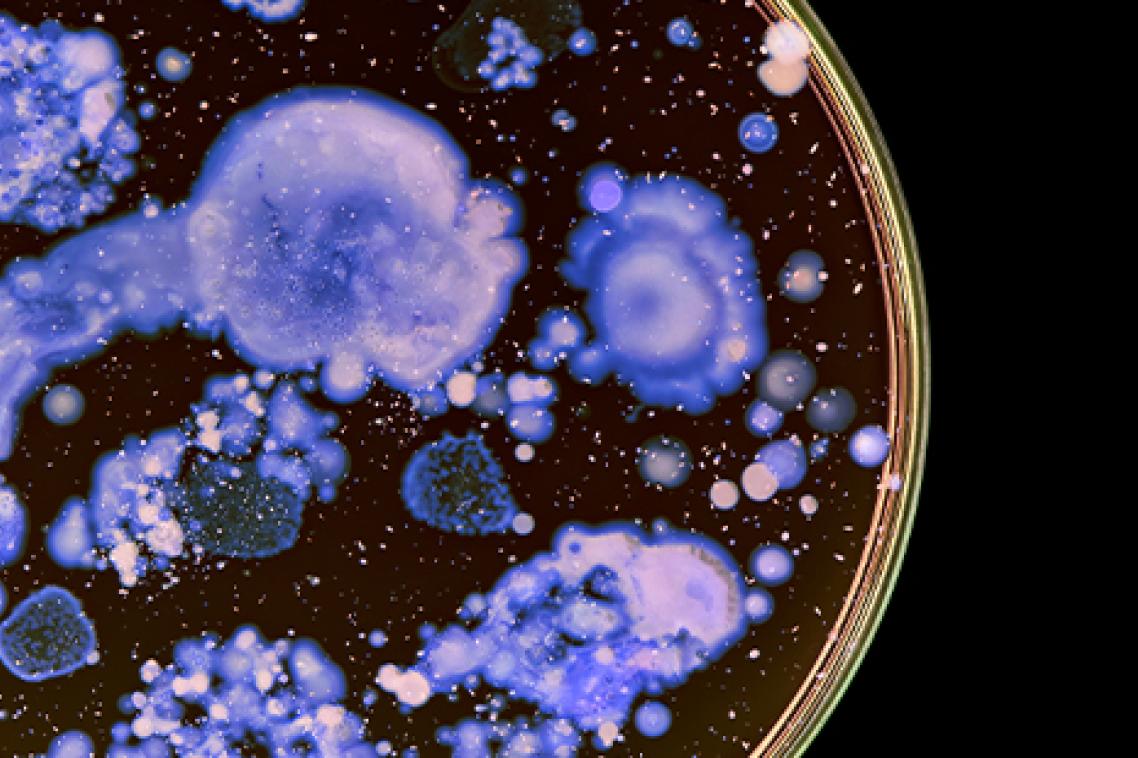
University of Queensland scientists have helped to construct a detailed timeline for bacterial evolution, suggesting some bacteria used oxygen long before evolving the ability to produce it through photosynthesis.
The multinational collaboration – led by researchers from the Okinawa Institute of Science and Technology, the University of Bristol, Queensland University of Technology and UQ – focused on how microorganisms responded to the Great Oxygenation Event (GOE) about 2.33 billion years ago, which changed Earth’s atmosphere from mostly devoid of oxygen to one that allows humans to breathe.
Professor Phil Hugenholtz from UQ’s School of Chemistry and Molecular Biosciences said establishing accurate timescales for how bacteria evolved before, during and after the GOE had been difficult until now, because of incomplete fossil evidence.
“Most microbial life leaves no direct fossil record, which means that fossils are missing from the majority of life’s history on Earth,” Professor Hugenholtz said.
“But we know ancient rocks hold chemical clues of how bacteria lived and fed, and we were able to address the gaps by concurrently analysing geological and genomic records.
“The key innovation was using the GOE as a time boundary, assuming that most aerobic branches of bacteria are unlikely to be older than this event unless fossil or genetic signals suggested otherwise.”
The team first estimated which genes were present in ancestral genomes. They then used machine learning to predict whether or not each ancestor used oxygen to live.
To best utilise fossil records, the researchers included genes from mitochondria (related to alphaproteobacteria) and chloroplasts (related to cyanobacteria), which allowed them to use data from early complex cells to better estimate when events happened.
“Results show that at least 3 aerobic lineages appeared before the GOE – by nearly 900 million years – suggesting that a capacity for using oxygen evolved well before its widespread accumulation in the atmosphere,” Professor Hugenholtz said.
“Evidence suggests that the earliest aerobic transition occurred around 3.2 billion years ago in the cyanobacterial ancestor, which points to the possibility that aerobic metabolism occurred before the evolution of oxygenic photosynthesis.”
Lead author Dr Adrián Arellano Davín said the combined approach of using genomic data, fossils and Earth’s geochemical history married together cutting-edge technologies to clarify evolutionary timelines.
“By using machine learning to predict cell function, we can not only predict the aerobic metabolisms of ancestral bacteria but also start to take incomplete genomes to try to predict other traits that could impact the world now, such as whether certain bacteria might be resistant to antibiotics,” Dr Davin said.
The research has been published in Science.
Media contact
UQ Communications
communications@uq.edu.au
+61 429 056 139
Topics
Related articles

Hay fever can strike even when grass pollen concentrations are low
