
Database reveals vital ocean links to aid conservation
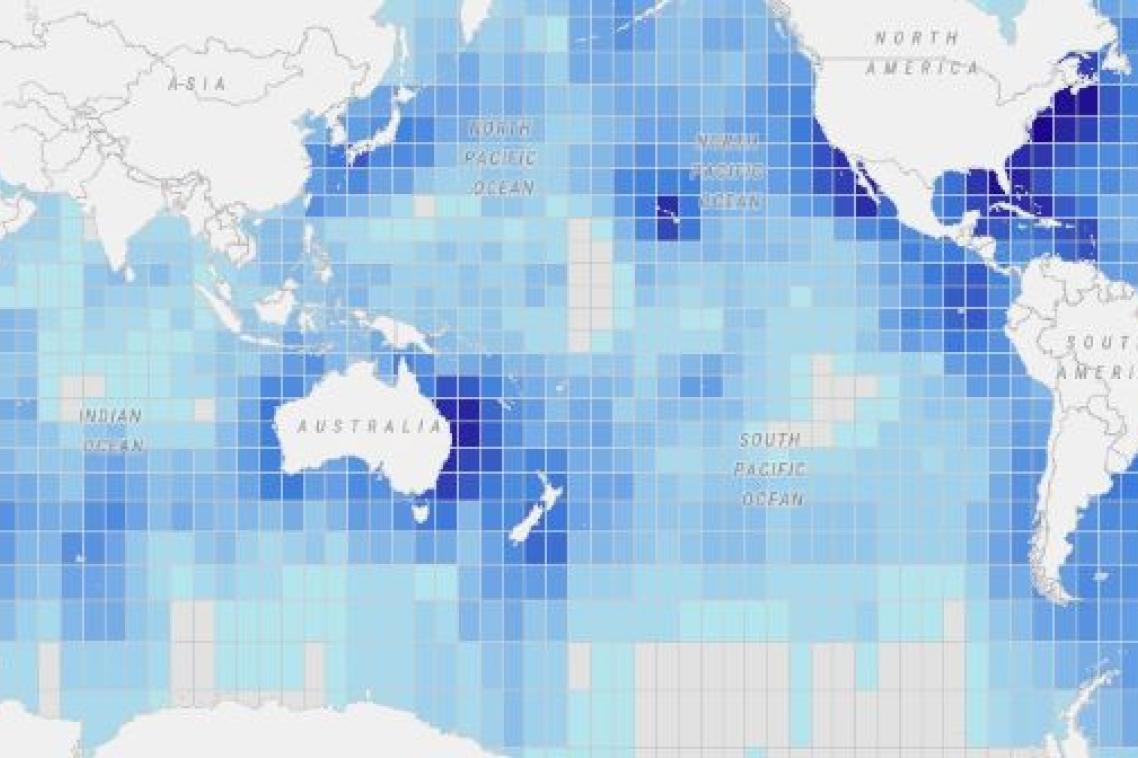
Each square on the MiCO map contains information on the species which move through that part of the ocean.
Scientists have launched an interactive global map to show the migratory patterns of more than 100 marine species in an effort to protect at-risk wildlife.
New models were developed by The University of Queensland and Duke University scientists to be part of the Migratory Connectivity in the Ocean (MiCO) database which aims to bridge information gaps for policymakers and conservationists.
Dr Lily Bentley from UQ’s Centre for Biodiversity and Conservation Science said the online tool was the first freely accessible global view of marine migratory connectivity.
“Covering 109 species including birds, mammals, turtles and fish, MiCO brings together thousands of records from more than 1,300 sources to map how marine animals traverse the world's oceans,” Dr Bentley said.
“The tool connects almost 2,000 crucial habitats and spotlights the importance of cross-boundary cooperation.
“MiCO enables scientists, governments, and international organisations to understand how migratory marine species link regions and jurisdictions.”
Researchers found many animals moved through national waters and the high seas during their life cycles, exposing them to various threats across countries.
Dr Bentley said the models highlight critical areas and connections that transcend political boundaries, showing that no country can fully protect migratory species on its own.
“To protect these species effectively, nations must work together,” she said.
Centre director Associate Professor Daniel Dunn said the intricate connectivity described in the system underscores the need for globally-aligned conservation efforts such as the recent High Seas Treaty, which seeks to safeguard biodiversity beyond national waters.
“MiCO's freely available models have already been identified as a valuable asset to inform the implementation of this treaty, helping policymakers understand how their countries and the biodiversity they are responsible for are connected to the high seas,” Dr Dunn said.
“The system also aligns with the Convention on Migratory Species' goal of developing a global atlas of animal migration, an effort to which MiCO seeks to be a key contributor.”
Researchers say more than two-thirds of marine migratory species are still unassessed and future expansions of MiCO are planned.
"Our goal is to provide the most comprehensive global baseline of connectivity generated by marine migratory species possible, so that conservation strategies are based on robust data," Dr Dunn said.
This research is published in Nature Communications.
Related articles

‘Forever renting’ is common in New York, California and Europe. What lessons can we learn?
