
Reawakening ancient grains
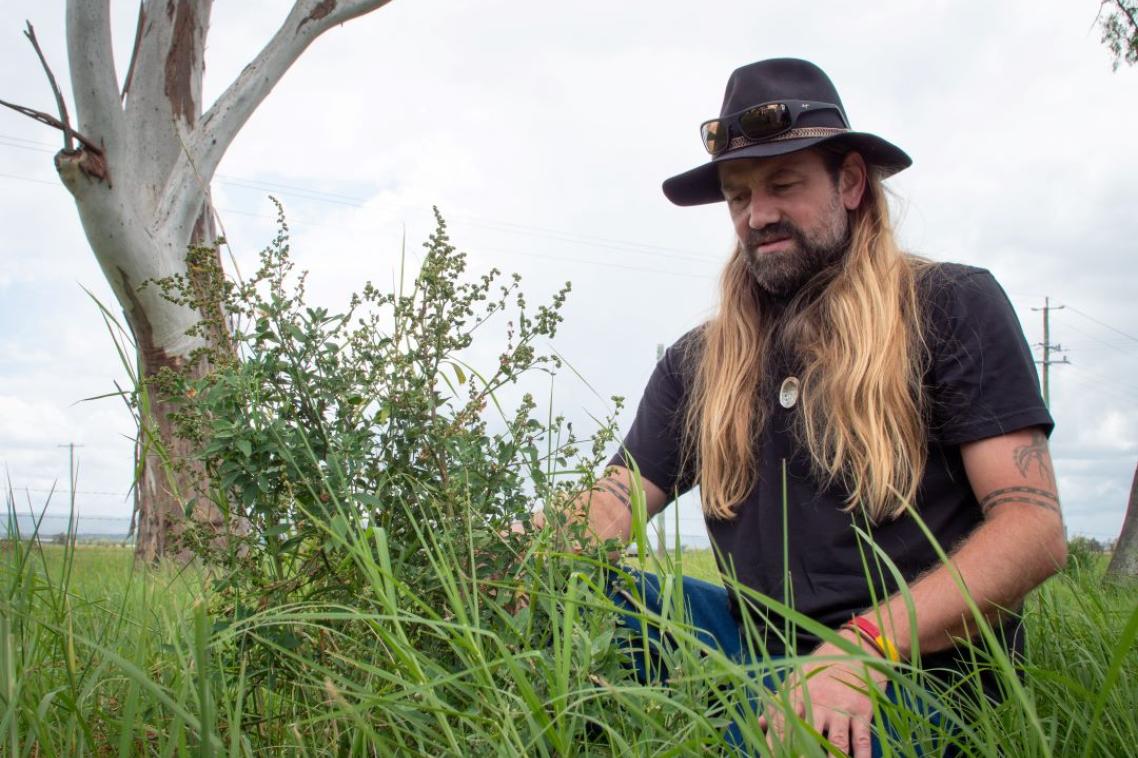
(Photo credit: Megan Pope )
Returning locally extinct native grains to Queensland’s grasslands is the goal of Gamilaraay man and University of Queensland PhD candidate Jacob Birch.
Inspired by his Churchill Fellowship where he studied the achievements of Indigenous communities in North America, Mr Birch is gathering seed to sow at UQ’s Gatton campus later this year.
“Some of these grasses can no longer be found on Country,” Mr Birch said.
“In fact, grasslands in general are critically endangered in a lot of regions across Australia.
“What we are hoping to do in partnership with families from the Yagara people, is grow culturally significant species native to both Gamilaraay country in southern Queensland and north-western New South Wales and in the Gateebul territory of Yagara country in south-east Queensland.”
A trial crop will be sown under the governance of Gamilaraay and Yagara peoples, once the seed has been sourced from Gamilaraay Country.
“The land has been gifted by the Gatton farm stakeholders and facilitated with Indigenous engagement staff at QAAFI and UQ’s Faculty of Science,” Mr Birch said
“This project has not been funded, so we’ll be relying on the generosity of volunteers and farm staff.
“But we do have a proposal to develop an integrated native grain seed collection and production program, which could be activated with the right support.”
Mr Birch said two mobs working together on the project was significant.
“It’s all about strategic governance, nation-building stuff,” he said.
“Prior to colonisation, communities used to travel to each other’s Country to conduct ceremonies, trade, for marriages, sporting events and diplomatic purposes.
“So, this is very important for thinking about the future, working together to achieve joint aspirations but also rebuilding those networks.”
He’s also hoping to follow in the footsteps of North American Indigenous communities he said were 30 years ahead of Australia.
“Some US Indigenous communities have become regional economic powerhouses, creating food systems and flipping the dominant agricultural system of economic profit,” Mr Birch said.
“They’ve managed to increase their life expectancy to exceed the national average by eating their own locally grown and processed native and commercial foods.
“That means you have thriving Indigenous populations in a nation that is feeling the same pressure we are in Australia with the changing global climate and cost of living pressures.”
He said native grains had the potential to improve the lives of Indigenous Australians.
“Native grains may not feed the world, but it’s about setting a different way of doing business in the food and agriculture space,” he said.
“It could be the door we walk through into a bigger opportunity.”
The Queensland Alliance for Agriculture and Food Innovation is a research institute at The University of Queensland established with and supported by the Department of Primary Industries.
Topics
Related articles

Unpacking wheat’s water use for drought research
