
From waste to energy, weeds as a source of biofuel
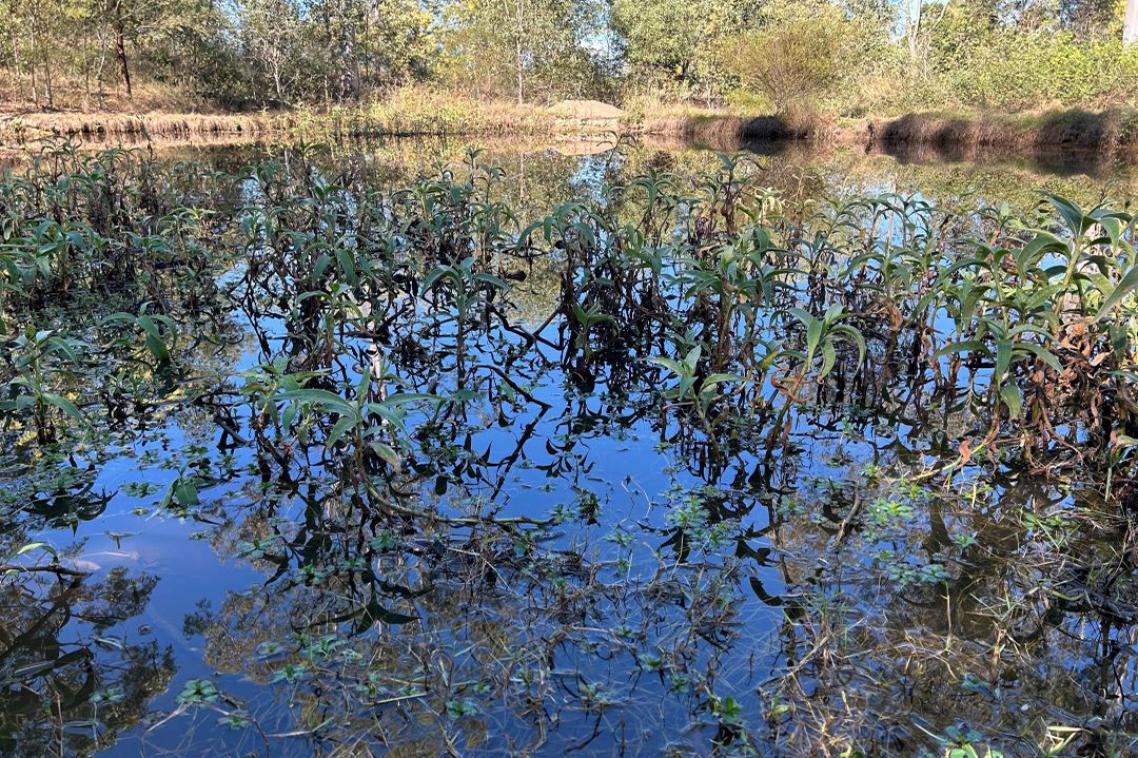
Several species of invasive weeds could become a source of renewable bioenergy, according to University of Queensland research.
Researchers assessed the potential to convert 15 weed species found west of Brisbane into biomass pellets to be used as a solid biomass fuel.
Lead author Dr Bruno de Almeida Moreira from UQ’s Queensland Alliance for Agriculture and Food Innovation said two vines, Brazilian Nightshade and Climbing Asparagus, were found to be suitable.
“Historically, the international pellet market has focused on forest biomass,” Dr Moreira said.
“But with regulations in Australia ruling wood pellets are not classified as renewable, we are trying to find alternative sources of biomass to produce pellets of the same quality.
“Wood has a lot of lignin, one of the most important components, and these weeds have a lignin content of about 25 per cent, which is competitive.
“The other key finding is we can make market-grade pellets, which means there are some weed-to-pellet conversion pathways that can provide market-grade biofuels we could sell.”
Th research was completed in collaboration with Ipswich startup - WorkEco, thanks to a seed grant from the Australian Government’s Strategic University Reform Fund (SURF).
Study co-author and AgriSustain lab leader Associate Professor Sudhir Yadav said the work aimed to reduce the environmental footprint and improve the sustainability of the agricultural sector.
“Agencies like the Australian Renewable Energy Agency have predicted bioenergy will supply 20 per cent of energy demand by 2050,” Dr Yadav said.
“It’s an optimistic but achievable target and a lot of research is required to bridge that gap.
“Another of our research areas is converting low value biomass and agricultural residue such as crop stalks, straw, wood chips, and animal manure, into functional products.
“This work could provide a source of revenue for a startup, solve a problem for a local government and more importantly reduce the environmental burden.”
Dr Yadav said the work was far from complete.
“We have many more weed species to test but we know from a sustainability perspective, environmental weeds have a limit and eventually supply will become a problem,” he said.
“We’re also thinking about other potential sources of biomass like green waste collected by councils and households and even some broadacre crops like sorghum.”
The research was published in Sustainable Energy Technologies and Assessments.
Collaboration and acknowledgements
The Queensland Alliance for Agriculture and Food Innovation is a research institute at The University of Queensland, established with and supported by the Department of Primary Industries.
Related articles

Turning up the heat on chickpea yield
