
Koala stress linked to disease threat
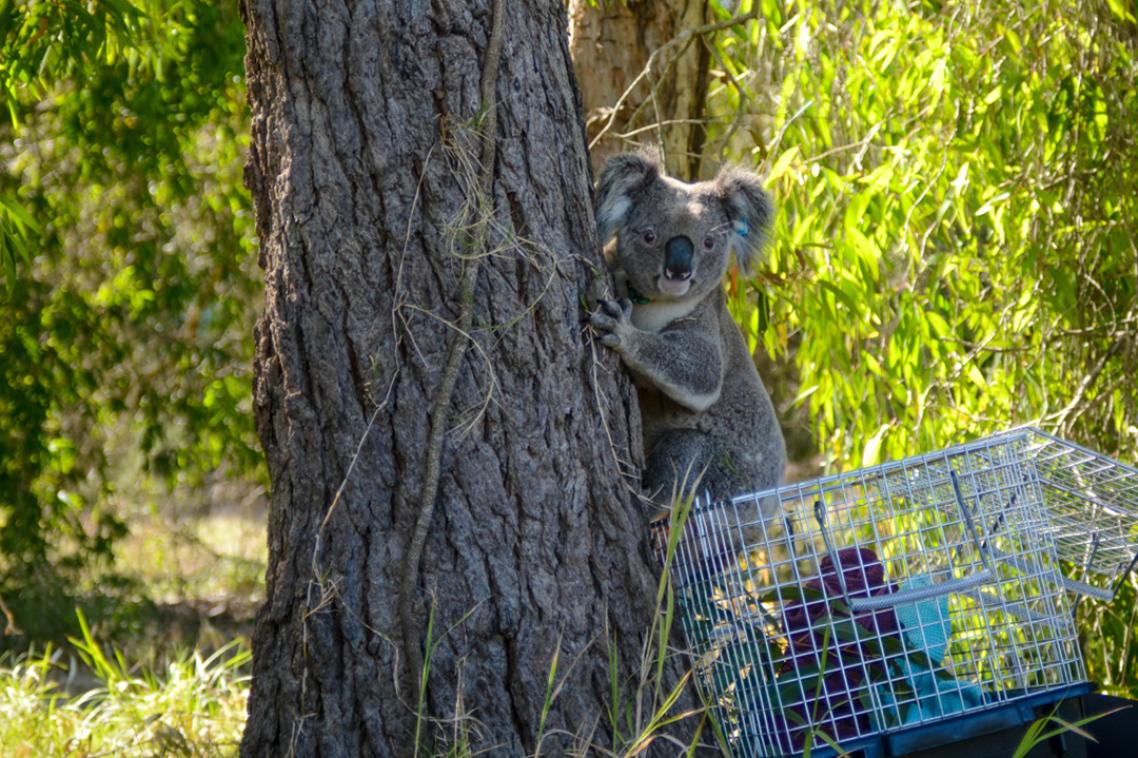
Many koalas in the study were successfully treated for Chlamydia before being released back into the wild.
(Photo credit: Currumbin Wildlife Hospital )
Key points
- The study confirms the biggest threats facing koalas of habitat loss and disease are connected.
- Koalas with high levels of stress hormone had high retrovirus levels, increasing their risk of chlamydial infection.
- The results indicate koala conservation efforts should prioritise good quality habitat.
Researchers have revealed a clear relationship between stress and increased disease risk in koalas in South East Queensland and on the New South Wales North Coast.
A study led by Dr Michaela Blyton at The University of Queensland measured and tracked the level of koala retrovirus (KoRV) in groups of captive and wild koalas.
“We wanted to see what happened to their KoRV loads over time and how it related to chlamydial infection and levels of the stress hormones cortisol and corticosterone in their faeces,” Dr Blyton said.
“Virus load likely weakens the immune system, so those with a higher KoRV load are more at risk of diseases such as Chlamydia which can cause blindness, infertility and death.
“Poor quality or disappearing habitat may increase stress and the koalas with higher average cortisol levels had higher average KoRV loads.
“We have confirmed the biggest threats faced by koalas of habitat loss and disease are connected – this is very important to know to improve support for remaining koala populations.”
The 67 koalas in the study included wild koalas being treated for Chlamydia before being released, others in a Chlamydia vaccine trial and a small number of animals kept in captivity because of injury or ill health.
“Our study showed KoRV loads within individual animals were very stable over time,” Dr Blyton said.
“Even when a koala with Chlamydia was successfully treated for that infection, their KoRV load did not decrease.
“That tells us the direction of causation is high KoRV load leading to an increased susceptibility to chlamydial infection and not the other way around.
“KoRV load could be underpinning the Chlamydia epidemic among koalas in northern New South Wales and South East Queensland.”
The study at UQ’s School of Chemistry and Molecular Biosciences was supported by the Port Macquarie Koala Hospital, Currumbin Wildlife Hospital and funded by the NSW Government under the NSW Koala Strategy.
“When we’re looking at koala conservation strategies, we need to be taking a holistic approach because disease and environmental factors are linked,” Dr Blyton said.
“The best thing is to preserve good quality habitat and the populations of koalas it supports.
“We are involved in Koala Conservation Australia’s breed to release program, where we are now screening and preferencing animals with low KoRV loads to hopefully give their offspring greater protection against Chlamydia and other infectious diseases.
“We are also aiming to investigate antiretrovirals to reduce KoRV loads in individuals to give them a better chance of fighting off Chlamydia and reducing transmission to the next generation.”
The research paper is in the Journal of General Virology, published by the Microbiology Society which is a membership charity for scientists interested in microbes, their effects and practical uses.
Related articles

From UQ reef science to national action in Fiji
