
Low-cost tool could one day detect leukemia in a patient’s saliva
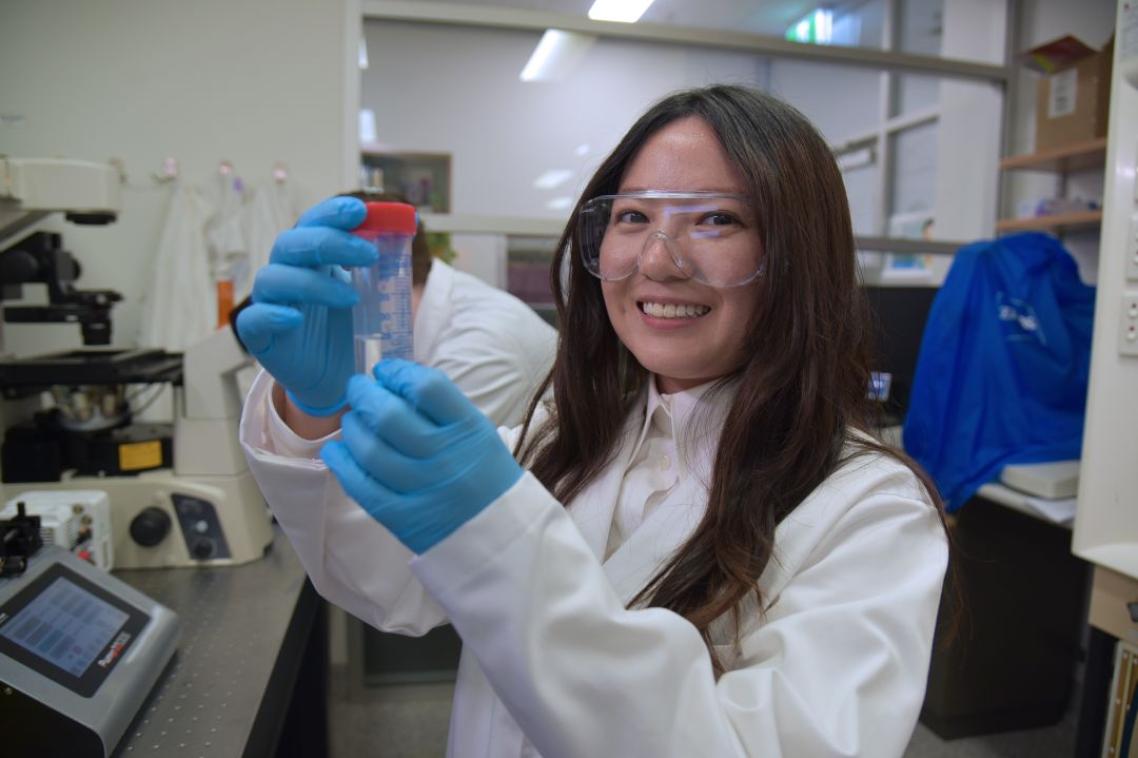
Dr Dan Yuan is a leading researcher in the field of viscoelastic microfluidics and its applications.
(Photo credit: The University of Queensland. )
Key points
- UQ researchers are developing a low-cost, saliva-based diagnostic device to detect diseases like leukemia without needing blood tests.
- Eventually, a portable tool could simplify at-home screening and improve early disease detection.
- Led by Dr Dan Yuan, the project draws on her research into viscoelastic microfluidics and has received a UQ Foundation Research Excellence Award for its potential impact.
Engineering researchers at the University of Queensland are developing a low-cost tool that could diagnose diseases like leukemia from a simple saliva sample.
The project, led by Dr Dan Yuan from UQ’s School of Mechanical and Mining Engineering, aims to deliver a portable benchtop device that replaces blood tests for many diseases.
Dr Yuan said she wanted the device to be as simple as possible to help remove strain on hospital system.
“Saliva testing is fast, painless and suitable for at-home, large-scale screening as we have seen with COVID-19 and flu kits,” Dr Yuan said.
“The aim is to develop a test that avoids the need to come into hospital for a time-intensive check.
“The non-invasive nature of saliva-based diagnostics will improve patient comfort and compliance, particularly in paediatric and routine screening populations.
“This could help enable early detection of diseases such as cancer, reducing mortality rates and healthcare costs.”
Dr Yuan’s project is in its early stages, but its promise has been recognised with a UQ Foundation Research Excellence Award (UQ FREA), as part of Research and Innovation Week.
UQ FREA prizes celebrate exceptional research achievements and leadership potential of early and mid-career researchers.
She said the project had potential applications for many diseases beyond leukaemia.
Dr Yuan said her device draws heavily on the study of viscoelastic microfluidics, one of her primary research interests.
Viscoelastic microfluidics is the science and tech behind the movement and manipulation of tiny objects such as cells in liquid samples through microscopic channels.
“Cancer cells – such as leukemia cells – tend to be larger than normal cells, so by understanding the way tiny particles move in fluids like saliva, we can manipulate cells of different sizes into different channels, thereby detecting abnormal results,” Dr Yuan said.
Dr Yuan said the tool she is designing currently requires an external pump and microscopic high-speed camera to operate and observe as she intends.
Eventually, her hope is the device will be small and portable.
“I would like my device or platform to be as simple as possible, so people can just do the sampling and processing themselves in the comfort of their home,” Dr Yuan said.
Dr Yuan said her UQ FREA award will provide funding for more preliminary data gathering ahead of developing a working microfluidic platform for immune cell isolation from saliva.
Related articles

From cooked breakfast to their own TV, aged care residents need to watch for extra fees
