
An integrated vision for predicting crop success
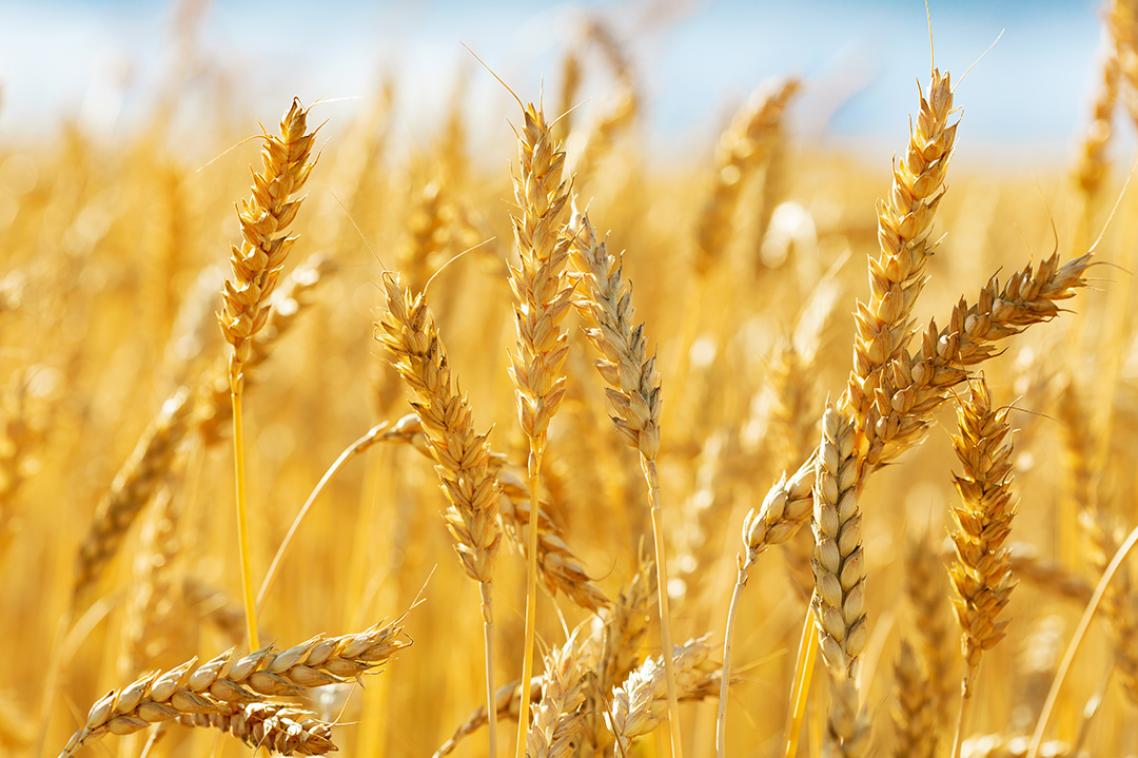
(Photo credit: Nitr/Adobe Stock. )
A system developed at The University of Queensland is offering accurate predictions of crop yield and farm production risks up to 4 months before sowing.
CropVision, an Australian Research Council Linkage project led by Associate Professor Andries Potgieter, links crop models with data from Earth Observation (EO) monitoring of physical, chemical and biological systems and global climate information.
“Existing crop forecasting can be unreliable because it’s driven by historic data with limited understanding of the biophysical-climate systems at field, farm or regional levels,” Dr Potgieter said.
“CropVision is a science-based, holistic innovation that will enable better decisions and more sustainable practices to meet the many challenges affecting crop production.
“Growing up on a dryland cropping farm in South Africa, I experienced firsthand the impact of droughts and floods, and in those days, farming decisions were mainly reactive and opportunistic.
“One reason for this was that little to no information was available on production risk and projected climate and its impact on the crop potential before sowing.
“CropVision can now provide that additional information at both the temporal and spatial scales and has been validated for different crop management practices and environments across Australia.”
At the Queensland Alliance for Agriculture and Food Innovation, CropVision has been used to develop and calibrate a new wheat model predicting yield at the 10-metre pixel scale and the field scale from more than 400 observed fields across Australia with significantly high accuracies at regional, farm and field scales.
Furthermore, as early as March 2024, CropVision’s national wheat outlook was for a close to median yield of 2.30 t/ha.
This closely aligns with the current October 2025 yield estimate of 2.25 tonnes per hectare.
Dr Potgieter said outputs generated from CropVision would be invaluable to better inform farmers and industry in making smarter, data-driven decisions well before sowing of their winter and summer crops.
“Having advance knowledge of the impact of the climate on the likely production for the coming season is critical information for farmers but also for companies looking at fertiliser and seed sales and bulk handlers planning the movement of commodities,” he said.
“Knowing the likely size of a crop or where the hotspots will be is critical to give them an edge over their competitors in terms of moving resources from one area to another.
“The next step would be to work with the Queensland Government to provide the technologies we’ve developed in CropVision to industry partners like bulk handlers of grain, insurance companies, financial institutions, and government agencies like ABARES and the ABS.”
Collaboration and acknowledgements
CropVision was funded by The Australian Research Council (ARC), The Aerospace Information Research Institute under the Chinese Academy of Sciences and the Department of Primary Industries with contributions from ABARES and the Australian Bureau of Statistics.
The Queensland Alliance for Agriculture and Food Innovation is a research institute at The University of Queensland, established with and supported by the Department of Primary Industries.
Related articles

Time to tap into agriculture’s hidden genetic potential
