
Paralysis ticks prefer heads and necks of pets
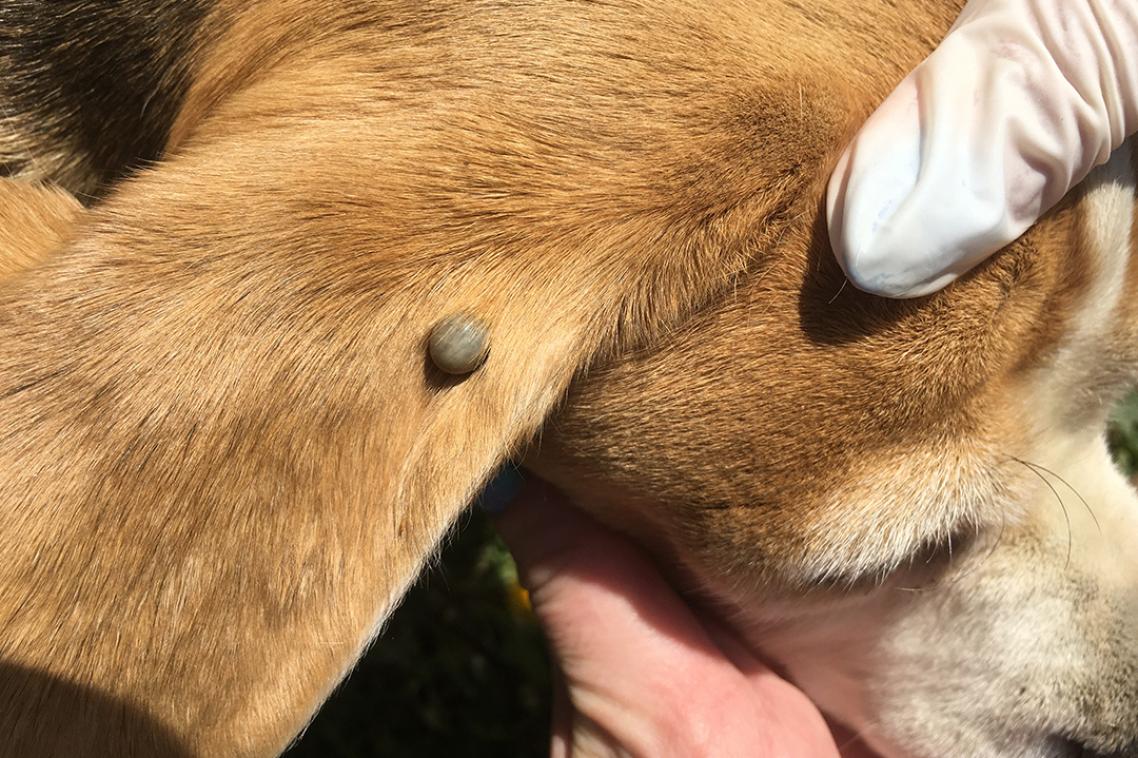
(Photo credit: hurvajs / Adobe Stock )
University of Queensland research has shown the head and neck should be searched first if a dog or cat is suspected of suffering from paralysis tick toxin.
Professor Stephen Barker from the School of Chemistry and Molecular Biosciences said the finding, from the largest study of tick preference sites in Australia, could save lives.
“We studied more than 10,000 tick envenomation cases at veterinary hospitals in Brisbane, the Gold Coast, the Sunshine Coast and Sydney’s northern beaches,” Professor Barker said.
“The paralysis tick, Ixodes holocyclus, was found on the head, neck or ears in 73 per cent of dog patients and 63 per cent of cats.
“If pet owners and vet clinics focus on where ticks most often occur, crucial treatment can be started sooner.
“Ticks were found in other sites like the animal’s nostrils and genitalia, but statistically speaking, hunting for them first on the head and neck is the best strategy.
“Symptoms of tick toxin in dogs and cats include voice and behaviour changes, progressing to wobbly back legs – prompt removal of the tick is critical for the best outcome.”
Professor Barker said it didn’t seem to matter if the tick jumped onto the animal on its tail, torso or legs, they made their way to the head and neck areas.
“We don’t know why this is the case, but it appears adult female ticks which are the most dangerous are not attaching at their first point of contact but have a preference for the head and neck,” he said.
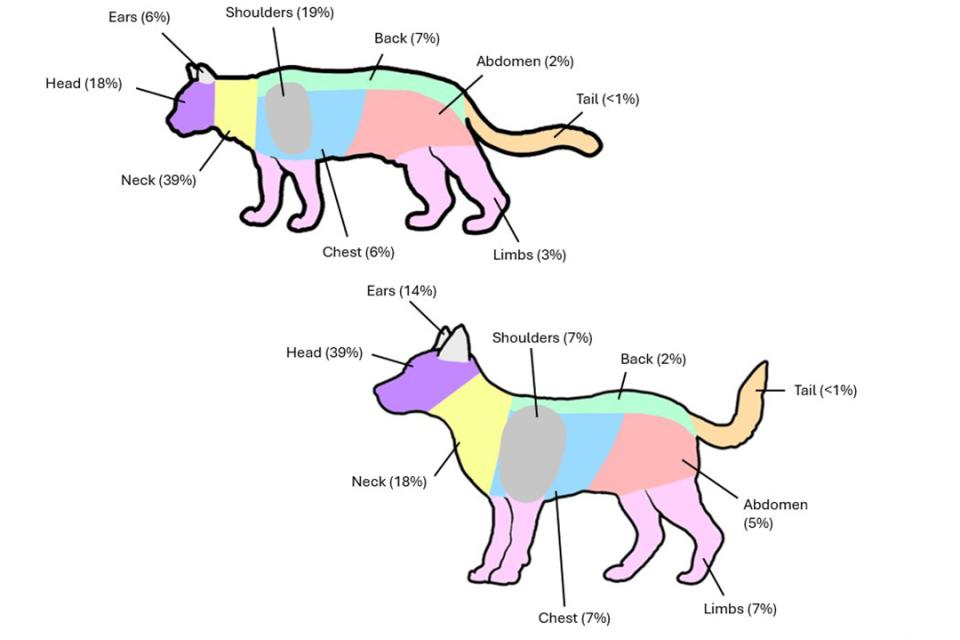
The review of vet hospital cases categorised the location of paralysis ticks on cats and dogs.
(Photo credit: Professor Stephen Barker)
Previous research by Professor Barker showed the severity of a tick season is determined by the weather the previous summer, when adult females lay their eggs.
“If summer is mild and wet, most of the eggs will survive to hatch and become adult ticks in spring needing a host to feed from,” he said.
“Our prediction for the current tick season is that it will be similar to the 2024 season, which while average still meant around 5,000 tick-related vet visits in eastern Australia with 1 in 10 of those pets dying.
“My advice to pet owners is to be vigilant and check their animals after each outing and while in a tick prone area, keep dogs on a lead and on marked paths.
“And if you are worried, go straight to your vet: do not delay since every hour may be critical to the survival of the pet.”
The research is published in the Australian Veterinary Journal.
Related articles

UQ to support development of mobile launcher for high-speed flight R&D
