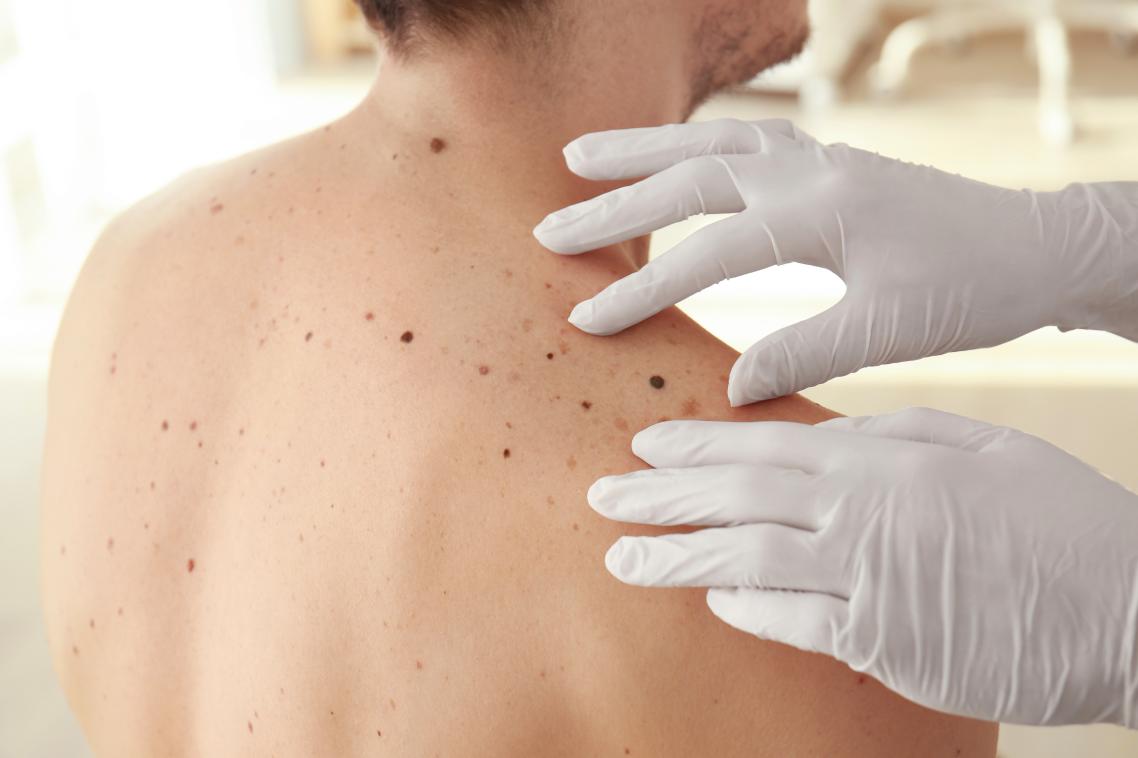
Study challenges conventional wisdom on a common cause of melanoma
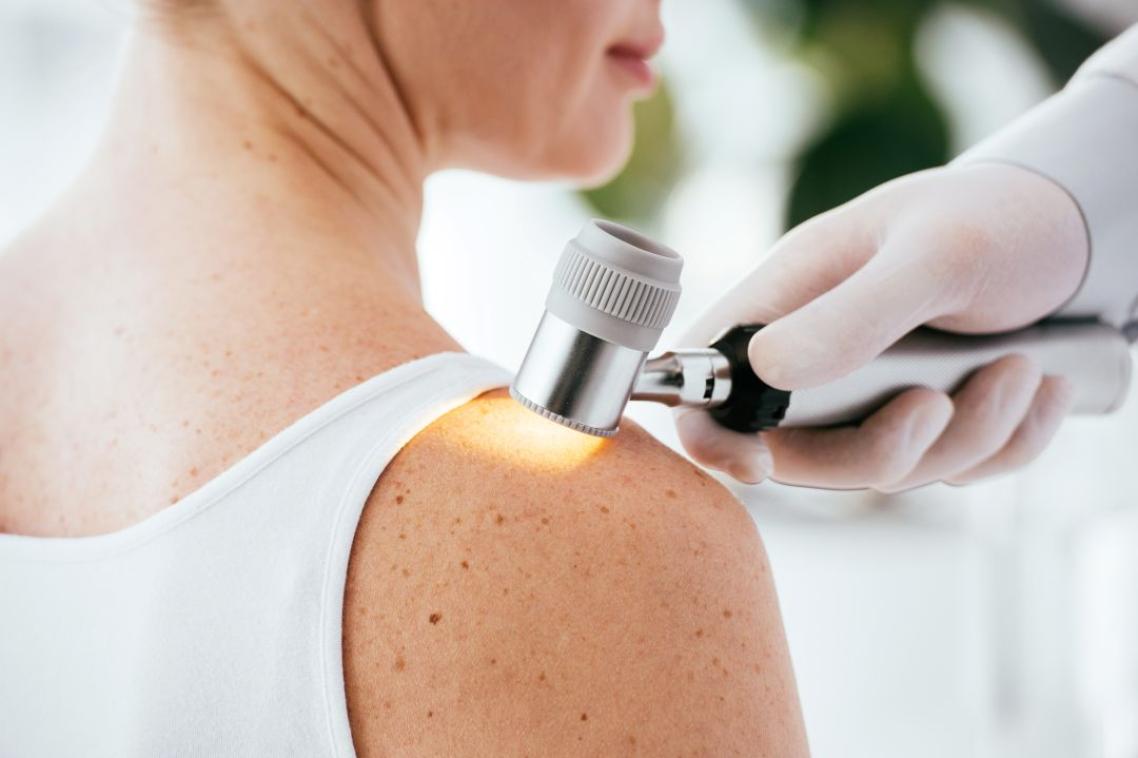
Melanoma, the deadliest form of skin cancer, develops in melanocytes and can occur on parts of the body overexposed to the sun or even following intermittent sun exposure.
(Photo credit: LIGHTFIELD STUDIOS/ Adobe Stock. )
Key points
- A new study has found a gene mutation in BRAF – common in melanoma – can lie dormant in healthy skin.
- Until now, it was thought this particular mutation would almost always cause a mole or melanoma to form.
- The study could result in improving patient screening of areas of skin more prone to the disease.
University of Queensland researchers have found a genetic mutation that causes melanoma can lie dormant in healthy skin, a finding that could improve screening of areas more prone to the disease.
The mutation in the BRAF gene – commonly identified in melanoma tumours – was thought to only exist in moles and melanomas.
UQ Frazer Institute PhD candidate Katie Lee said it was assumed this particular mutation would almost always cause a mole or melanoma to form.
“We have found many examples of the BRAF mutation in normal skin, including skin next to a mole and a melanoma, as well as in sun-exposed and sun-protected skin,” Ms Lee said.
“Our research challenges conventional wisdom that BRAF is not generally found in normal skin and that it nearly always causes a melanoma or a mole to form.’’
Ms Lee said about 50 per cent of melanomas and up to 100 per cent of moles commonly had a mutation in the BRAF gene melanocytes – a type of skin cell responsible for pigment production.
The Dermatology Research Centre team examined the mutation in 97 skin samples from a high-risk Australian cohort that appeared normal to both the naked eye and under a microscope.
Most were taken from the participants’ backs and shoulders.
UQ Frazer Institute Associate Professor Mitchell Stark said the mutant cells appeared to be dormant, but would likely form a tumour under certain circumstances.
“However, just because you have this mutation, doesn’t mean you’ll develop skin cancer,” Dr Stark said.
“Other external factors are needed for the cells to become malignant.”
Dr Stark said the findings could improve patient screening and melanoma prevention by helping researchers map areas of skin with the mutation and categorising individuals by risk level.
“We noticed our study participants often had all their melanomas and other suspicious lesions removed from the same region of the back,’’ he said.
“If we can use our findings to show certain areas have more mutations, then we could focus treatment on those spots rather than the whole body.’’
Early detection and surgical removal of the disease offer the best chance of a cure.
The research was a collaboration with Associate Professor Robert L. Judson-Torres of the Huntsman Cancer Institute at The University of Utah.
The research is published in British Journal of Dermatology.
Collaboration and acknowledgements
UQ’s Frazer Institute is based at the Translational Research Institute (TRI).
The British Journal of Dermatology is a top-ranked international dermatology journal, publishing the highest-quality research to advance the understanding and management of skin disease to improve patient outcomes. The BJD is one of the journals of the British Association of Dermatologists, the professional membership body for dermatologists in the UK.
Oxford University Press (OUP) is BAD's publishing partner. OUP publishes over 500 academic and research journals covering a broad range of subject areas, two-thirds of which are published in collaboration with learned societies and other international organizations. OUP has been publishing journals for more than a century and, as the world’s largest university press, has more than 500 years of publishing expertise. For more information, visit academic.oup.com.
Topics
Related articles
Tech trial to speed regional melanoma diagnosis